
Brooklyn’s industrial heritage has found dynamic new life thanks to the sweeping revitalization of its historic factories, sugar refineries, and power stations. What were once bustling centers of manufacturing and manual labor are transforming into art spaces, creative hubs, modern offices, and cultural venues. These changes do more than protect New York City’s historic architecture; they create a vibrant new urban landscape that attracts artists, entrepreneurs, and visitors alike. In this article on i-brooklyn.com, we explore how Brooklyn’s industrial sites are being revitalized, which landmark buildings have taken on new lives, and how reimagining industrial heritage is reshaping neighborhoods and the city’s creative economy.
Revitalizing NYC’s Industrial Waterfront: Reimagining Manufacturing Heritage
Brooklyn’s industrial districts once moved to the relentless rhythm of factory shifts, the roar of machinery, and the steady hum of waterfront shipping. Factories churned out goods, stored raw materials, and powered New York’s vital trade routes. Over time, however, manufacturing plants closed or moved elsewhere. They left behind massive assembly floors, vacant warehouses, and entire deserted blocks in search of a new purpose.
Many post-industrial cities faced a similar crossroads. As traditional manufacturing declined, local leaders and communities wrestled with a tough question: what should be done with an industrial heritage that no longer fit modern economic needs, yet remained an essential chapter of the city’s story?
In Brooklyn, one of the most successful solutions was adaptive reuse—repurposing former industrial sites for modern uses. Instead of tearing down historic structures, architects, developers, and cultural organizations began unlocking the potential of existing spaces. Vacant factories and warehouses were turned into artist studios, galleries, tech offices, concert venues, and creative hubs.
The Domino Sugar Refinery in Williamsburg: From Industrial Giant to Modern Workspace and Waterfront Park
Perched on the East River waterfront in Williamsburg, Brooklyn, stands the former Domino Sugar Refinery—one of New York City’s most iconic industrial landmarks. In the 19th century, this plant symbolized the city’s industrial boom. Raw sugar arrived by ship, and the scale of refining here made it one of the largest sugar manufacturing operations in the world.
For generations, the refinery was central to life in Williamsburg. Yet, as the manufacturing sector shifted, this industrial titan gradually lost its dominance. When production finally ceased, the complex faced a major challenge: how to breathe new life into massive industrial buildings without erasing their history?
Real estate developer Two Trees Management took on the challenge of reviving the complex, kicking off an ambitious transformation of the Williamsburg waterfront anchored by the former refinery.
Now reimagined as a state-of-the-art office complex known as The Refinery at Domino, the project balances authentic industrial character with modern workspace standards and high energy efficiency. It stands as a prime example of how an iconic historic structure can retain its soul while serving a completely new purpose.
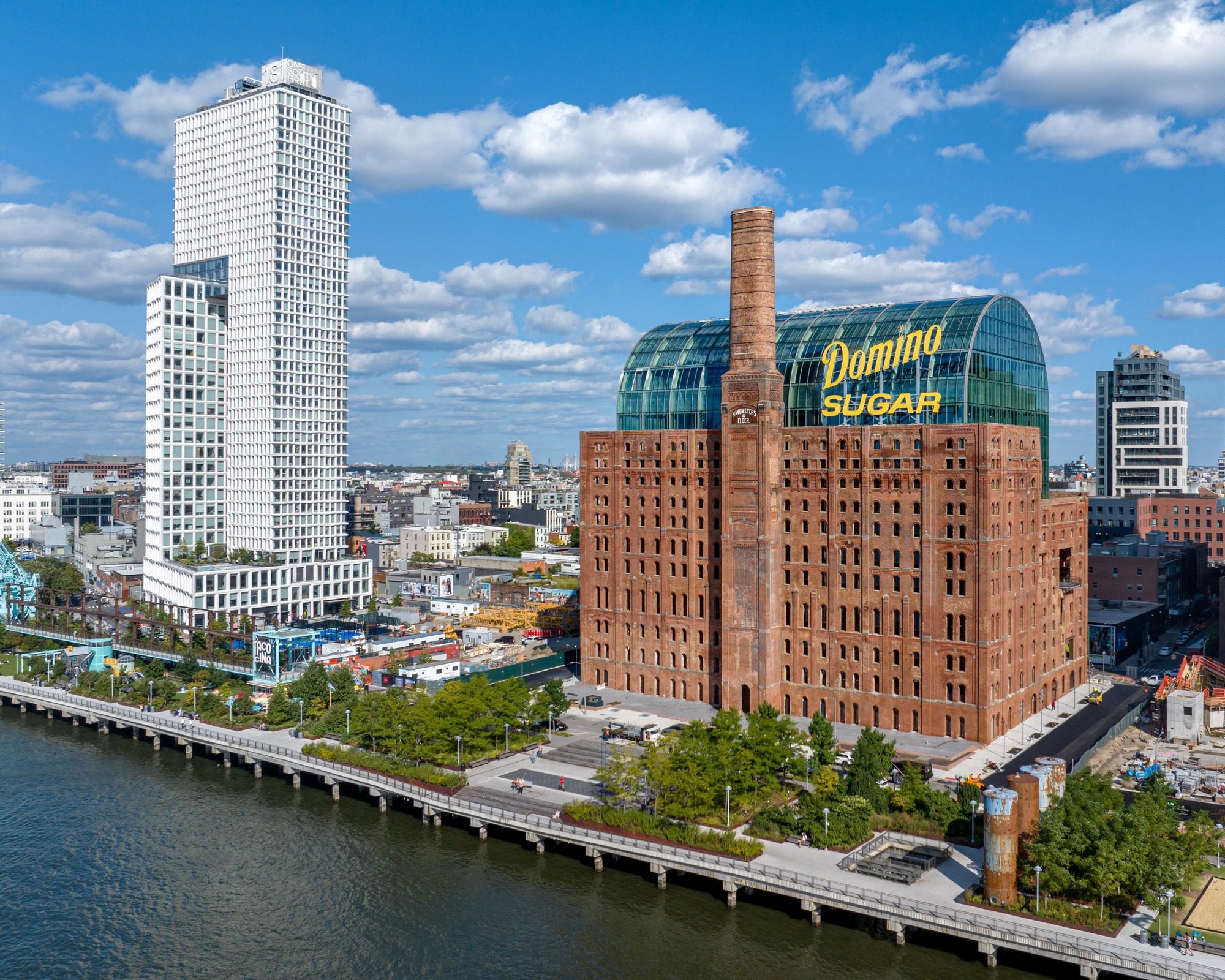
The transformation didn’t stop with the brick walls of the refinery. Right alongside it sits Domino Park, a public waterfront park built on land once closed off for manufacturing. With walking paths, green lawns, and panoramic views of the East River and Manhattan skyline, the park gave the public access to a stretch of shoreline that had been strictly industrial for over a century.
Powerhouse Arts: Transforming the Abandoned “Batcave” into a World-Class Art Center
Along Brooklyn’s Gowanus Canal, the hulking brick-and-concrete frame of the former Brooklyn Rapid Transit power station stood vacant for decades. With its exposed steel beams, cavernous rooms, and crumbling walls, the derelict building became a haven for urban explorers, graffiti artists, and squatters. In underground circles, it earned the nickname the “Batcave”—a moniker that eventually cemented its status in local lore.
Everything changed in 2012 when philanthropist Joshua Rechnitz purchased the four-story structure for $7 million. Rather than demolishing the site, he envisioned an ambitious alternative: converting the former industrial plant into a vibrant hub where artists could both produce and showcase their work.
In 2016, Swiss architecture firm Herzog & de Meuron—acclaimed for their work on major cultural and civic landmarks—stepped in to lead the redesign. The mission was to adapt the historic structure for contemporary needs while preserving its raw, industrial character. Out of this massive renovation emerged Powerhouse Arts.
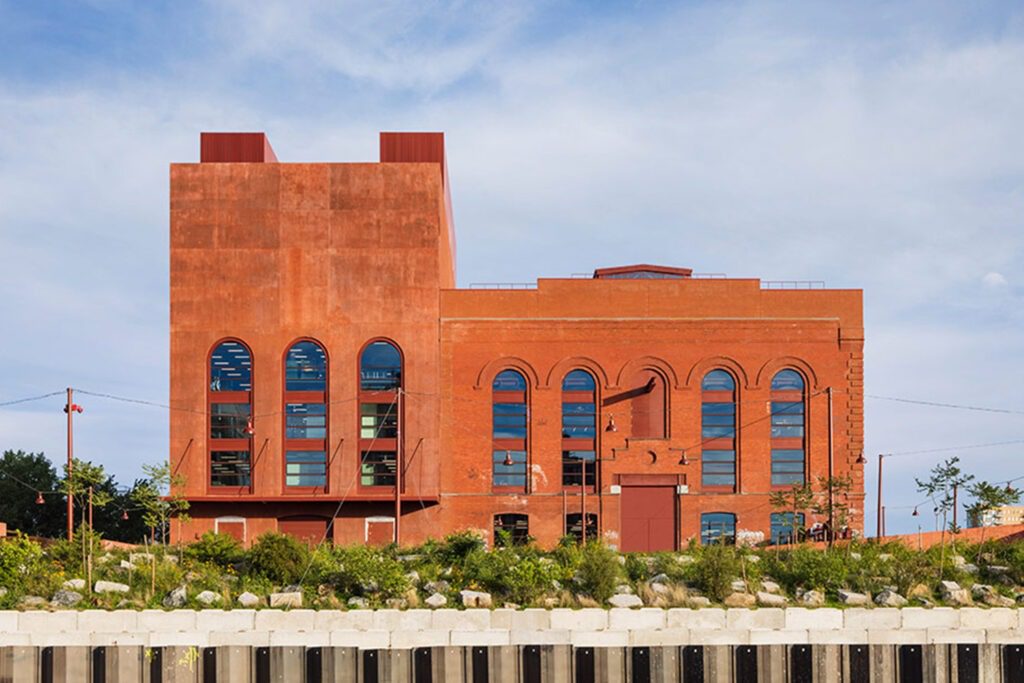
The new facility is much more than an exhibition hall. It features a soaring event space, modern offices, and advanced fabrication studios. Artists and craftspeople have access to specialized facilities for ceramics, metalworking, woodworking, and printmaking. By bringing production facilities, flexible workspaces, and cultural gathering areas under one roof, Powerhouse Arts allows creators to use industrial-grade equipment while inviting the public to engage directly with contemporary art and craft.
Empire Stores in DUMBO: Breathing New Life into Historic Waterfront Warehouses
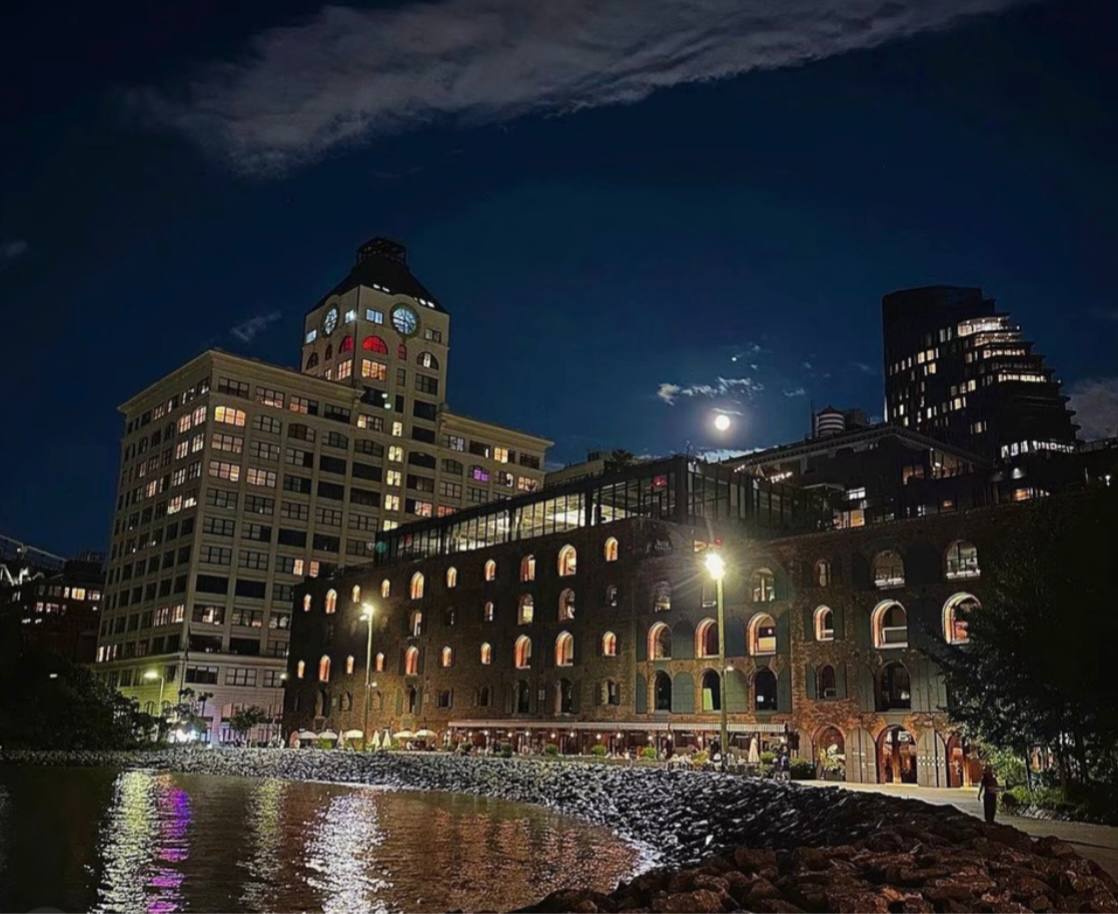
Nestled near the foot of the Brooklyn Bridge along the East River, Empire Stores is a landmark warehouse complex that harkens back to the era when the Brooklyn waterfront was a vital nexus of global trade. During the late 19th century, cargo ships docked here to unload goods destined for storage and distribution. Key commodities like coffee beans, sugar, and molasses—which drove New York’s commercial growth—filled its cavernous floors.
Built between 1869 and 1885, the seven interconnected buildings spanned more than 300,000 square feet, strategically located right at the water’s edge for easy freight handling. For nearly a century, the complex remained an integral part of the city’s maritime infrastructure. By the 1960s, however, changing logistics left the warehouses abandoned and their original purpose obsolete.
The next chapter for Empire Stores began in 2013, when developer Midtown Equities teamed up with Studio V and S9 Architecture to reimagine the property. Rather than tearing down the historic red-brick structures, the team designed an adaptive reuse project tailored to modern commercial and community needs.
Throughout the restoration, original architectural details were meticulously preserved. Thick schist masonry walls, antique iron hoisting wheels, and original coffee chutes were woven into the updated design. Instead of erasing the past, the renovation made the history of the buildings an integral part of the everyday visitor experience.
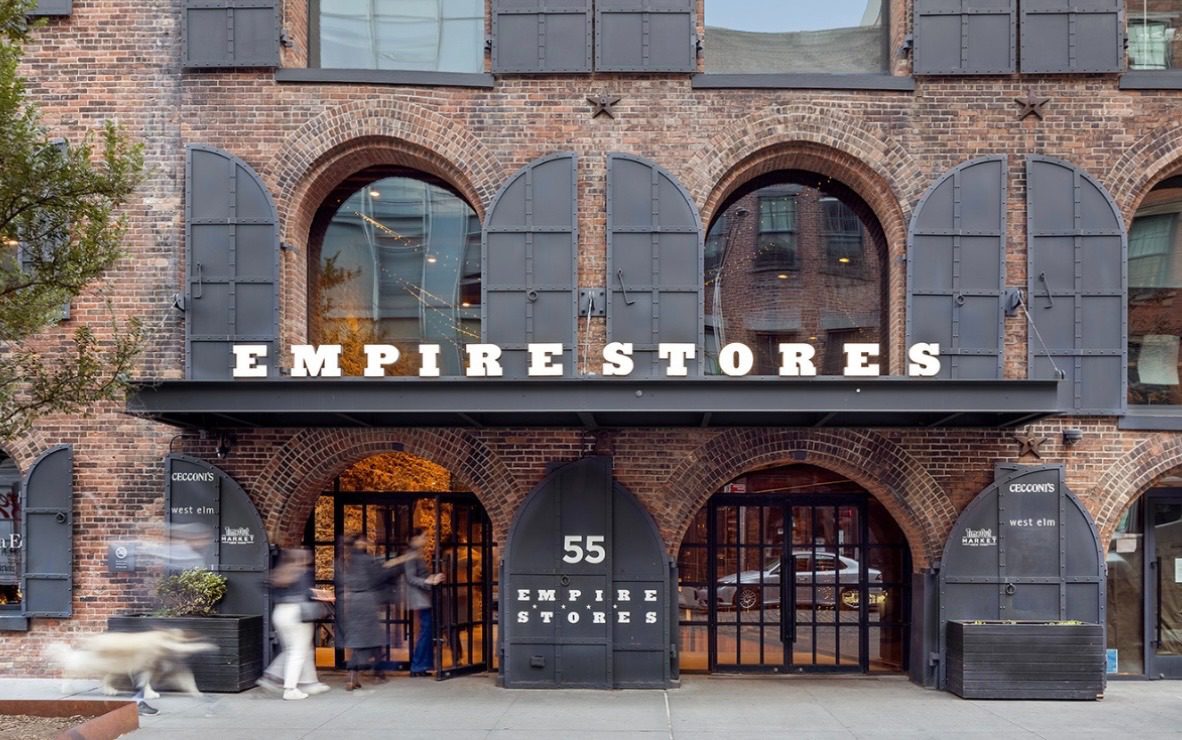
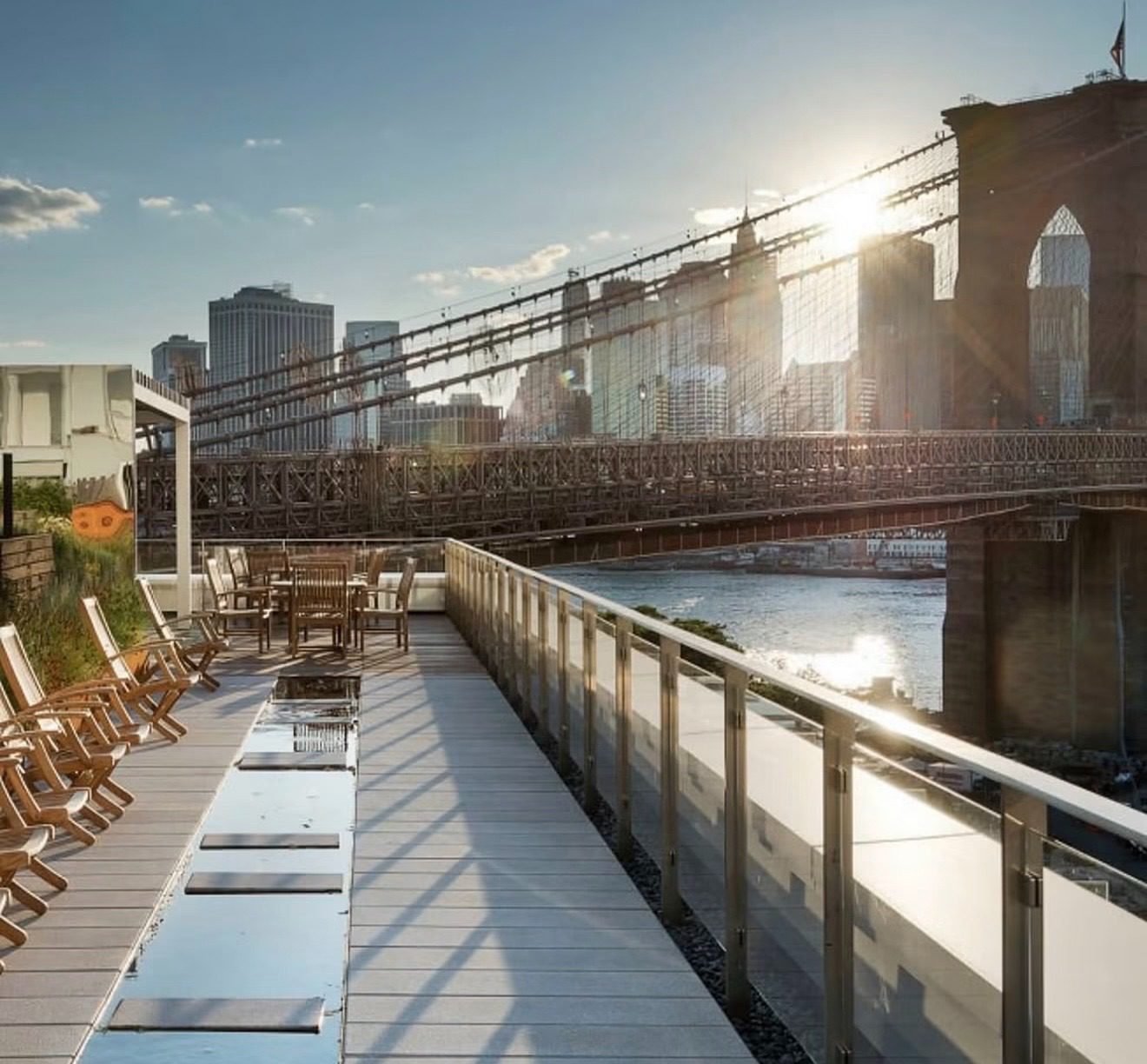
Today, Empire Stores functions as a vibrant mixed-use destination. It houses offices, restaurants, and retail spaces, while public areas invite locals and visitors to gather by the river. The rooftop terrace is a standout attraction, offering sweeping panoramic views of Lower Manhattan and the Brooklyn Bridge. What was once a secure storage facility has transformed into a lively hub for dining, working, and community life.
The Wythe Hotel in Williamsburg: From Historic Cooperage to Industrial-Chic Retreat
Not long ago, North 11th Street in Williamsburg was firmly part of industrial Brooklyn—a corridor of factories, freight loading docks, and brick warehouses honoring the neighborhood’s working-class roots. Soon, however, artists, designers, and entrepreneurs arrived, breathing fresh life into vacant spaces. A defining symbol of this transformation was the Wythe Hotel, which opened its doors in 2012.
The boutique hotel was carved out of a former cooperage—a 1901 factory that once manufactured wooden barrels. Morris Adjmi Architects, collaborating with developer Two Trees Management, led the transformation of the industrial structure. Rather than concealing the building’s history behind modern drywall, they highlighted it. Exposed cast-iron columns, massive timber beams, and weathered brick masonry took center stage. Atop the original masonry structure, they added a striking glass-and-steel penthouse, lending the building a bold contemporary silhouette.
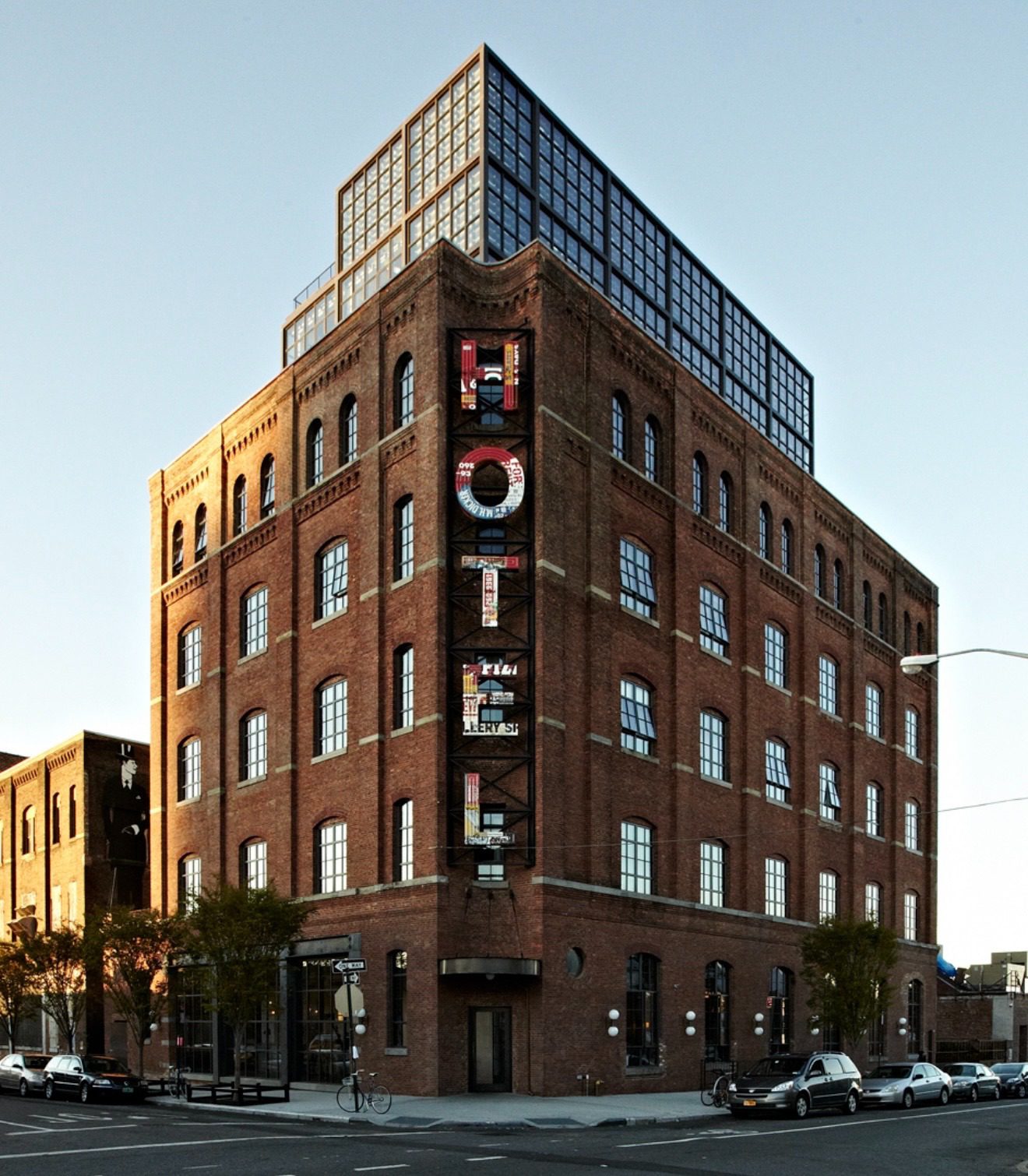
The Wythe Hotel seamlessly paired authentic factory character with modern boutique hospitality. Here, history was not preserved as a museum artifact; it became part of daily life. This thoughtful design helped the hotel fit naturally into the evolving fabric of Williamsburg, where industrial heritage became the cornerstone of a new cultural identity.
Industry City in Sunset Park: How an Industrial Powerhouse Became an Innovation District
Along the waterfront in Brooklyn’s Sunset Park, manufacturing was once king. For decades, massive multi-story facilities were dedicated to assembling, storing, and shipping goods. Over time, many of these spaces fell into disuse. Yet, instead of being left to decay, the sprawling Industry City campus was given a second act—reinvented as a dynamic ecosystem for business, creative enterprise, and modern technology.
The turnaround unfolded gradually through private investment, led by a joint venture that included Jamestown, Angelo Gordon, and Belvedere Capital. Instead of demolishing the massive complex to start fresh, developers renovated and retrofitted the existing footprint to meet the demands of modern commercial tenants.
Today, Industry City brings together entrepreneurs, designers, artists, tech startups, and light manufacturers. Creative studios and offices sit alongside artisan retailers and bustling food halls. Landscaped courtyards and open pedestrian spaces give the campus the feel of an energetic urban village, where visitors and workers can collaborate, dine, and unwind.
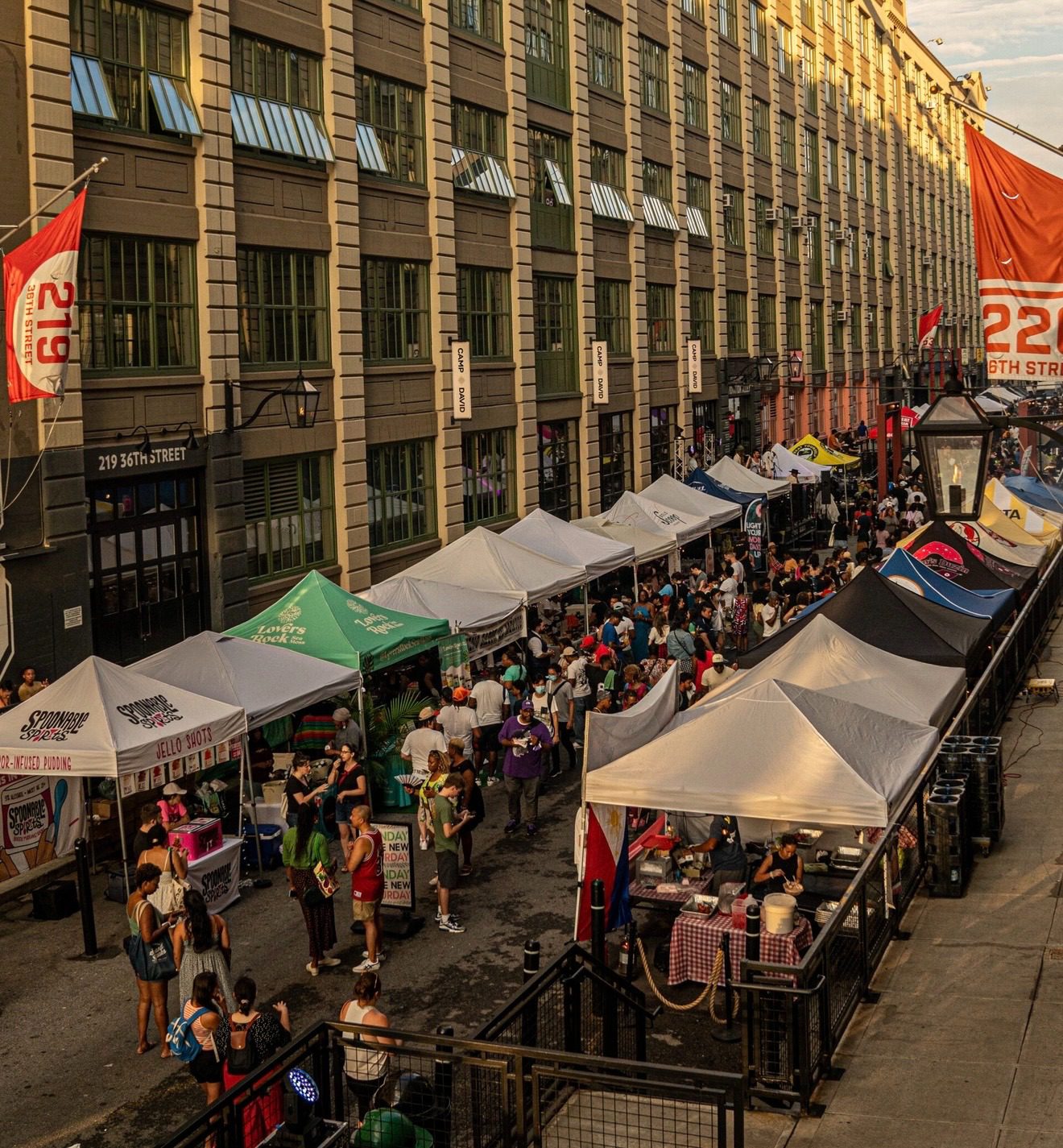
The story of Industry City reflects the broader transformation taking place across Brooklyn: industrial heritage is not disappearing, but actively adapting to a new economic reality. At the same time, this evolution raises critical conversations about workspace affordability, the future of blue-collar manufacturing, and who ultimately benefits from large-scale urban redevelopment.
The aesthetic of weathered steel, exposed concrete, and patinated brick has proven its lasting power in modern urbanism. Brooklyn’s reinvented factories prove that an industrial past is never a liability—when approached with vision, it provides the foundation for creative enterprise, vibrant culture, and inspiring public spaces. By pairing historical memory with bold design, former industrial ruins can become the most exciting cultural landmarks in today’s modern metropolis.