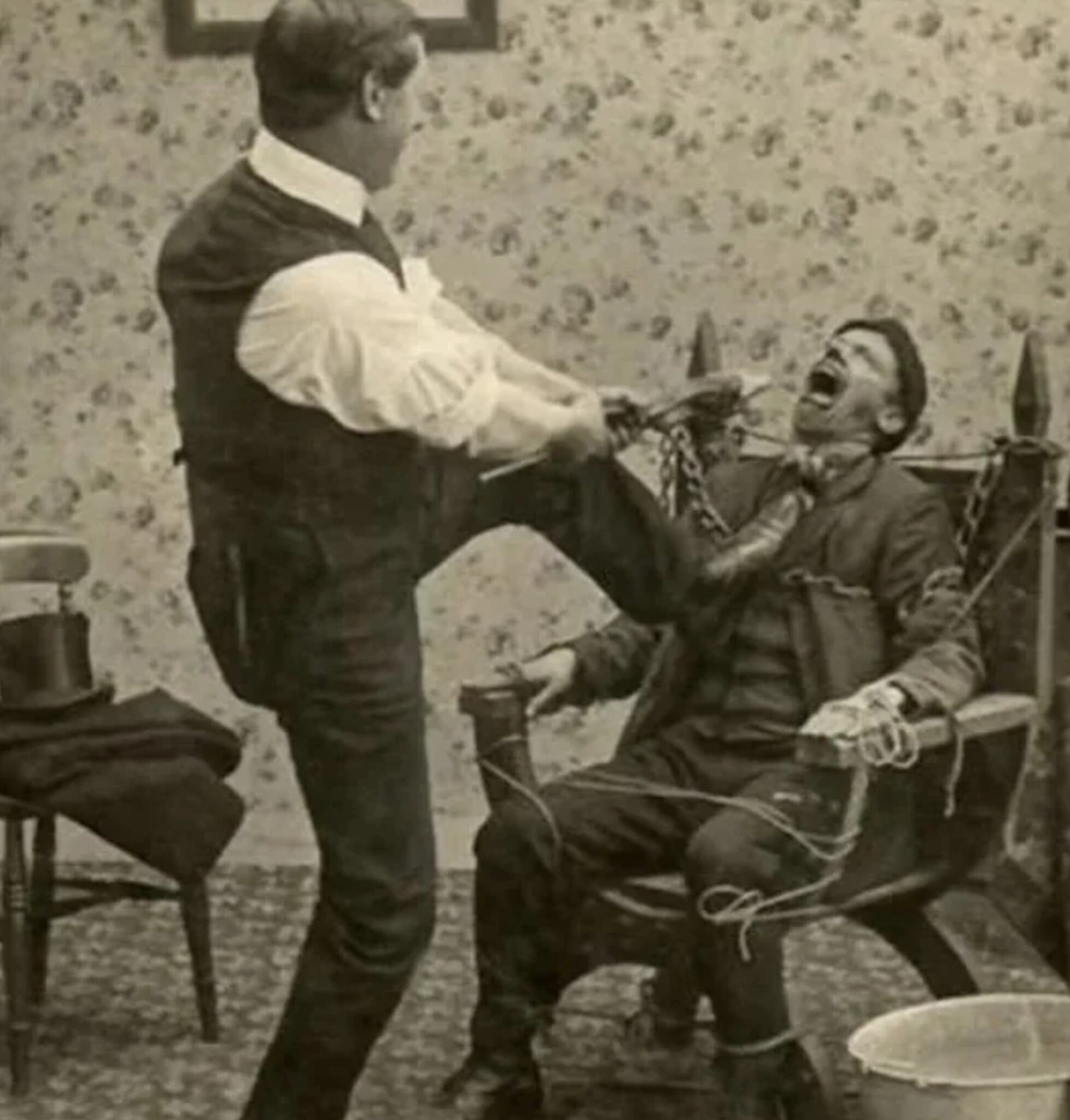

Dental problems among Brooklynites go way back—almost as far back as Brooklyn itself. The pain was just as bad back then as it is now, except that the solution was much simpler: whoever happened to be around became the “doctor.” Barbers, craftsmen, and sometimes just daredevils with a steady hand would take on the job without any formal qualifications and, to put it mildly, without any guarantee of success. Treatment often boiled down to a single universal method—remove it and forget about it, if, of course, you were lucky.
And yet, even under such conditions, Brooklyn—which at the time was still a separate and entirely self-sufficient city—managed to take a step forward. This is where the first dental office appeared, where teeth began to be treated not as a problem to be quickly extracted, but as a part of the body worth treating. It sounds mundane, but for its time, it was almost a revolution.
How exactly this happened, who was there at the very beginning , and what Brooklyn’s first “professional” dentistry practice looked like—you can read more about it in detail at i-brooklyn.com.
The History of Dentistry in the United States
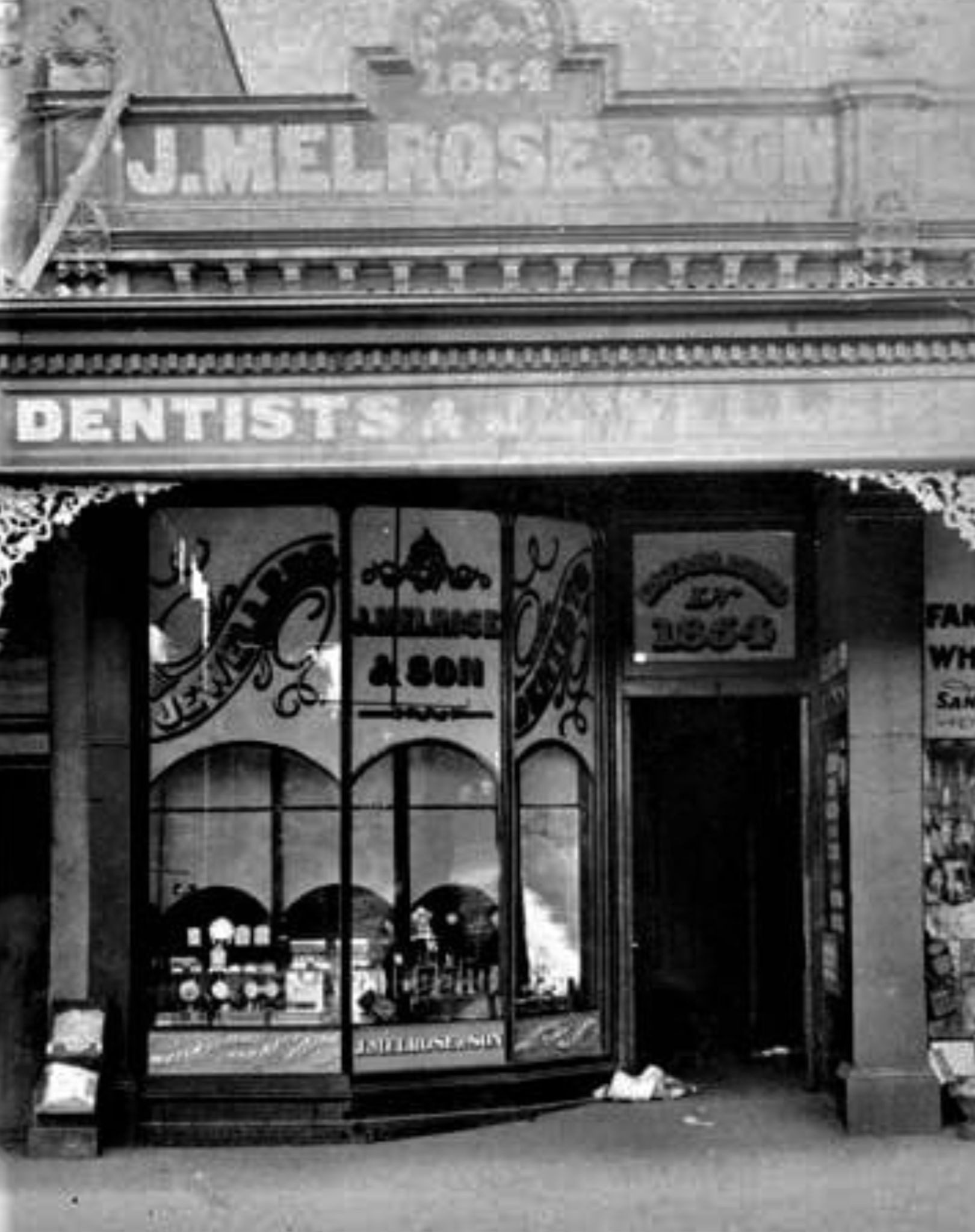
In short, the history of dentistry in the United States did not begin with pristine white offices and sterile instruments, but with rather dubious experiments on living people—and without their explicit consent to the “experimental” nature of the procedures. In the 18th and early 19th centuries, toothaches were treated here according to the principle: if it hurts, it’s superfluous. And what’s superfluous, as we know, must be removed. Quickly, decisively, and without unnecessary sentimentality.
Formally, dentistry did not yet exist as a separate profession. Barbers, blacksmiths, and sometimes even pharmacists—anyone who had the right tools and a certain degree of self-confidence—would moonlight as dentists. Sterility was unheard of back then; people could only guess at pain relief, and the word “treatment” more often meant extraction. In this system, the patient was more of a bystander than a client: the main thing was to survive the procedure and not lose more than planned.
In this regard, Brooklyn wasn’t particularly different. Like other American cities, it operated by the same rules: a toothache was a personal problem, and dealing with it came down to luck and strong nerves. At best, you might come across someone with experience; at worst, someone who decided to try their hand at a new “specialty” just today.
The turning point came in the mid-19th century, when the U.S. finally realized the obvious: teeth are not disposable. The first dental schools appeared, doctors received training, and instead of pliers as a universal tool, drills, fillings, and, most importantly, anesthesia came along. And suddenly it turned out that treatment could be not only quick, but also relatively humane.
Brooklyn embraced these changes with considerable enthusiasm. The city was growing, becoming wealthier, and, surprisingly, beginning to pay more attention to the quality of life of its residents—including their dental health. It was here that the first attempts were made to organize dentistry as a true practice: not “seeing patients in the kitchen,” but a separate space where the dentist didn’t just pull teeth, but tried to treat them.
One of the earliest known practitioners mentioned in historical sources is T. Jefferson Jones, who had been practicing in Brooklyn since the late 1820s. His office is mentioned on Sands Street. It was not a clinic in the modern sense, but rather a combination of living and working spaces, where other “medical services” could be provided alongside dental procedures. But what is important is this: it was already an attempt at a regular dental practice, rather than the occasional interventions of a “jack-of-all-trades.”
And that, in essence, was the moment when dentistry in Brooklyn took a step from a craft to a medical profession. It wasn’t without pain—but this time it was more historical than dental.
The Birth of a Profession
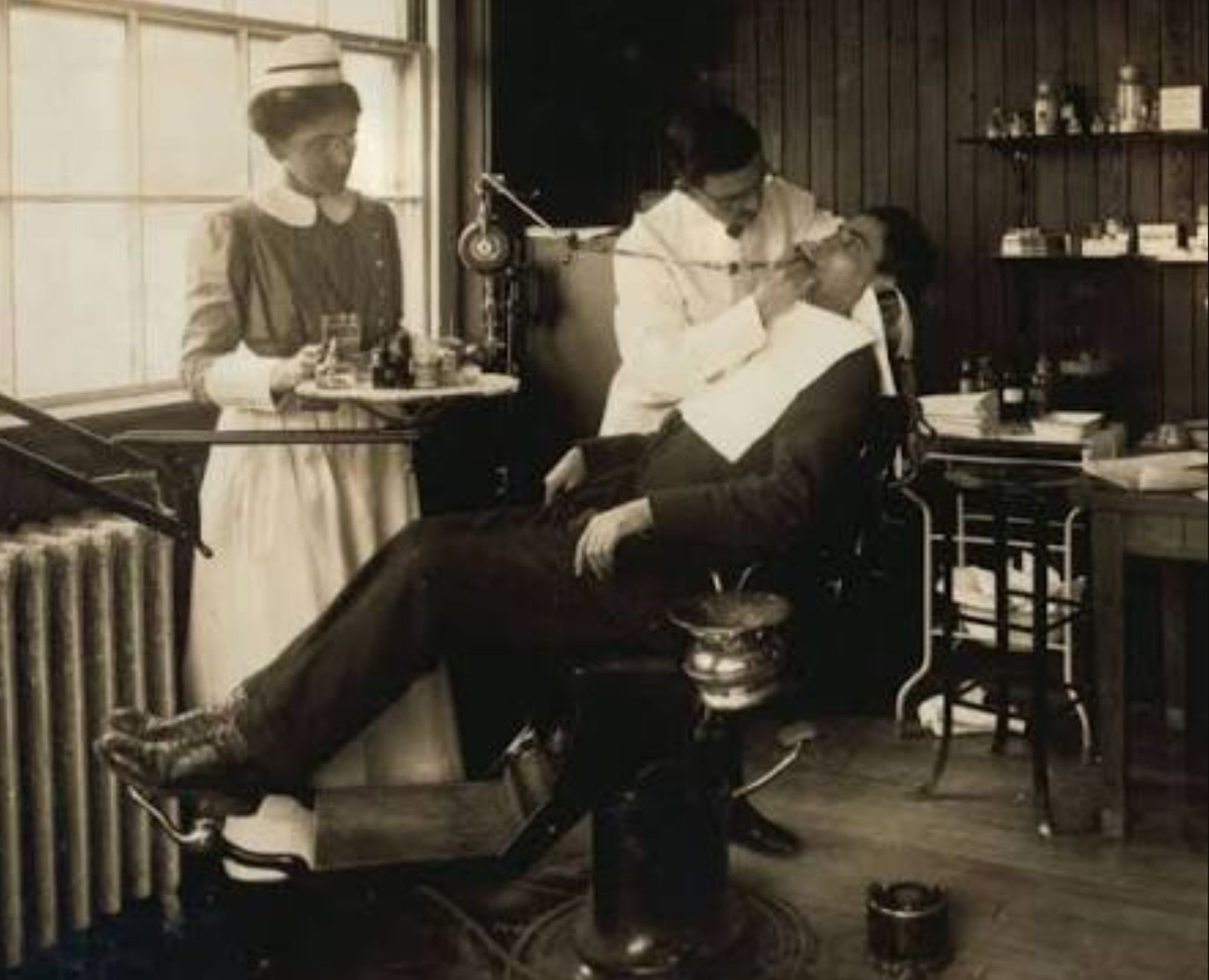
Sometime in the mid-19th century, something happened that seems obvious today but was nothing short of a minor revolution back then: dentistry in the U.S. finally decided to become a profession rather than a side job for a “jack-of-all-trades.” The first educational institutions, diplomas, and attempts to establish rules of the game appeared—and suddenly, the person with the forceps had not only confidence but also the formal right to call themselves a doctor.
This was the moment when teeth began to be taken more seriously than nails in a wall. New instruments and filling materials were introduced, and most importantly, anesthesia became available. Ether and nitrous oxide did more for dentistry than any advertisement: for the first time, patients were given a chance not only to survive, but also to avoid remembering the process in detail for the rest of their lives.
Brooklyn, which at the time was rapidly developing as a separate city, did not ignore these changes. Here, it was no longer makeshift “offices” that began to open, but more or less organized medical practices. Doctors rented separate premises, purchased equipment, and even tried to create an atmosphere in which the patient did not feel doomed before the consultation even began.
Here’s an interesting fact: it’s known that it was during that period that dental offices began furnishing their spaces with velvet chairs and paintings to distract patients from the instruments. Although, let’s be honest, it wasn’t until much later that they managed to completely eliminate that feeling.
Moreover, it was during this period that women began to gradually enter the profession. And while to some segments of society this seemed like something exotic, for patients it often meant a more attentive and, shall we say, less radical approach to treatment. Dentistry was slowly learning not only to treat, but also not to frighten.
Ultimately, the second half of the 19th century cemented a simple yet important idea: teeth can and should be saved. And although the path to this realization was far from comfortable, it was then in Brooklyn—as well as across the country—that the foundations were laid for the dentistry we recognize today.
Professional dental offices in Brooklyn
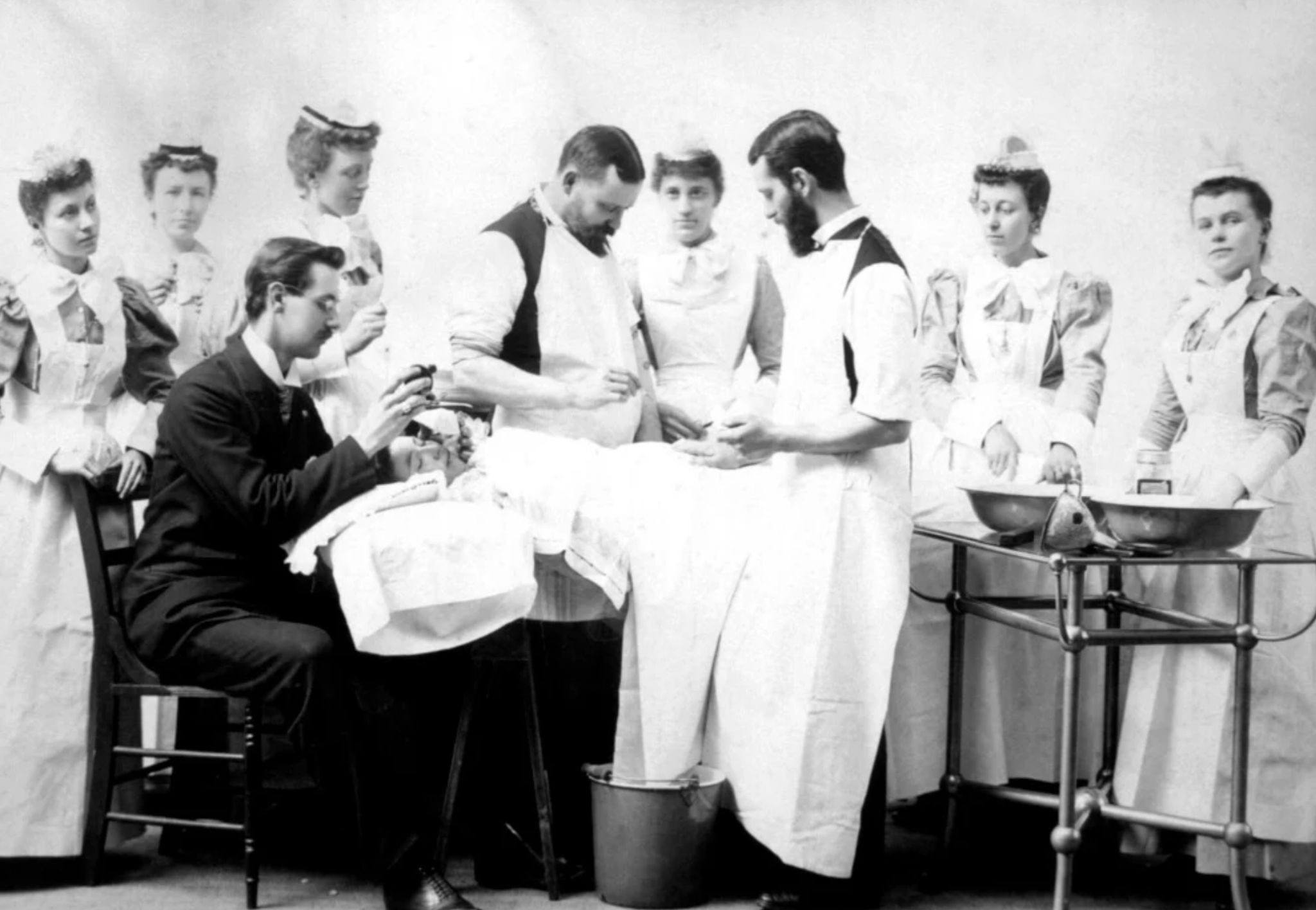
And then, at some point—around the 1860s to 1880s—dentistry in Brooklyn finally stopped pretending to be a home-based trade and moved into what could now be called real dental offices. These were functional spaces where the main thing was that the patient had a place to sit and the dentist had somewhere to plug in his instruments.
The first dental offices of this kind were as practical as possible: a chair, a cabinet with instruments, a lamp, and the pride and joy—the drill. At first, it was foot-operated. Yes, literally a pedal, just like on an old sewing machine. The dentist pumps his foot, the patient holds onto the chair, and somewhere in the midst of this rhythmic “back and forth,” modern dentistry is born. It sounds like technical progress, but in practice—it’s a unique kind of endurance test.
Next came steam-powered drills. They no longer depended on the dentist’s foot, but instead relied on steam, pressure, and the overall performance of the equipment. It was only with the advent of electricity that dentistry achieved what could be called stability. Electric drills did not make the process any less frightening, but they did add a degree of predictability.
An evolutionary leap: from treatment to prevention
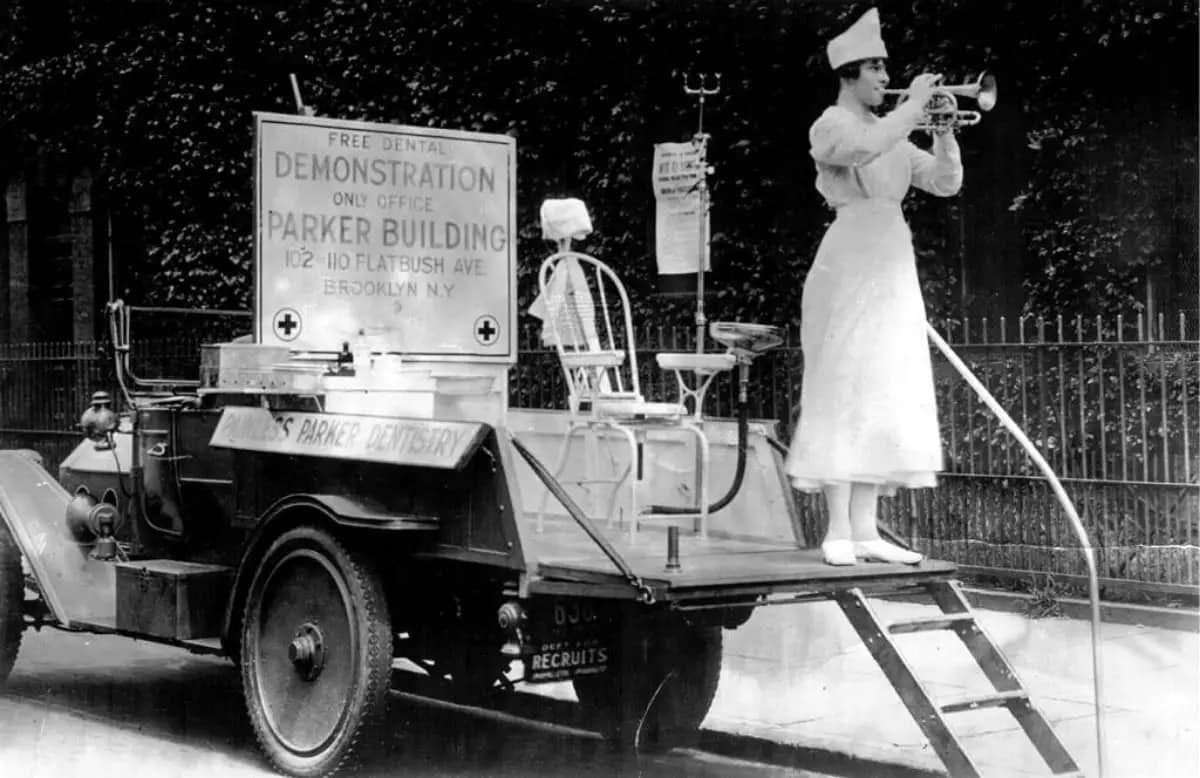
And this is where the most important change begins: dentistry finally stops being about “remove and forget.” In Brooklyn, as in other major cities, a different approach is gradually taking hold—preserve, treat, and prevent. Brushing teeth is shifting from “exotic advice” to the norm. Doctors are starting to talk to patients about hygiene, prevention, and regular checkups—in other words, about things that could save money, spare nerves, and reduce the number of dramatic stories in the family.
And so, rather than just individual dental offices, a fully-fledged system began to take shape in Brooklyn. Technology became more sophisticated, materials improved, and patients were gradually introduced to a simple—though at the time still unfamiliar—idea: it’s better to preserve your teeth than to have to replace them with dentures later on, but that’s another story.
Sources:
- https://historyofdentistryandmedicine.com/place-and-means-of-practice/
- https://southbrooklyndentist.com/who-we-are/
- https://www.encyclopedia.com/science/encyclopedias-almanacs-transcripts-and-maps/birth-profession-dentistry-nineteenth-century
- https://www.britannica.com/science/dentistry/Dentistry-in-18th-and-19th-century-America