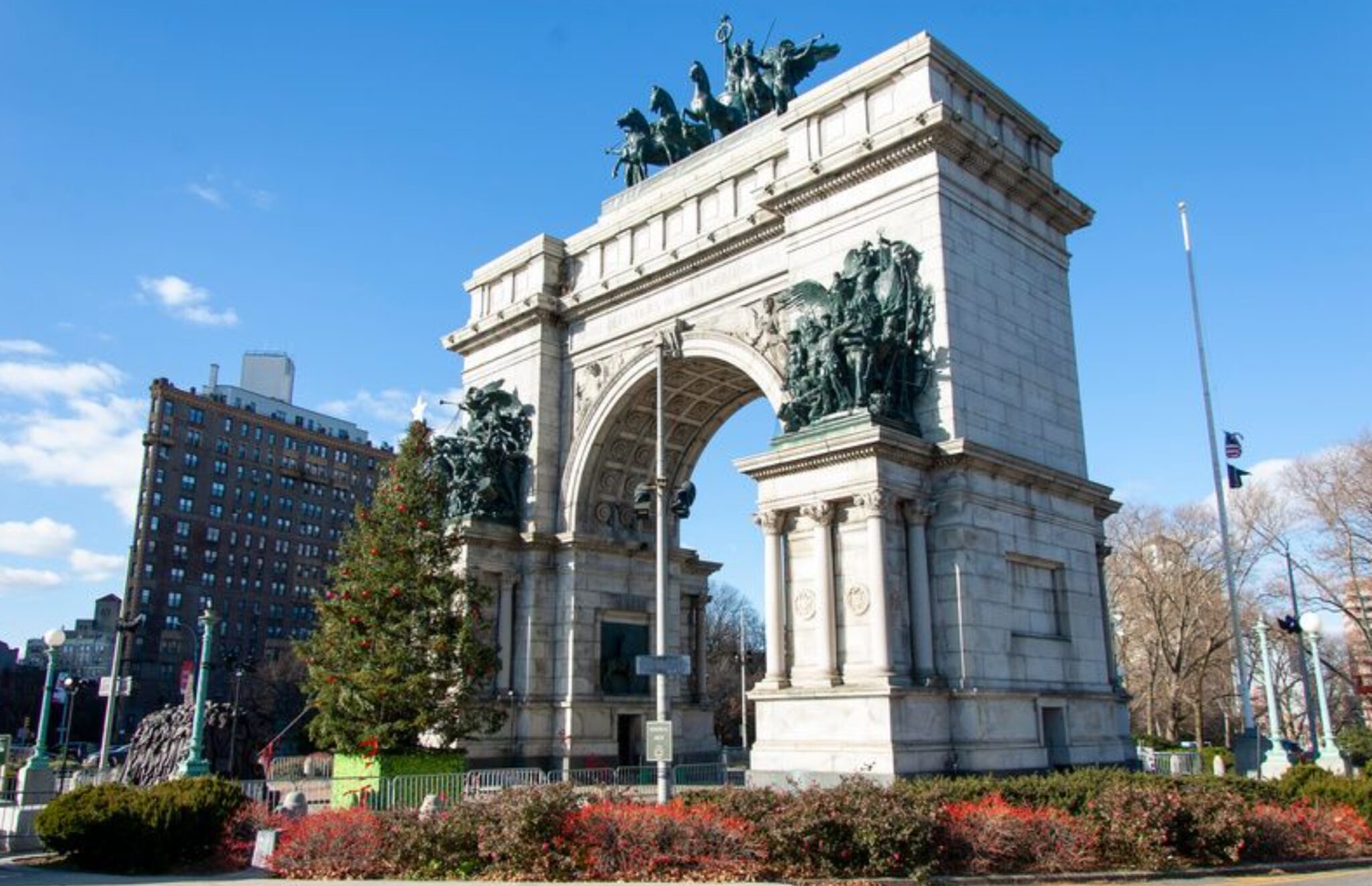

Standing proudly in Brooklyn’s Grand Army Plaza, the Soldiers, and Sailors Memorial Arch has been a monumental entrance to Prospect Park since its opening. It was built between 1889-92 to honor those who fought for the Union during the Civil War, and its cornerstone was laid by General William Tecumseh Sherman. A huge sculpture of the McMonnies Quadriga atop the arch was installed in 1898. Later, in 1901, two more sculptural groups symbolizing the army and navy were added on the south side on pedestals. Read more about the memorial on i-brooklyn.com.
History of the monument
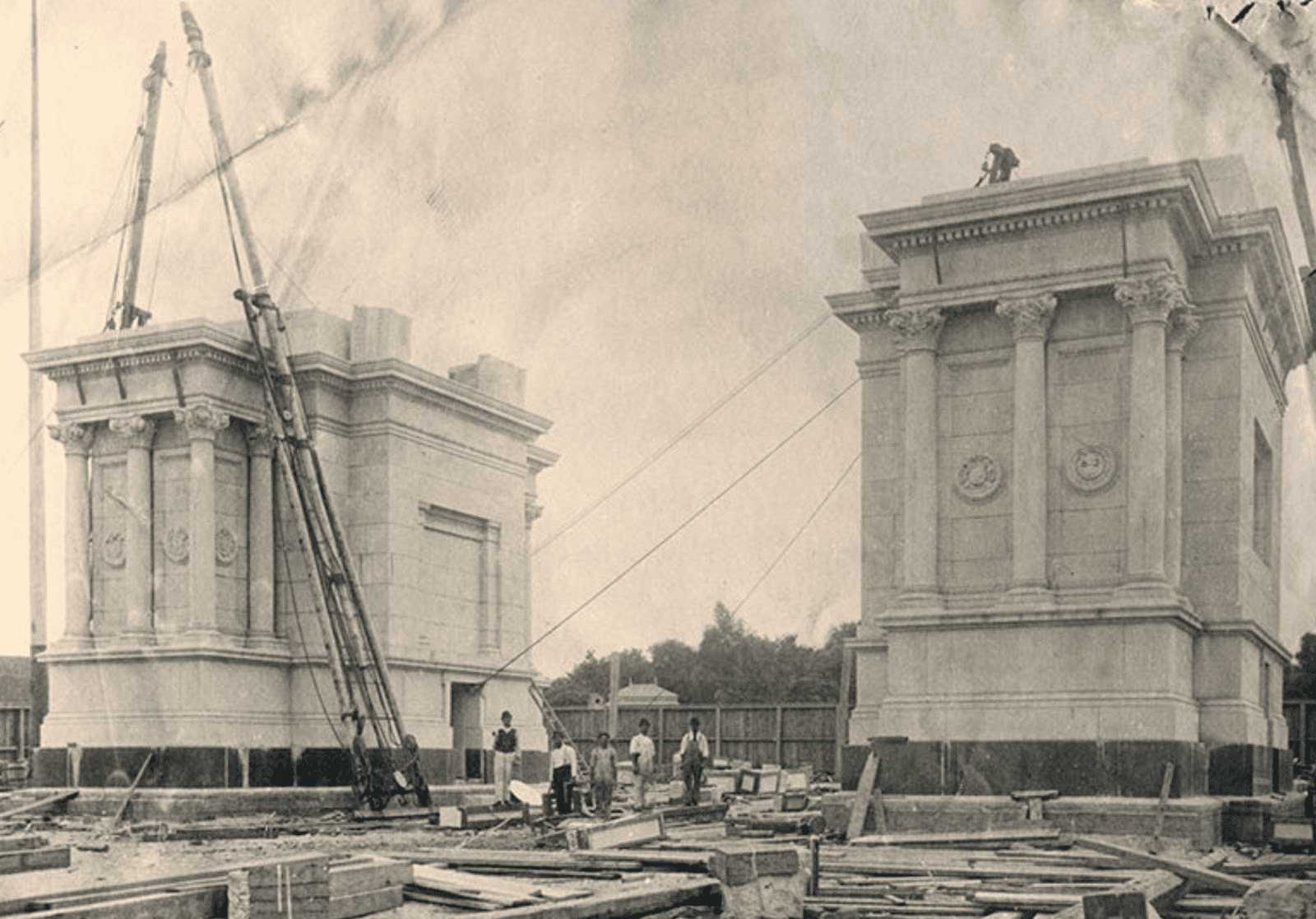
The granite monument to soldiers and sailors was unveiled in 1892. The official opening ceremony was attended by the then President of the United States, Grover Cleveland. It is known that the decorative medallions on the arch depict those Brooklyn regiments that participated in the Civil War. These images are, of course, symbolic.
This memorial was designed by architect John Hemingway Duncan. He submitted his project to a competition and won. The commission, which was formed to organize all the necessary work to create the monument, chose Duncan’s plan without the slightest hesitation, considering it the best among the others. A total of 36 applications were submitted for the competition.
According to the commission members, this was the only project that met the goal of erecting a memorial at this particular site in terms of its general idea and nature. In addition, they were impressed by the technical and artistic details that the author proposed, which distinguished it from other projects and from everyday life.
Despite the fact that the project belongs to the established type of memorial arches, it has a special personality. This statement of the commission members was confirmed after the memorial was erected, as it was the least similar to any previous examples. For his work, John Duncan received a reward of $1,000, and the local newspaper The Brooklyn Daily Eagle announced that the prize was won by a New Yorker. By the way, John Duncan’s next famous work was the design of Grant’s tomb in Manhattan.
The appearance of sculptures
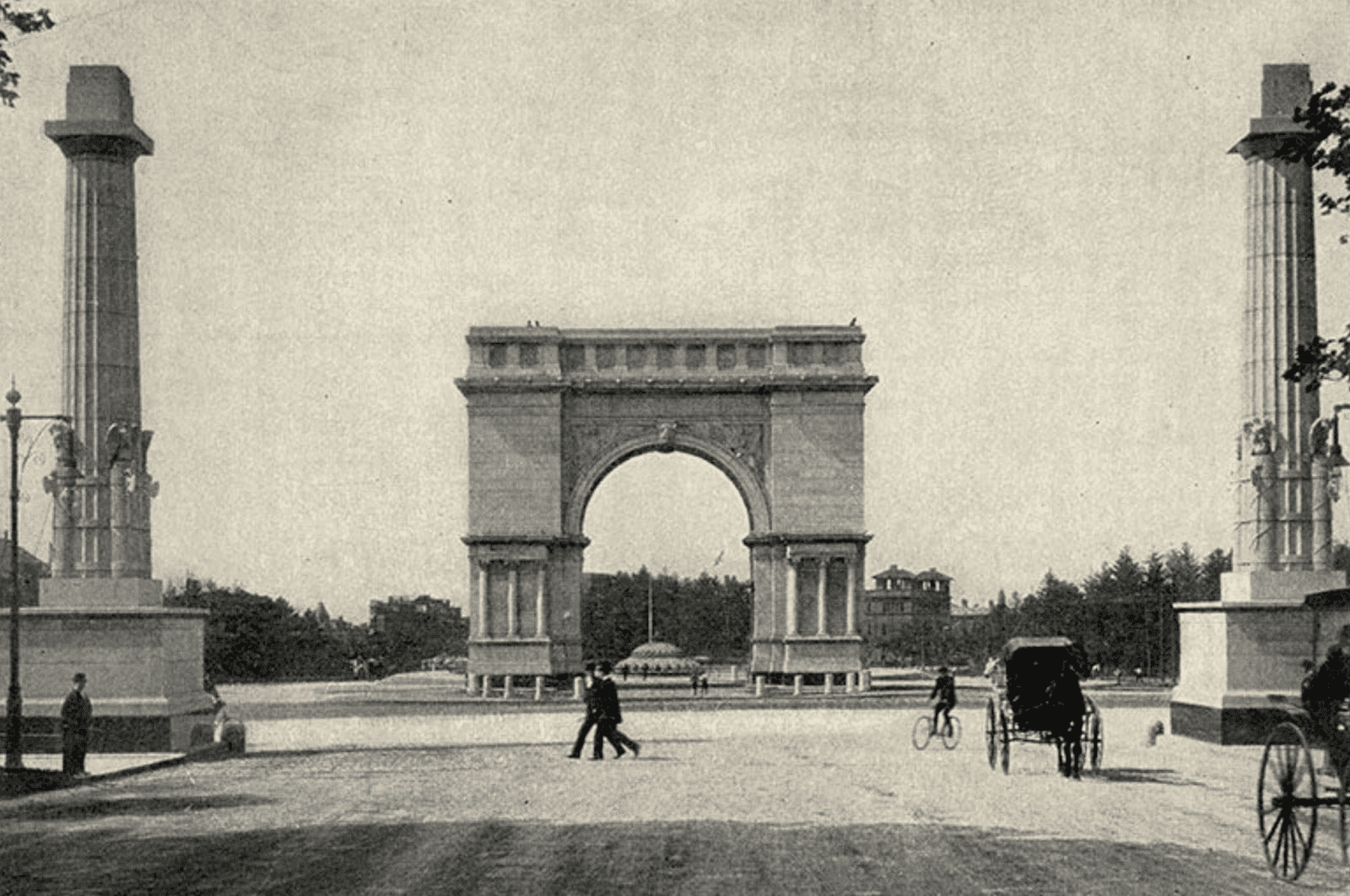
When the Memorial Arch of Soldiers and Sailors appeared on the Grand Army Plaza, there was some debate in society about whether the memorial was located in the right place. From the very beginning, this square was not the only place that was considered for construction. The commission spent a lot of time discussing the location. The main requirement was an isolated location, for example, at the end of the square, so that the monument would remain a memorial and not be perceived as a gate.
Later, it was decided to redesign the entrance to Prospect Park, for which the firm Mc Kim, Mead & White was hired. The work was led by Stanford White, who, while designing the entrance to the park, suggested that the Soldiers and Sailors Memorial Arch be updated as well. White wanted it to be in keeping with the new City Beautiful movement that swept the country after the World’s Columbian Exposition in Chicago in 1893.
The sculptures, including two groups of soldiers, a quadriga with the goddess Columbia on a chariot representing the United States, and the winged Victories that frame the arch, were created by Frederick McMonnies on behalf of the Parks Department. It was McMonnies who once designed the main fountain for the World’s Columbian Exposition, the controversial Civic Virtue for City Hall Park, and the statue of General Slocum on Grand Army Plaza next to the arch.
The huge quadriga sculpture at the top was installed in 1898, and two groups on pedestals representing the army and navy were added in 1901. Frederick McMonnies was partly influenced by the monumental ornamented arches of Paris, especially the Arc de Triomphe, as the sculptor lived in Paris for decades, studying and working at the same time. He worked part-time for Augustus Saint-Gaudens, where he met Stanford White by chance.
The first reconstructions
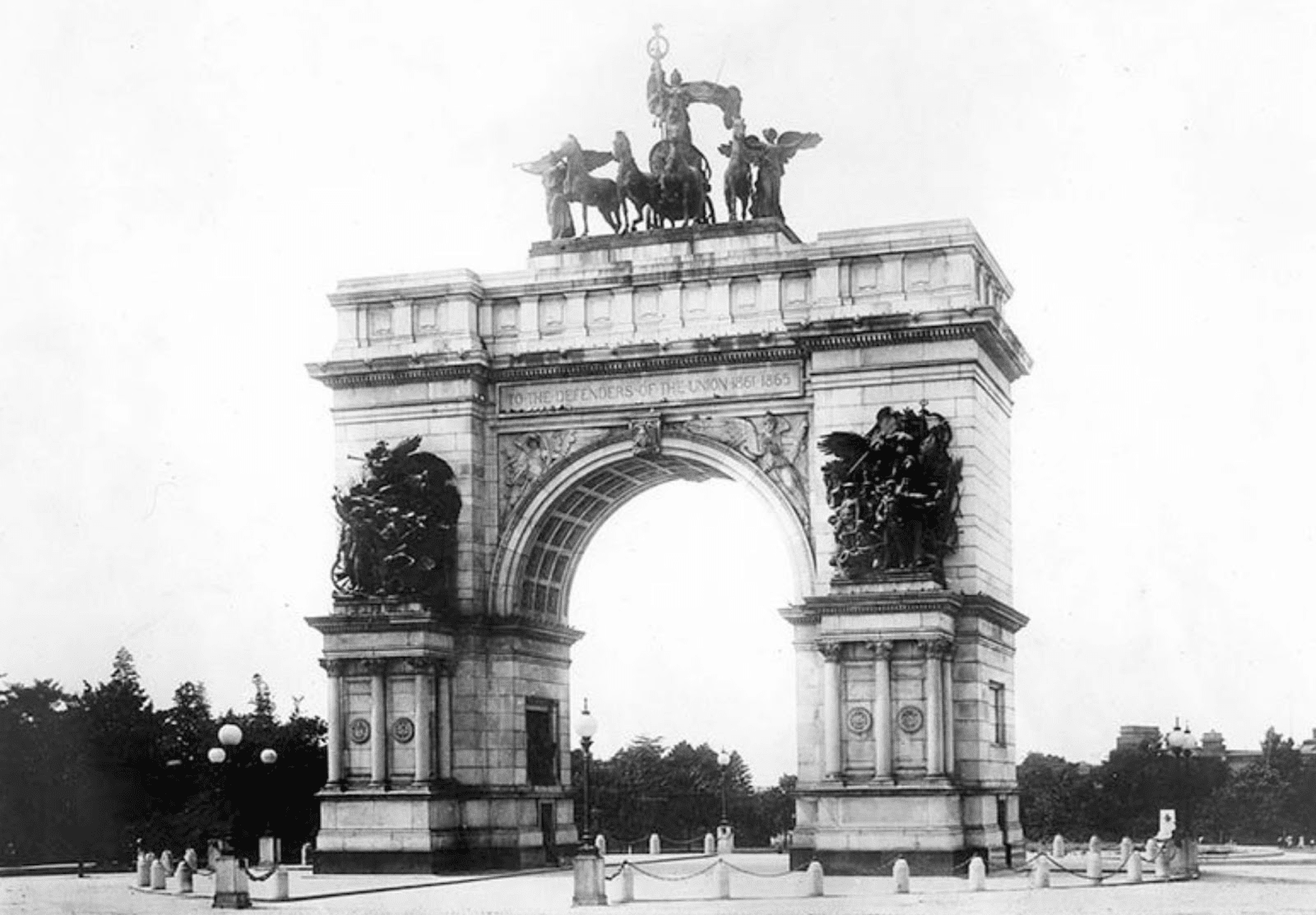
In 1973, the Soldiers and Sailors Memorial Arch was recognized as an architectural monument. But, according to the Prospect Park Alliance, at the time of recognition, it was in a very dilapidated state-the statue of Columbia had literally fallen off its chariot at that time. After that, in 1977-1979, the first restoration of the monument by the city authorities took place. Further work was carried out in 1989 and in the mid-1990s. All the statues were restored in 1999 as part of the New York City Parks Preservation Program.
Another restoration work began in 2021. At that time, their cost was $8.9 million, led by the Prospect Park Alliance and NYC Parks, with financial support from the city of New York. It was a special restoration because it was the first time the arch was scanned in detail by the engineering firm Atkinson-Noland & Associates. They used special radar and magnetic research.
This work was of particular importance, as the original drawings of the arch had been lost long ago. This research helped to study the internal structure of the arch and determine its internal condition. All this was done in a way that was previously impossible. By the way, as it turned out, the original arch had an iron gate in front of the door that let air in while closing the inside from overly curious passersby. This architectural detail was returned during the last restoration.
On June 5, 2025, the Prospect Park Alliance in New York City held a ribbon-cutting ceremony to mark the completion of the restoration of the iconic Soldiers and Sailors Memorial Arch at Grand Army Plaza in Brooklyn. This arch is considered the most important example of monumental public art of the borough. During the restoration work, the arch itself, the surrounding plaza and landscape mounds were restored.
Major restoration
In the last 50 years, this was the first major restoration of this iconic Brooklyn landmark. It included replacing the roof and reinforcing the historic structure with new steel beams, and creating a new internal drainage system. After laboratory tests, the team determined the composition of the stone mortar, Rosendale cement from the city of the same name in upstate New York, and used it during the restoration.
The granite masonry was re-set to remove years of build-up, stains, and delamination. Additionally, cracked and damaged stonework was replaced to match the actual stone from a quarry near the original source in Maine.
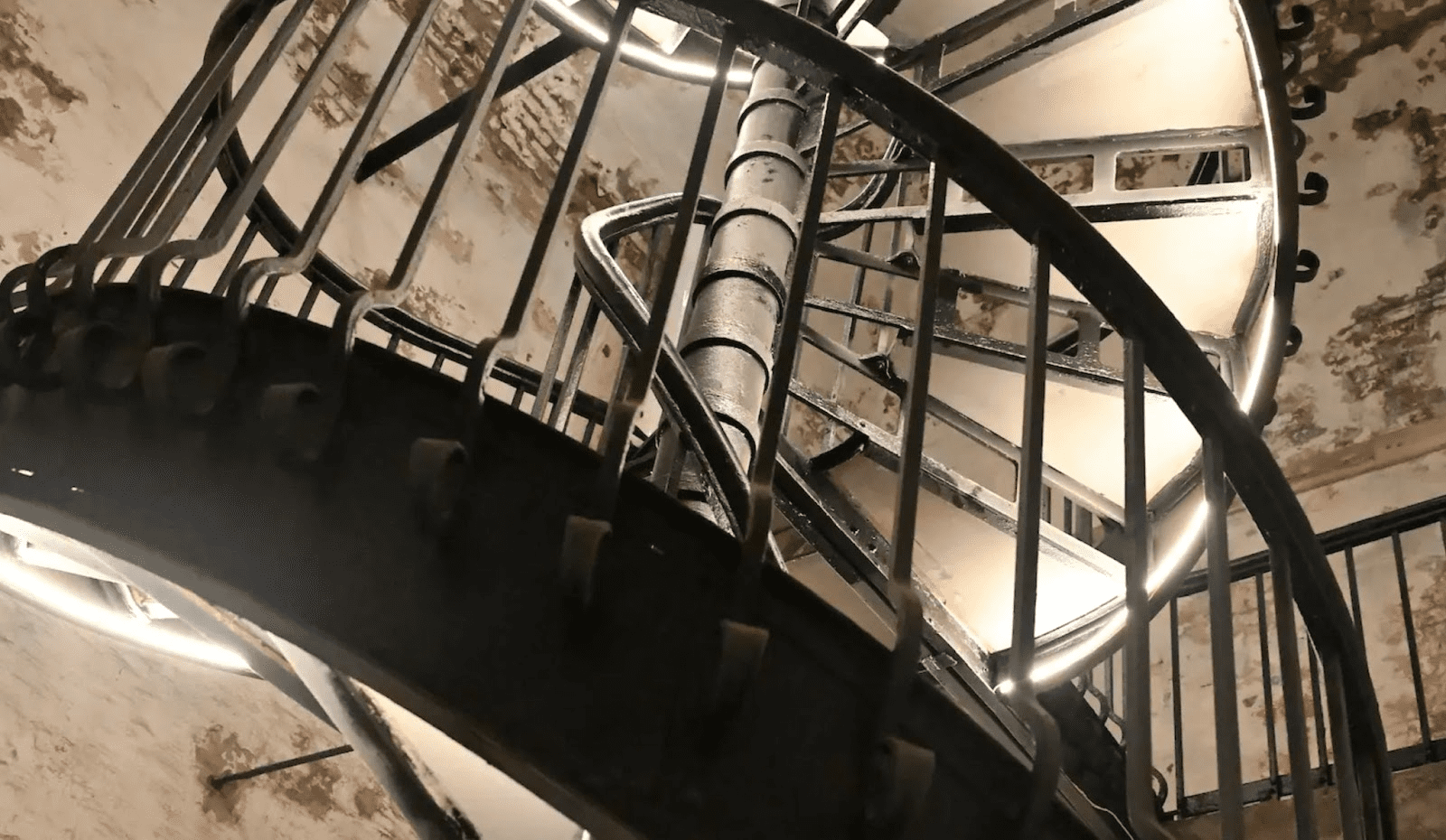
Interior elements, including the decorative bronze and cast-iron spiral staircase and entrance gate, were also repaired. In particular, both the staircase and the gate were carefully disassembled for restoration – the original elements were carefully cleaned, the destroyed parts were reconstructed, and the almost completely renovated piece was reassembled on site.
As for the modern aspects, new, energy-efficient lighting was designed. This was done to better showcase all the historical elements of the arch and its sculptures at all times. In addition, during the restoration of the arch, the NYC Parks Citywide Monuments Conservation Program took over the cleaning and restoration of the arch’s monumental sculpture.
In addition, the broken blue stone and granite pavers around the Bailey Fountain and the John F. Kennedy Memorial were restored to the square.
Sources: