
When the inventors of the first bicycle prototypes pedaled (or simply pushed off the ground with their feet, since pedals didn’t appear right away), they hardly planned to spark an urban revolution. The plan was simpler: to get around a little faster and not collapse from exhaustion after two blocks. Back then, no one had heard of traffic jams, parking shortages, or city noise—so no one was planning to “kill” the auto industry, which didn’t even exist yet.
But the irony of fate is that the exact opposite has happened. In cities where cars have long since gone from being a “symbol of freedom” to part of an endless problem, the bicycle has suddenly emerged as the simplest and most effective solution. It doesn’t sit in traffic jams watching drivers grow old, doesn’t force you to circle around looking for a free inch of asphalt, and leaves behind only the quiet rustle of its wheels. In Brooklyn, this is no longer just a hipster trend—it’s a way to move with the city, not get stuck in it. And if you look closely, this story is much deeper than just two wheels and a frame. Read more about it at i-brooklyn.com.
Brooklyn as the perfect environment for bicycles
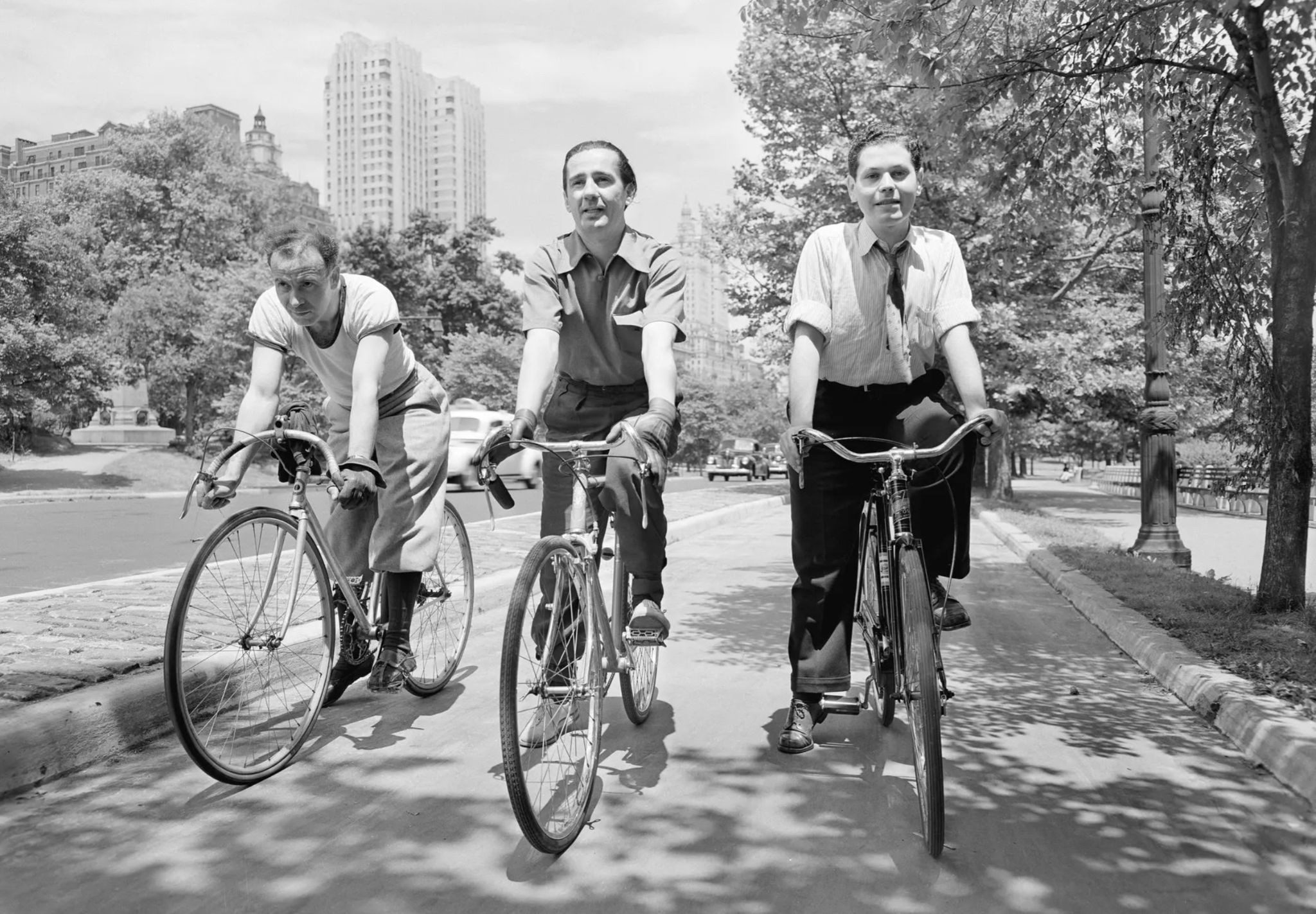
To put it simply, bike rentals emerged long before cities began to seriously consider traffic congestion and environmental issues. It was a pretty straightforward setup: you’d show up, pay, grab a bike for a few hours or a day—and go for a ride. It was a sort of tourist format, where the bike was more of a form of entertainment or a way to see the city at a leisurely pace. You returned it to the same place you picked it up, and that was the end of the “system.”
But over time, it became clear that this wasn’t enough for the city. People don’t need a bike “for the day”—they need a bike “right now.” That’s exactly how bike-sharing came about: a model in which the bicycle ceases to be temporary property and becomes part of the infrastructure. It is no longer tied to a specific location—on the contrary, it constantly moves along with the city.
The “pick up, ride, drop off” principle sounds almost too simple, but it’s exactly what changed everything. People no longer plan their trips in advance and don’t think about where to return the bike or whether they should even take it. They simply see a station, hop on, and ride. And that’s a different kind of behavior—faster, more spontaneous, and, importantly, more urban.
As a result, cycling ceases to be a separate activity. It becomes part of everyday life: riding to the subway, popping in for a coffee, zipping through a few blocks without any stress. And that’s when the rental ends and transportation begins.
Freedom of movement—but not for everyone
Brooklyn is all about density. It’s hard to call it a place where cars are truly welcome—unless you own a paid parking lot. Technically, there are cars here—and there are even too many of them. So many, in fact, that they start getting in each other’s way. All this metal flow creates an illusion of movement that usually vanishes at the very first traffic light.
Ultimately, owning a car in Brooklyn isn’t about status or speed, but rather about endless patience. And there’s no guarantee that at the end of a traffic jam, anything other than the next one awaits you.
There’s another factor that car dealership commercials rarely mention—air. When thousands of engines run in a stop-and-go cycle every day, the atmosphere becomes… heavier. The carbon footprint here isn’t some abstract number from the Paris Agreement but the exhaust fumes you breathe in while waiting at a traffic light. And against this backdrop, a bicycle looks like an almost suspiciously healthy choice: it doesn’t smoke, it doesn’t make noise, and it doesn’t demand anything from you except a little effort.
But the funniest part is something else. In a city where people are either sitting in an office or stuck in traffic, a bike forces you to move. No gym, no memberships, and no “I’ll start a new life on Monday” plans. You’re just riding to get coffee—and your heart gets a bonus workout (especially on the climb up to the Brooklyn Bridge, where it suddenly remembers it exists).
Brooklyn is the perfect place for this. It’s full of those “tricky” distances: too far to walk, but too silly to drive. The waterfront paths and bike lanes here don’t end as abruptly as most good intentions. These are neighborhoods where bicycles have long since ceased to be a rarity.
The logic is simple: it’s easier to roll along here than to stand still. And once you’ve driven past that endless line of stationary cars, you somehow don’t feel like going back to that metal “calm.”
Citi Bike as the new “city subway”
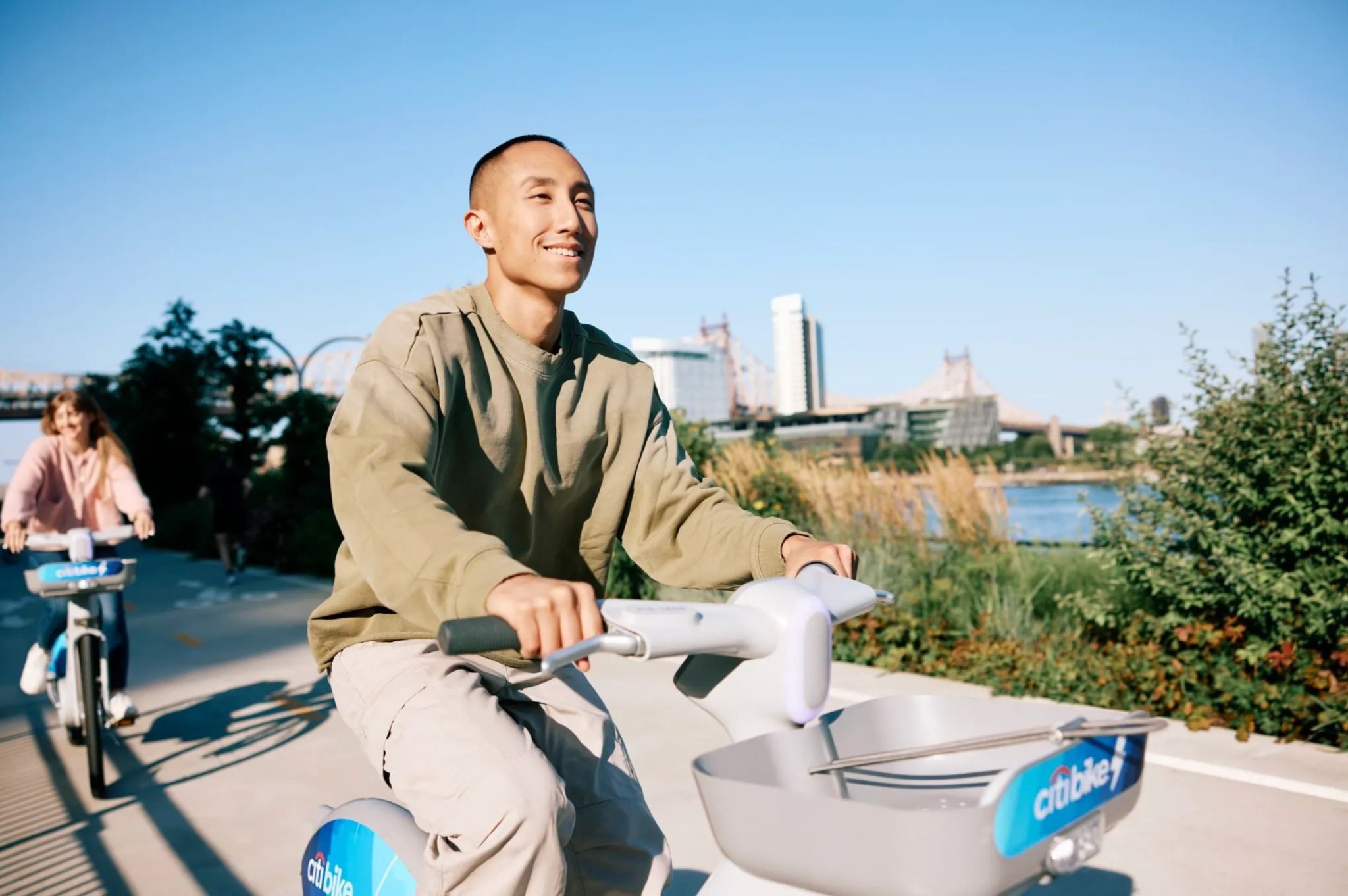
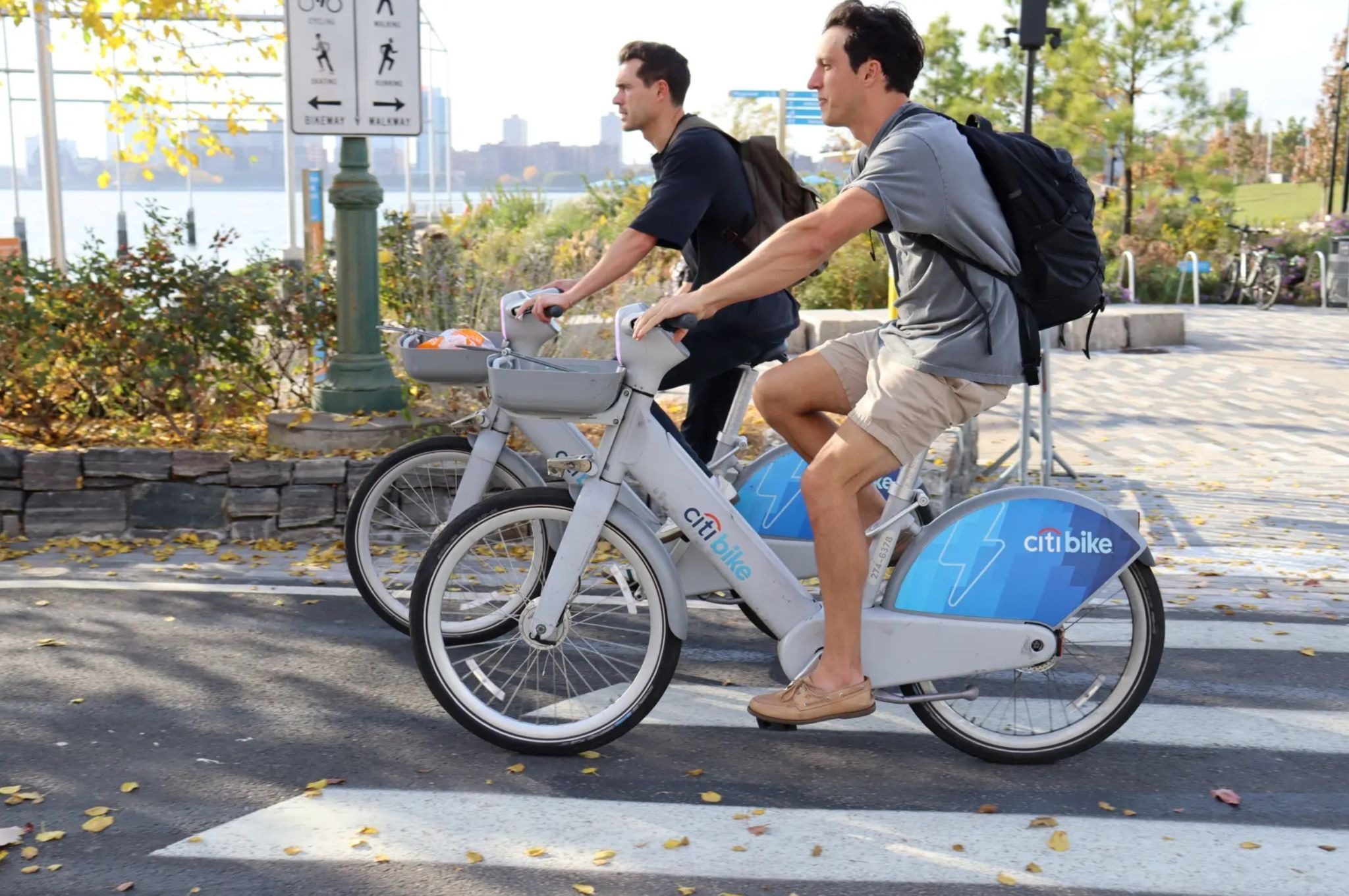
It’s no surprise that bike-sharing has flourished against this backdrop. In Brooklyn, the bicycle has long since ceased to be an object of romantic affection. No one thinks of it as “my trusty steed” waiting for the weekend in the garage anymore. Here, people are more likely to “snatch” one up. In this sense, Citi Bike works like the subway—only without the underground tunnels, the distinctive smells of the platform, and the illusion that a schedule even exists.
The principle is almost insultingly simple: see a station, grab a bike, ride off, and drop it off at another station. No more drama about “Where am I going to park this?” or nightmares about it getting stolen along with the fence. It’s as if the city has lifted some of the burden of daily life from your shoulders and whispered, “Just pedal.” And, oddly enough, it worked.
And now for a bit of dry reality that sounds like a pretty good joke.
A single ride costs about five dollars for half an hour—the price of a decent latte, after which at least your muscles won’t ache. There are daily options, there are annual subscriptions, and it all feels like you’re not buying transportation but the legal right to outpace the system. It’s like a micro-subscription to a reality where you don’t have to wait in line for fresh air.
The stations don’t have any kind of sacred geography—they’re simply everywhere people actually need to be. But therein lies the main irony: the system works perfectly—until you need it. During rush hour, you inevitably encounter two states of Brooklyn Zen: either there isn’t a single bike when you’re running late, or there’s no open space when you finally arrive. And then begins a light meditation on the theme of the “around the block” route.
That’s the beauty of it. You pick up a bike using a QR code just as casually as you open your news feed. No attachments, no names for the bike. Just the discipline of the system, which sometimes makes you a little anxious due to a lack of available docks. It still remains the fastest way to get from point A to point B without losing faith in the city’s logic.
What’s next: Where is Brooklyn’s cycling scene headed?
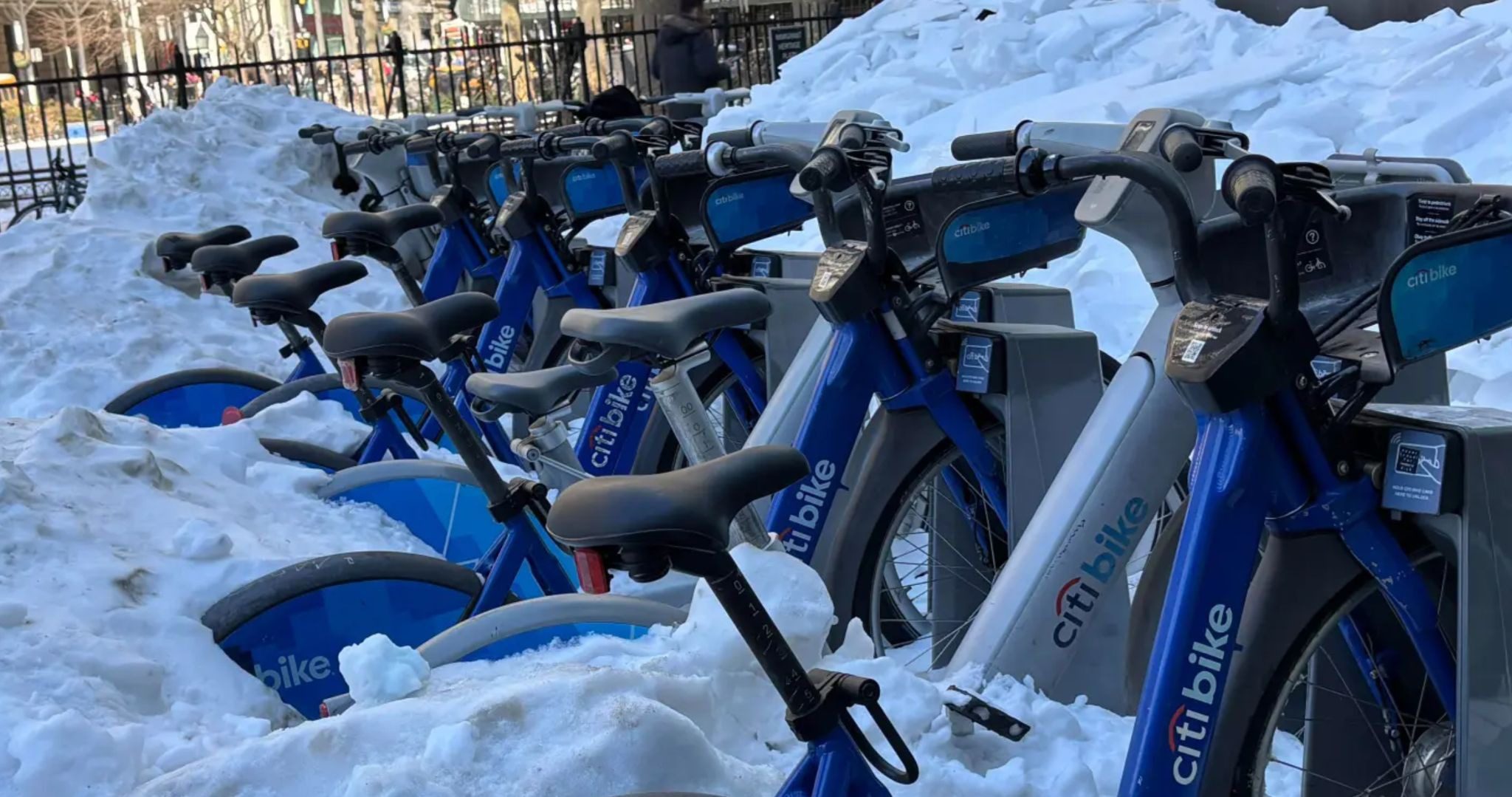
From the vantage point of a bicycle seat, Brooklyn looks completely different than it does from a fogged-up taxi window or from the depths of the subway, where you find yourself studying the cracks in the ceiling. A tourist who has heroically saddled up a rental bike sees the city as a vibrant slideshow: a bridge, the waterfront, a coffee shop with a line for matcha, another bridge. They rush through the city, trying to “see it all,” and usually look like someone who accidentally stumbled into a video game on the hardest difficulty, where the final boss is a yellow taxi.
Brooklyn—and indeed all of New York—is currently undergoing a slow recovery: the city is trying to cure its painful addiction to four wheels and metal. Bicycle infrastructure is taking root in the asphalt, not as pretty scenery for postcards, but as a vital necessity for those who don’t want to spend their old age stuck in traffic on the Brooklyn–Queens Expressway.
Of course, the cars haven’t disappeared—they’re still here, providing the backdrop and honking their horns. But the city has clearly split into two parallel worlds: the world of those who stand there gloomily paying for gas and the world of those who happily pedal their way past them.
Sources: