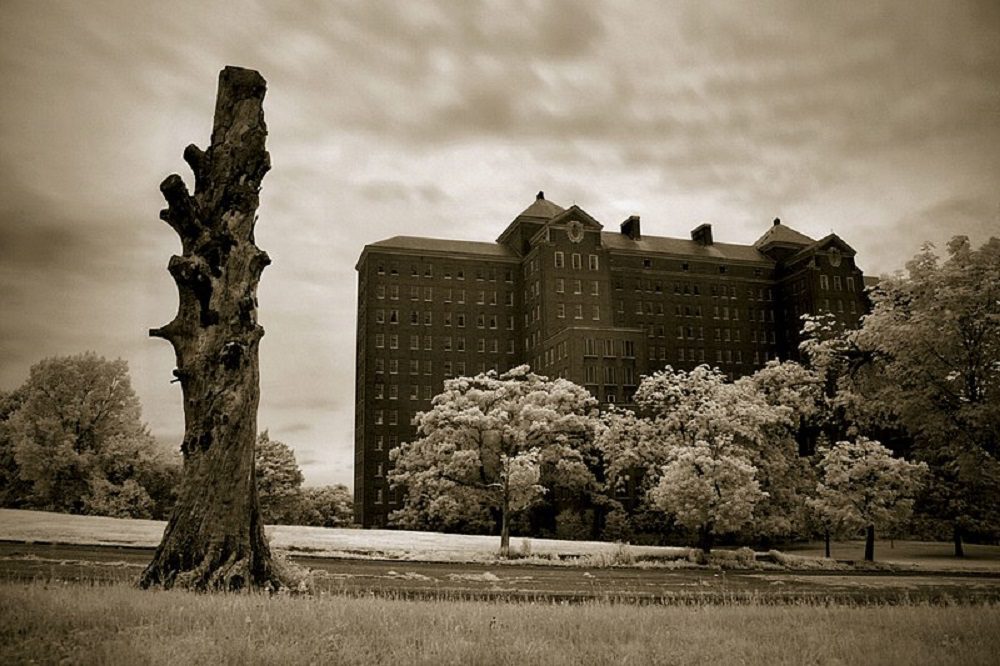

Kings Park Psychiatric Center, commonly known to locals as “Kings Park Asylum,” was a state-run psychiatric hospital located in Kings Park, New York. The facility operated from 1885 to 1996, when the State of New York officially shut it down, transferring its remaining patients either to Pilgrim Psychiatric Center or releasing them. For a deeper look into the history of Kings Park, visit i-brooklyn.
Innovative Beginnings
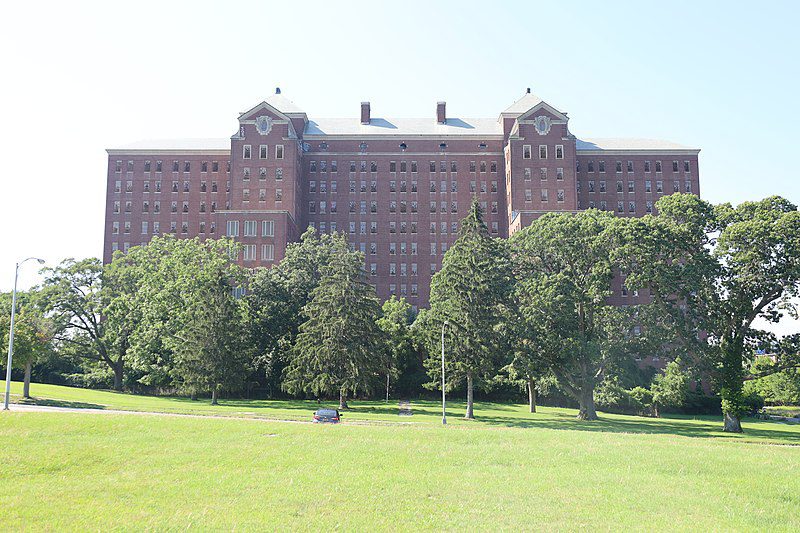
Kings Park Psychiatric Center was founded in 1885 by Kings County (Brooklyn) in neighboring Suffolk County, near the St. Johnland Society, an institution founded by William Augustus Muhlenberg. This was before Brooklyn was consolidated with Queens, Manhattan, Staten Island, and the Bronx to form Greater New York.
For the first 10 years, the hospital was officially known as “Kings County Asylum,” named after Kings County (Brooklyn), which funded and operated it. At the time, it was considered revolutionary, as it represented a radical departure from the overcrowded, abusive mental institutions of the era.
Built to relieve overcrowding in Brooklyn’s existing asylums, Kings Park followed the “farm colony” model, where patients worked on agricultural tasks such as feeding livestock and growing vegetables. This manual labor was seen as a form of therapy, aimed at helping patients regain a sense of purpose and stability.
The “Park of Kings”
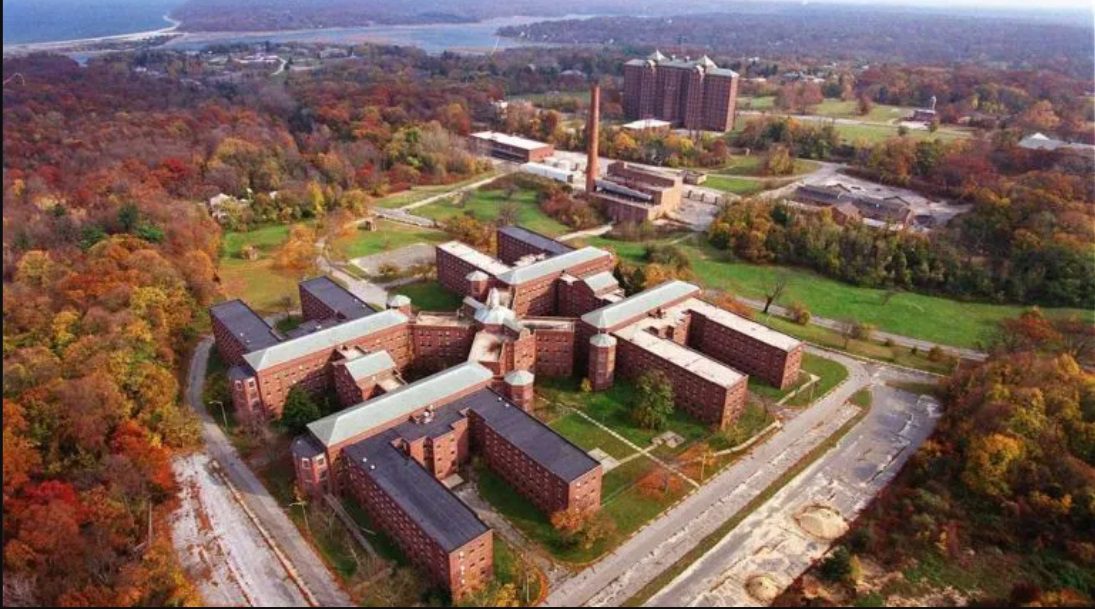
However, Kings County Asylum eventually succumbed to the very problem it sought to avoid—overcrowding. In 1895, the State of New York took control of the institution, renaming it “Kings Park State Hospital.”
The surrounding area, previously known as Indian Head, adopted the name “Kings Park”, which remains to this day. Over time, the state transformed the hospital into a self-sufficient community, complete with:
- Its own farmland for food production
- Its own power plant for heating and electricity
- A private railway line connected to the Long Island Rail Road
- Housing for staff members on the hospital grounds
As the patient population grew in the early 20th century, Kings Park expanded significantly. By the late 1930s, the hospital ran out of land and began building upwards instead.
The most iconic structure, a 13-story psychiatric ward, was designed by state architect William E. Haugaard and completed in 1939. Known as “the most famous asylum building on Long Island,” it housed geriatric patients and those with chronic physical illnesses.
Post-World War II Growth
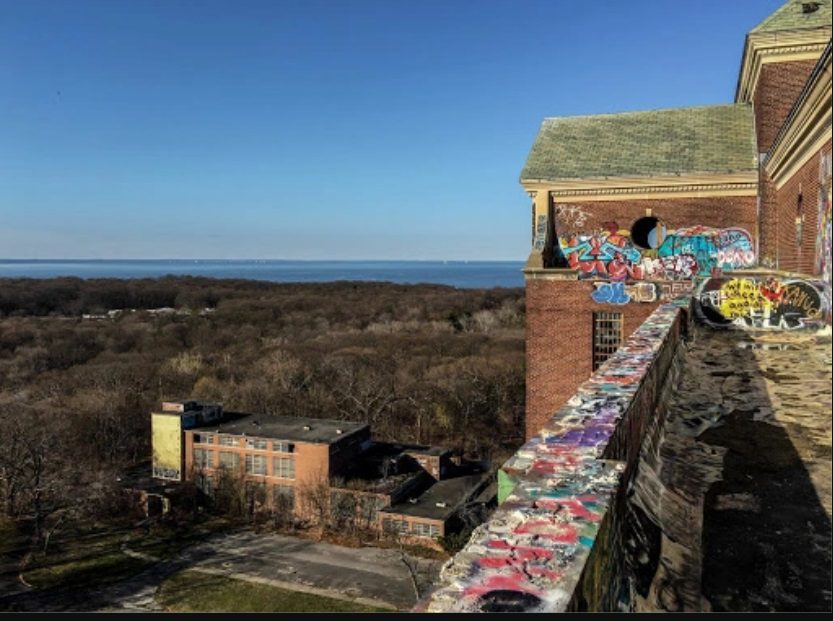
After World War II, the patient population at Kings Park and other Long Island asylums skyrocketed.
By 1954, the hospital housed over 9,303 patients. As Kings Park reached its peak capacity, the “rest and relaxation” approach of farm-based therapy was gradually replaced by more aggressive treatments, including:
- Frontal lobotomies
- Electroconvulsive therapy (ECT)
However, these invasive procedures were largely phased out after 1955, following the introduction of Thorazine, the first widely-used antipsychotic medication.
Thorazine allowed many psychiatric patients to live functional lives outside institutional settings, reducing the need for large mental hospitals like Kings Park.
The Decline of Kings Park
During the 1970s, legal activism and lawsuits pushed for deinstitutionalization, arguing that patients could receive better care in smaller, community-based facilities.
As a result, Kings Park Psychiatric Center began downsizing. With fewer patients, the hospital’s operations gradually wound down, leading to its eventual closure in 1996.