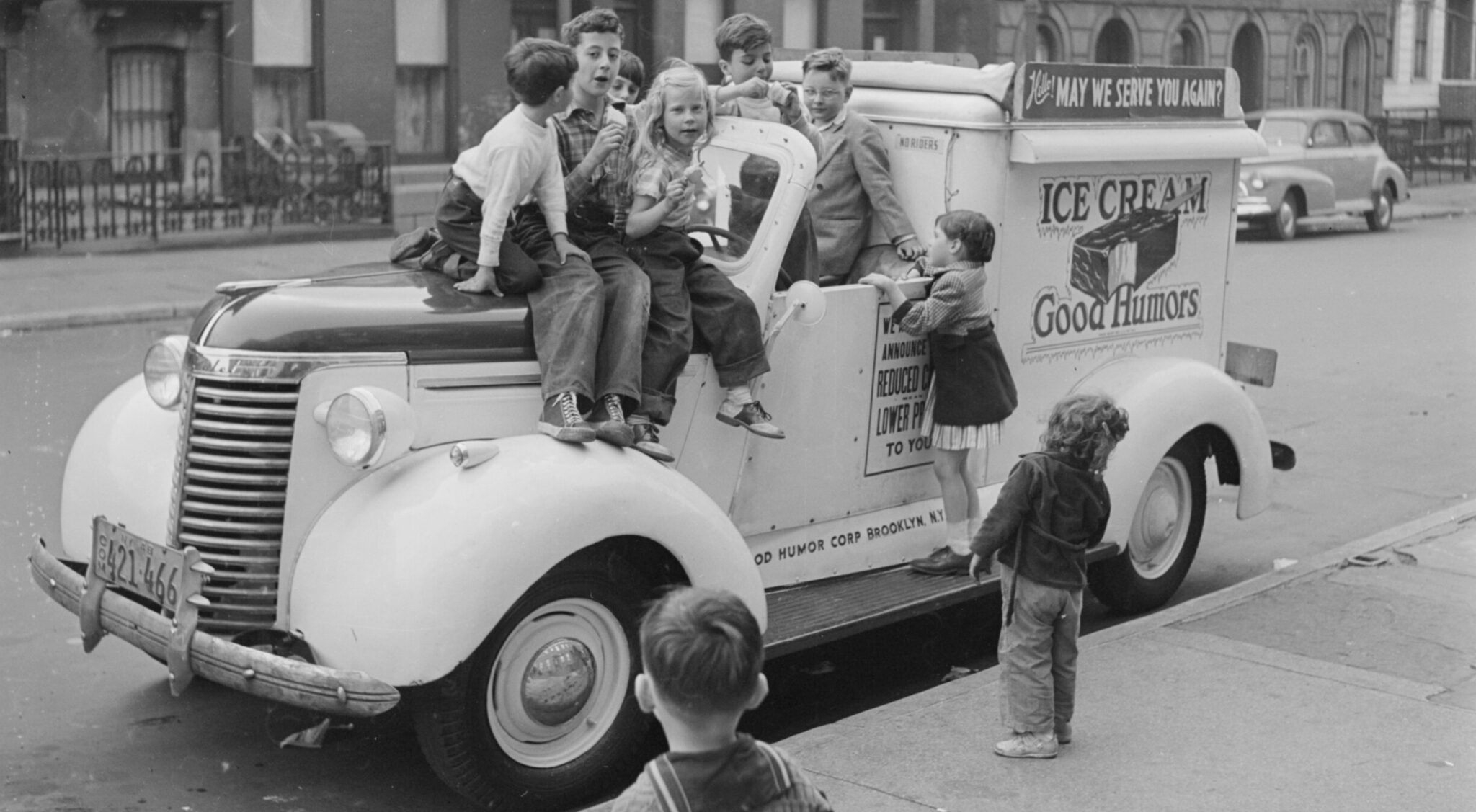

In 19th-century Brooklyn, as in New York City, ice cream was mostly enjoyed in trendy cafes, where it was prepared, as well as in “pleasure gardens.” Among the most popular flavors were vanilla, lemon, strawberry, and pineapple. This set of flavors appeared in the 1840s and 1850s.
Another notable evolutionary breakthrough in ice cream production was the advent of the hand-cranked machine in 1843. This device greatly simplified the production process. At the same time, Brooklyn companies such as the Knickerbocker Ice Company began supplying natural ice from Red Hook, making this confectionery product much more affordable. Read about the history of Brooklyn ice cream at i-brooklyn.com.
Versions of the appearance of the first ice cream
Legends are passed down from mouth-to-mouth, each one better than the last, telling stories about the appearance of the first ice cream. There are several main versions, one of which claims that Marco Polo brought ice cream from China. Another claims that Catherine de Medici brought it to France, and yet another attributes to King Charles I the creation of his own recipe for this delicious dessert and the invention of an ice cream maker.
Few people are concerned by the fact that there is no historical evidence to support any of these beautiful and colorful legends. For example, the famous merchant and traveler Marco Polo did not bring ice cream to Europe; moreover, he was unlikely to have been to China. Therefore, it can be argued that most of these myths were brought in by the Victorians.
If we take a serious look at the history of the famous dessert, the earliest evidence of the production of something very similar to ice cream is known in China during the Tang dynasty, approximately 618-907 AD. It was made from buffalo, cow, and goat milk, which was heated and left to “wander.”
Then, the resulting mixture was mixed with flour to thicken the product and camphor to add a specific flavor. After cooling, the dish was served. Judging by the fact that, for example, the emperor of the Tang dynasty of the Shan had a staff of 2,271 people involved in the production of the forefather of modern ice cream, including 94 glaciers, he liked it very much.
Ice cream in New York
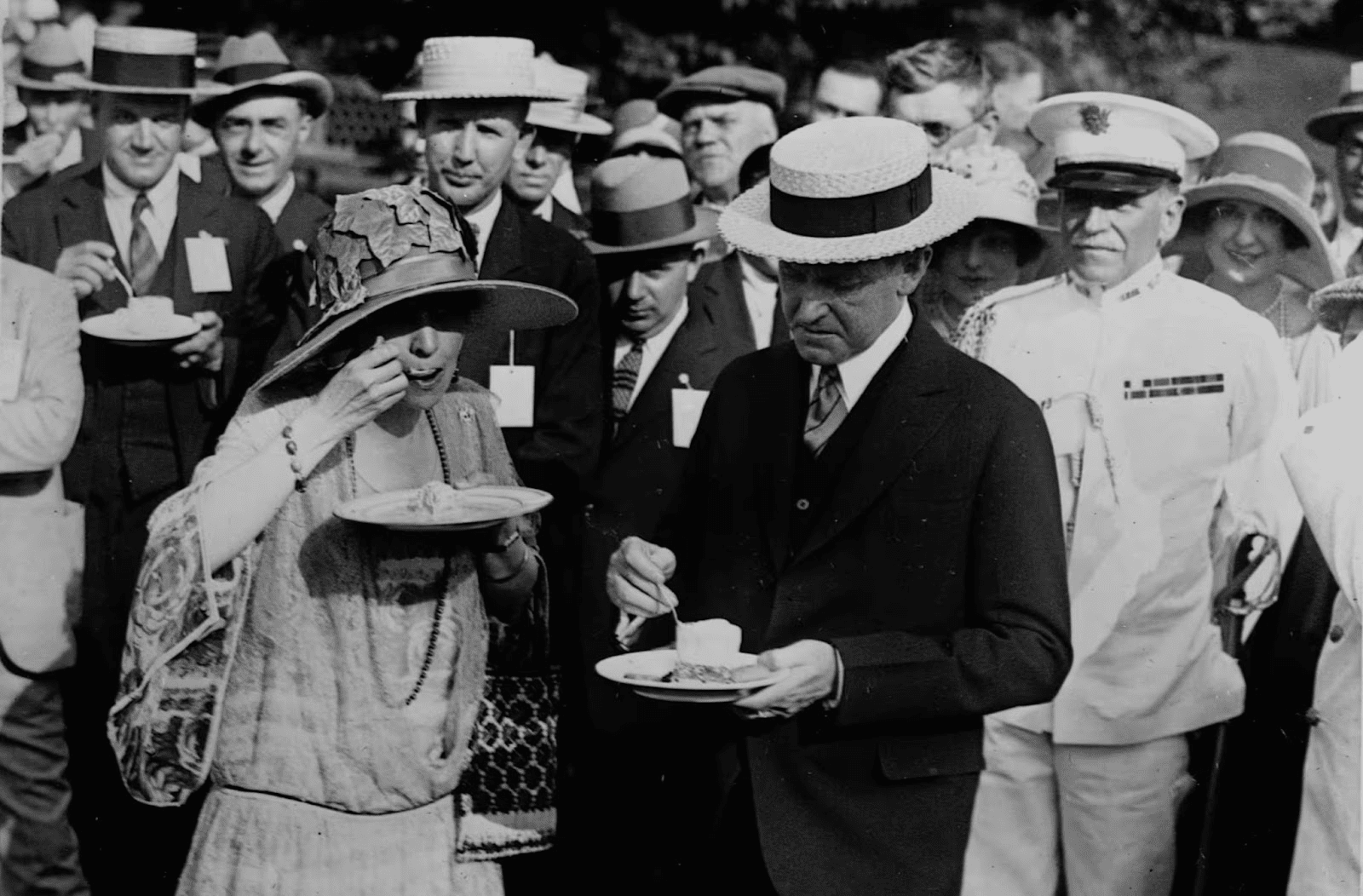
So, as it turns out, there is nothing better than a scoop of ice cream on a hot summer day. In the mid-19th century, the United States began to organize so-called ice cream parties. The themes of these parties were diverse, ranging from the Civil War and the temperance movement to Independence Day. Interestingly, these parties were not just charity events or church picnics — they were events that truly brought the community together.
By the mid-19th century, ice cream had become accessible to the general public in the United States. This was due to advances in dessert-making technology. We are talking about the first hand-held ice cream maker, invented and patented in 1843 by Nancy M. Johnson of Philadelphia. Before that, people made ice cream the old-fashioned way — by placing a container in a bucket of salted ice and stirring it.
Another reason why ice cream became more accessible in Brooklyn was that certain companies based in Brooklyn, which was still a sovereign city at the time, began to supply ice on a large scale. One such company was the Knickerbocker Ice Company. In the mid-19th century, long before the advent of gas and electric refrigerators, natural ice was very important. Especially when it came to making ice cream.
Ice was cut from rivers and ponds and delivered to New York for food storage, cooling drinks in homes and restaurants, and for many other commercial purposes. To understand the scale of the ice business in the 1880s, let’s say that in New York alone, 1.5 million tons of ice were sold, delivered from distribution glaciers located around the world.
The Brooklyn-based Knickerbocker Ice Company dominated the New York market. One of their several glaciers was located very close by in Red Hook, at the beginning of Smith Street, where ice was delivered by barges. And, of course, one of the important uses of ice was the production of ice cream, which was served in specialised parlours.
Incidentally, the first ice cream shop in America was located on Dock Street, now Pearl Street, in 1774. British confectioner Philip Lenz worked there, claiming in his advertisements that he sold ice cream of all kinds, as well as a variety of delicacies, including sugar plums, jams, and candies.
Brooklyn ice cream
It is known that ice cream vendors appeared on the streets of Brooklyn as early as the 1820s. Their work allowed less affluent people to enjoy this unrivaled dessert. It is also known that within a few decades, the “pleasure gardens” lost their elite status, turning into playgrounds for poor New Yorkers.
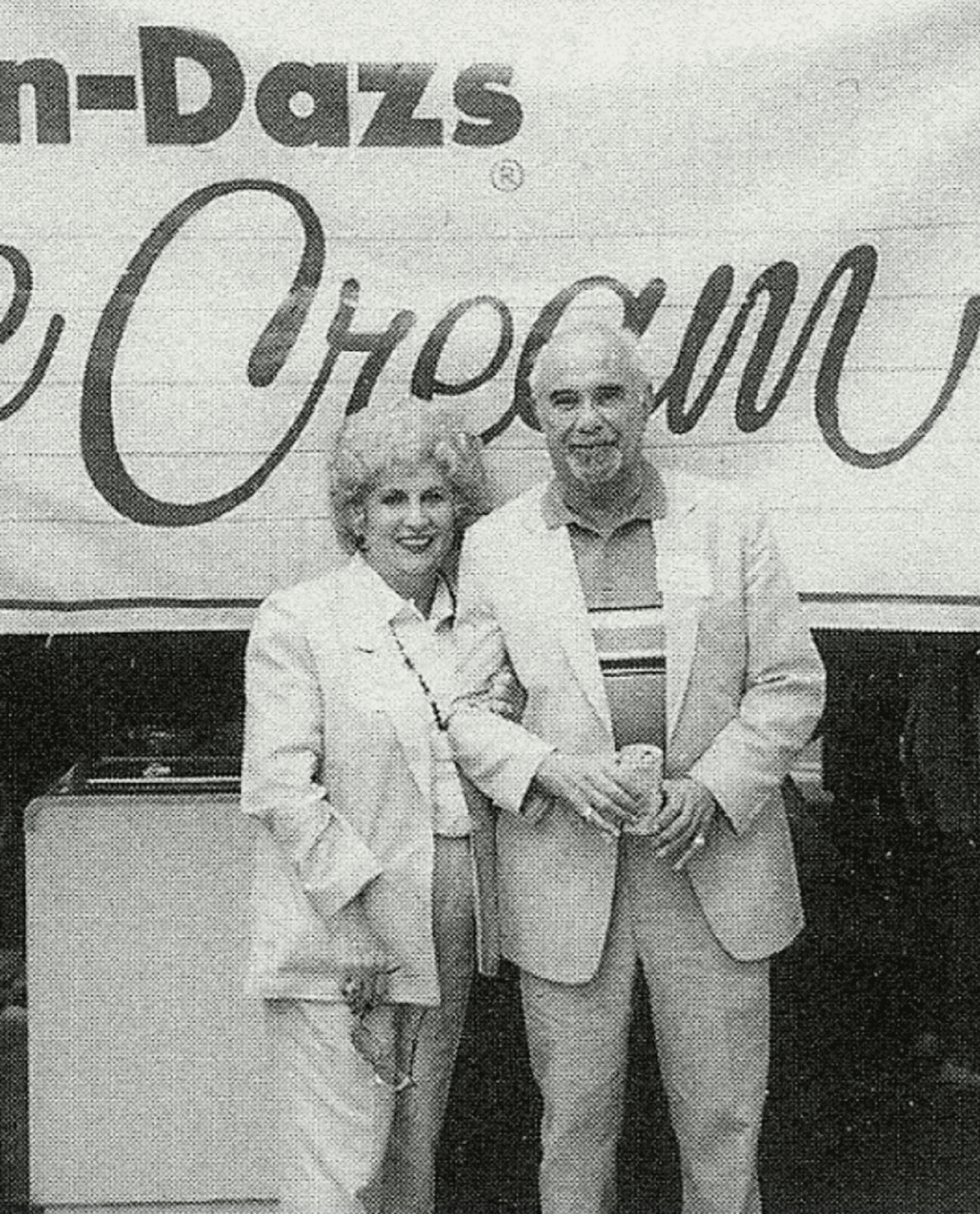
There is an interesting story behind Haagen-Dazs ice cream, which, although created somewhere near Scandinavia, or rather in the Bronx, was sold in Brooklyn. Haagen-Dazs became known as the product of two immigrant confectioners from Poland, Ruben and Rose Mattus. Reuben Mattus explained the name of this very popular ice cream, saying that they wanted people to look at the product and ask if it was imported ice cream.
In the 1960s, Reuben and Rose Mattus had their own vision of how to influence the world of ice cream. At a time when other manufacturers wanted to save money and pump air into their ice cream, the creative Poles decided to take a different path. They used only the highest quality ingredients, which put their rich, velvety ice cream in a category of its own. Although there were only three simple flavors — vanilla, chocolate, and coffee — combined with a playful name, it was not just a new ice cream brand, it was a new kind of luxury.
Later, Ruben’s daughter, Doris, opened the first Häagen-Dazs brand store in Brooklyn Heights. Brooklynites were delighted with the delicious, velvety ice cream that delighted with every scoop. Interestingly, that first store, opened in 1976, is still operating successfully at 120 Montague Street in Brooklyn.
Brooklyn ice cream factory
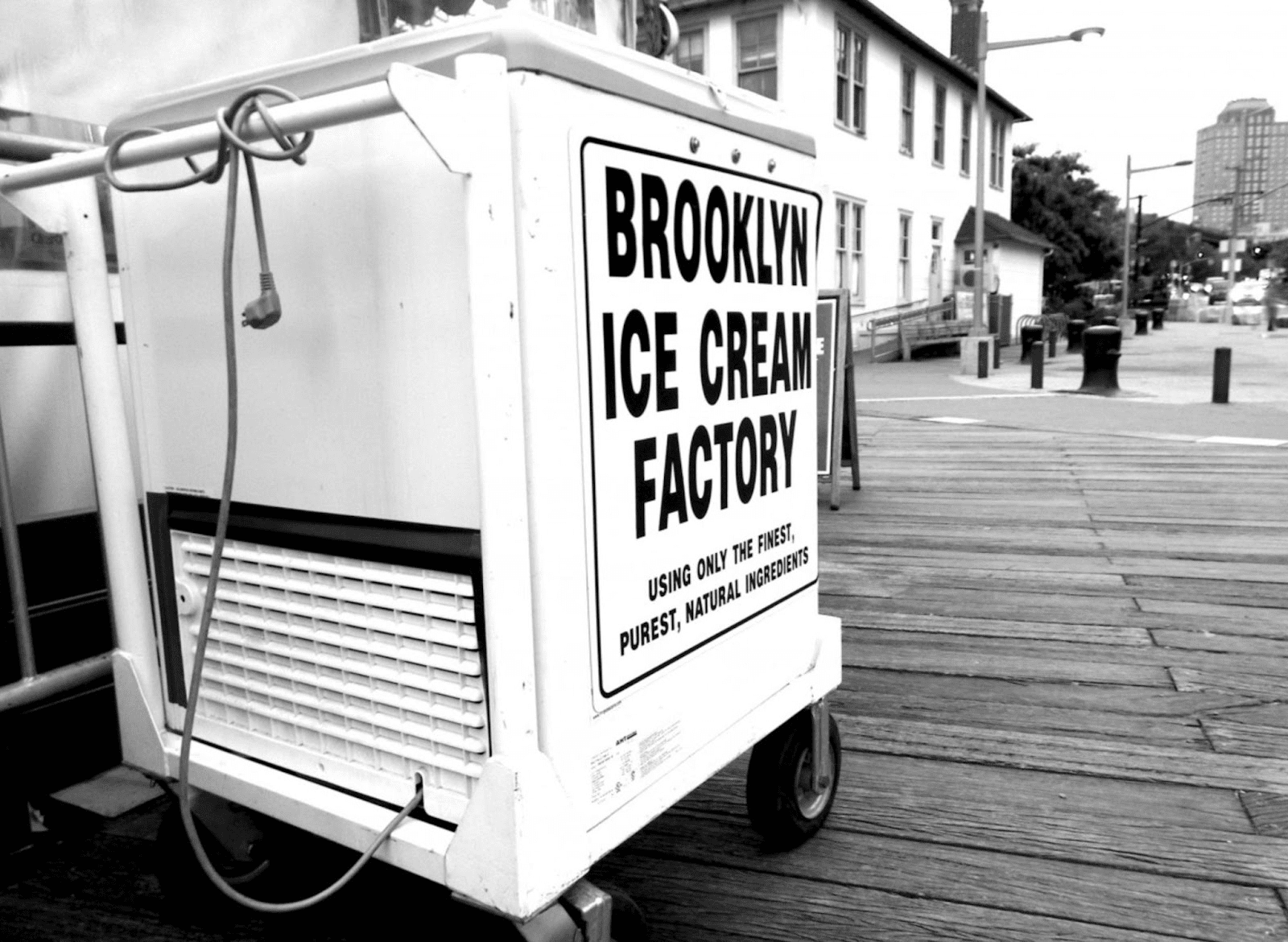
Смачні заморожені ласощі цілий рік пропонує своїм клієнтам Бруклінська фабрика морозива. У 2001 році, майже через два місяці після терористичних атак 11 вересня, Марк Томпсон відкрив для публіки фабрику морозива Brooklyn Ice Cream Factory.
Вона розташована навпроти поромної пристані Фултон. Підприємство обслуговує клієнтів вздовж пірсів парку Бруклін-Брідж, знаходячись за декілька хвилин ходьби від кампусу City Tech. Завдяки своїй близькості, це місце є популярним для відпочинку, особливо, коли хочеться втекти трохи далі від гамірного кампусу коледжу.
Тут пропонують усі класичні смаки, запрошують вас насолодитися автентичним шармом та вишуканими десертами, які, зазвичай, визначають враження від Brooklyn Ice Cream Factory.
Ложка дьогтю в бочці морозива
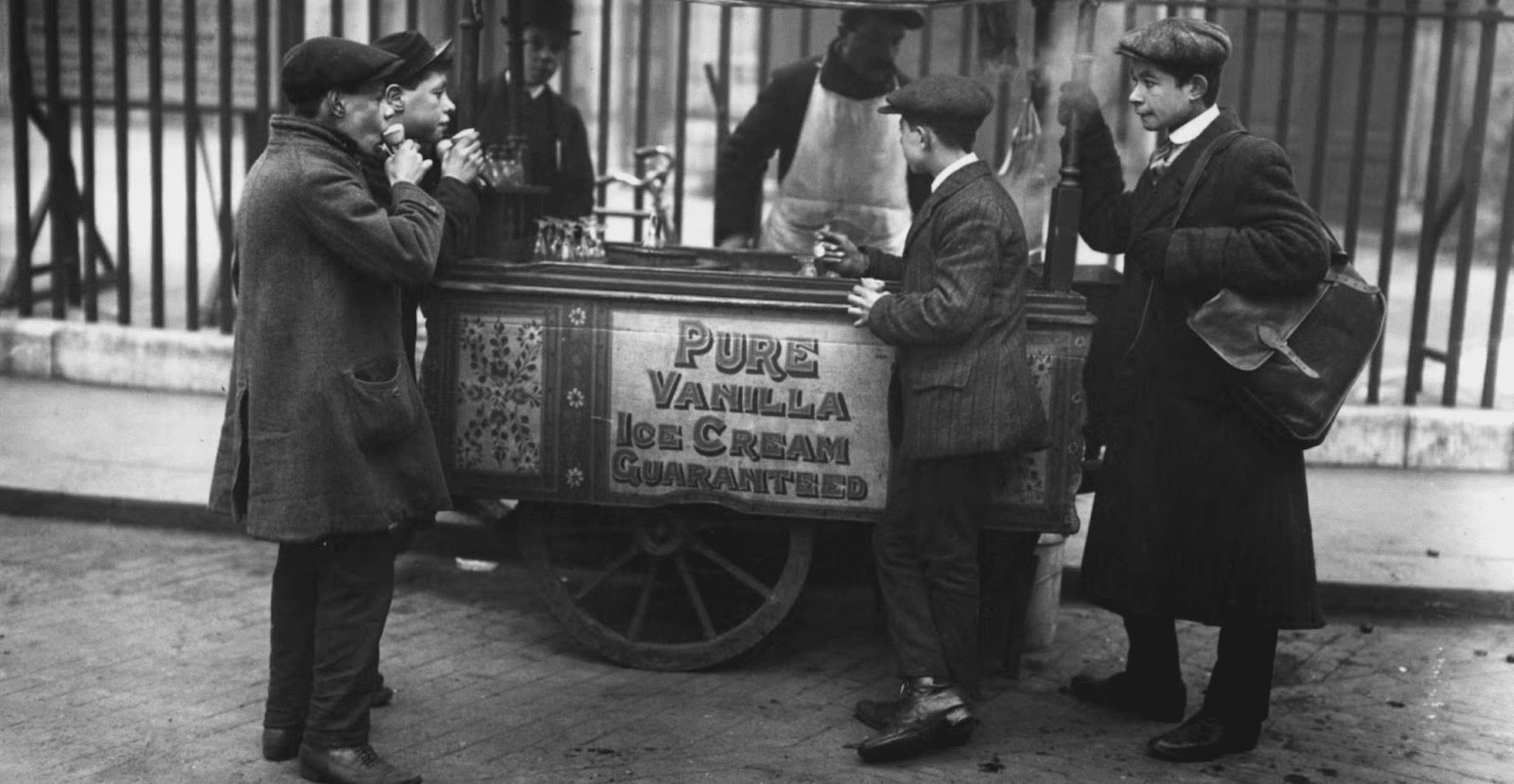
But let’s go back to the century before last. At that time, ice cream was a popular but little-studied dessert, so in addition to pleasure, it brought disease and death to American fairs and festivals.
The fact is that custard-based ice cream, which was eaten by the wealthy, remained too expensive for most people, but egg-free ice cream or cheaper flavored ice was widely available. It is still not known for certain what caused ice cream poisoning in those years. Doctors believed that Staphylococcus aureus bacteria were the cause, although they did not rule out other parasites.
Sources: