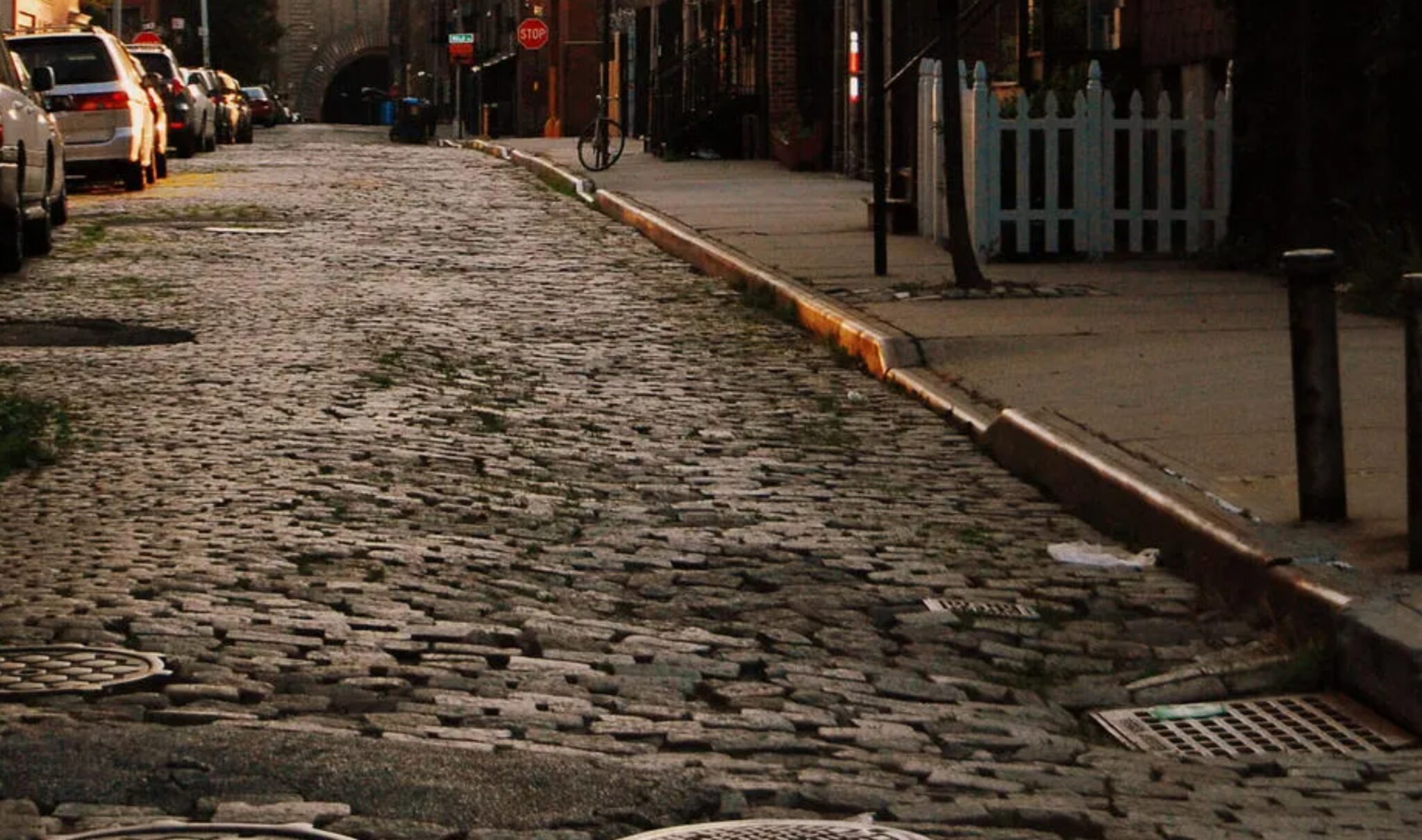

There’s one rather simple thing in Brooklyn that everyone has grown accustomed to over the years and no longer notices—until you step on it. It’s the cobblestones. There are particularly many of them left near the East River, where in some places they still stubbornly hold their ground, despite the asphalt and their advanced age. Yes, by today’s standards, it’s uncomfortable slippery after rain and certainly doesn’t make for a comfortable walk. But the cobblestones didn’t appear in the neighborhood by accident, and certainly not for beauty.
It used to be a city with “normal” problems—dirt, dust, and roads that simply disappeared after it rained. Back then, cobblestones weren’t just for decoration; they were the solution to these problems. Rough, simple, but quite effective. You can read more about this at i-brooklyn.com — but in short, it is precisely these small details that make up the city’s history, a history that usually goes unnoticed.
The History of Paving Stones: As Far Back as Before Our Era
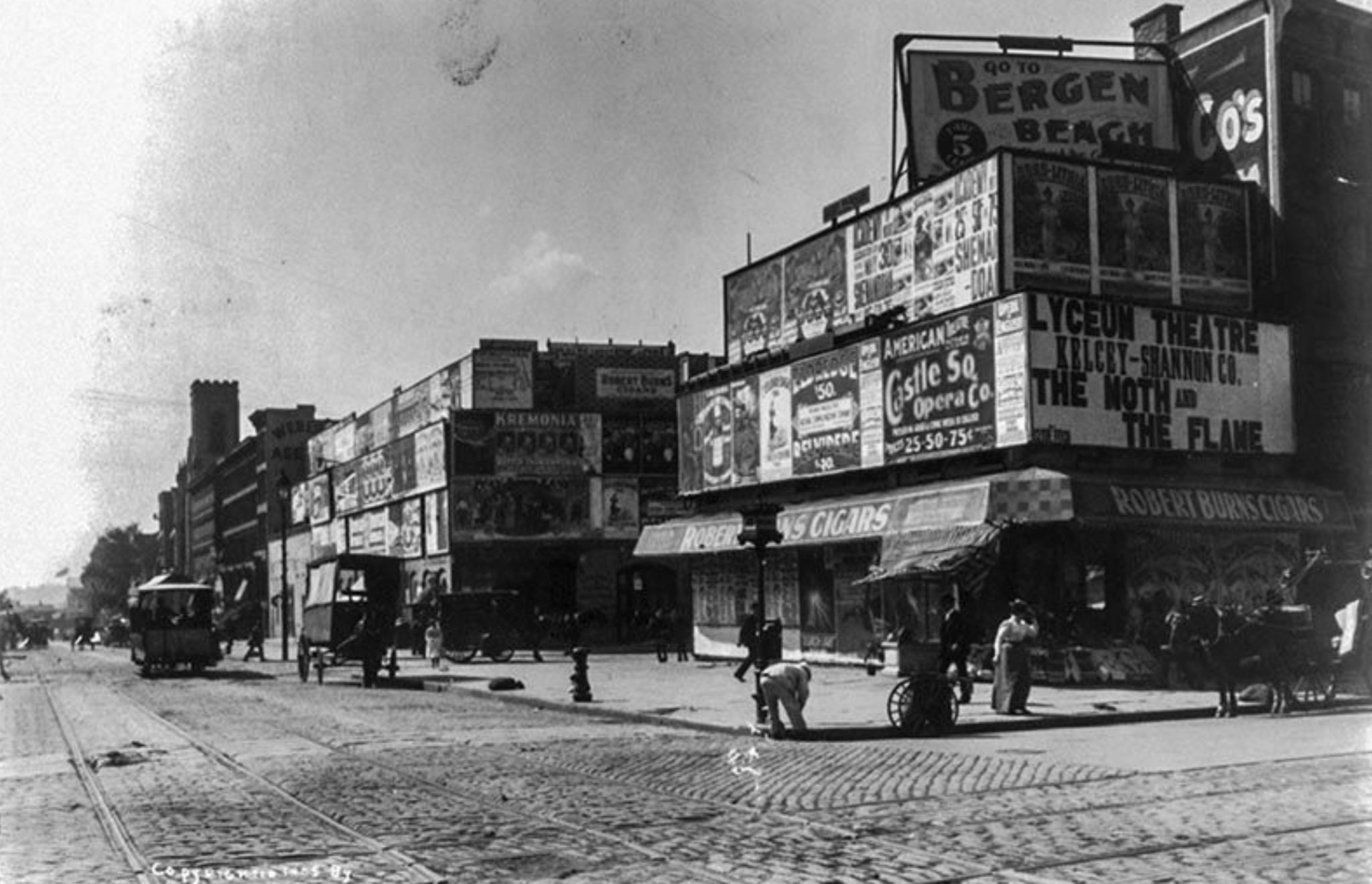
To put it simply, cobblestones didn’t come about because someone once wanted to make the roads “prettier.” Quite the opposite—it was an attempt to at least bring some order to a place where there was constant chaos underfoot. The idea of laying stones on the road is much older than it might seem. Even back in the days of the Roman Empire, people understood a simple truth: if you want the army, trade, and any movement at all to function, the road must be solid. Not “more or less dry,” not “we’ll manage to get through somehow,” but properly and well-constructed.
The Romans, of course, didn’t invent stone, but they were among the first to systematize its use. Their roads weren’t just random pieces of paving, but a carefully engineered structure: layers, drainage, and a prepared foundation. All of this was done so that rain wouldn’t turn the road into a swamp and wheels wouldn’t get stuck every ten meters. And, importantly, it worked. Some of those roads have survived for centuries—not in perfect condition, but enough to see that the idea was sound.
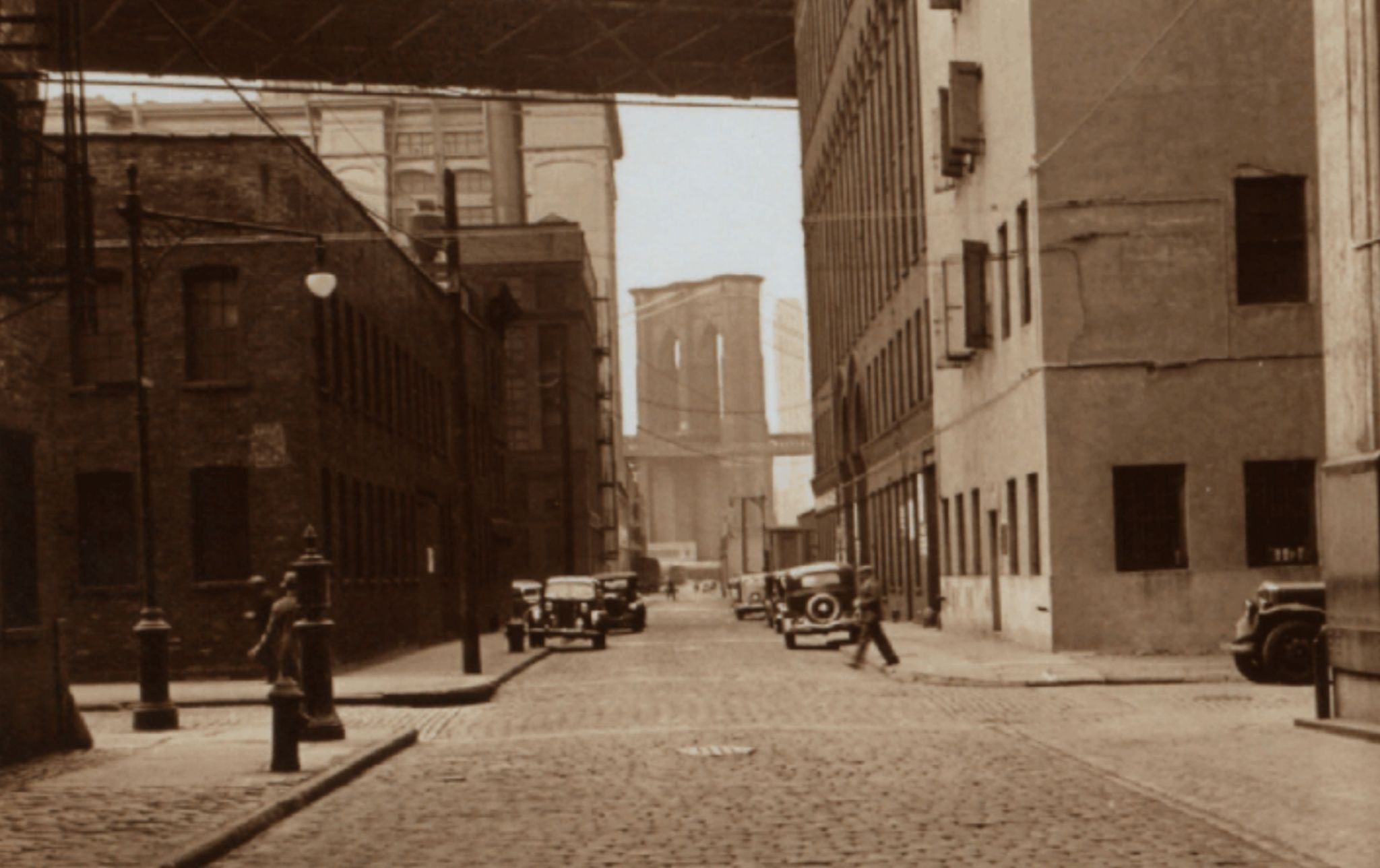
Later, Europe returned to this logic—no longer on an imperial scale, but with the same pragmatism. Stone became the go-to solution for cities that were growing faster than people could come up with a better alternative. Perhaps such roads were not convenient in the modern sense, but they were reliable. And most importantly—predictable: it rained, and the road remained a road.
So when cobblestones eventually make their way to Brooklyn, it won’t be some kind of innovation or architectural statement. It would be an almost obvious solution that humanity had been arriving at for centuries. That is, wherever there was too much mud and too little solid surface underfoot and under the wheels.
Save Brooklyn’s Roads
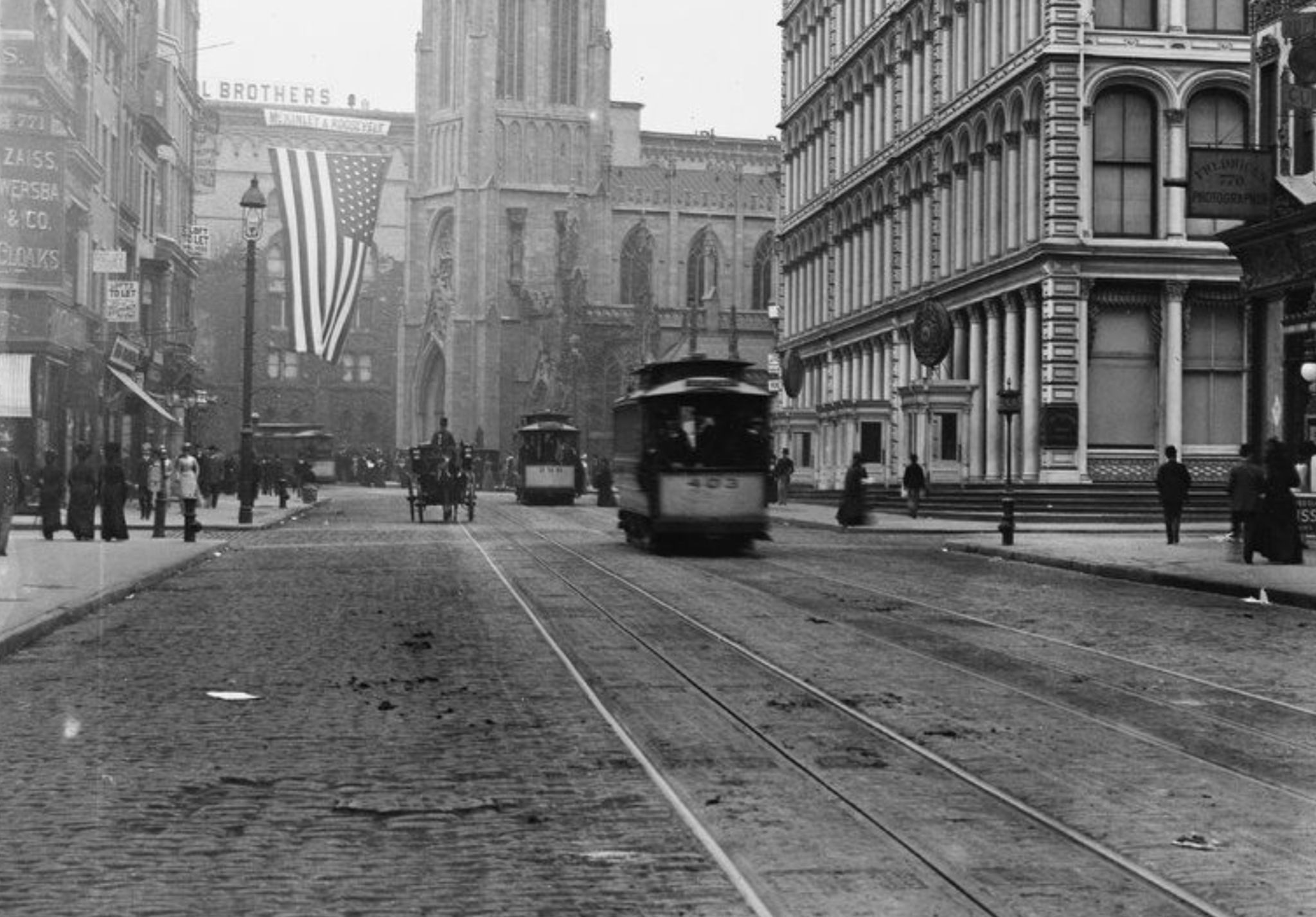
Especially since, in Brooklyn’s case, everything was much simpler and more down-to-earth than any talk of tradition or architecture. The city simply began to grow—quickly, chaotically in places, and, most importantly, as a port. Its proximity to the East River did the trick: ships came here, goods were unloaded here, and everything was constantly on the move. And very quickly it became clear that dirt roads couldn’t keep up with this pace.
Cargo was transported by horses and carts, and all of this regularly “wore down” the road surface. After rain, the roads turned into a muddy mess where the wheels of the carts got stuck—and with them, the entire logistics operation. For a port city, this was not just an inconvenience, but a problem that directly affected revenue, because the longer cargo sits, the more profit is lost. And here, of course, aesthetics are the least of the concerns.
The solution, in essence, was right there—and there was no need to invent it from scratch. European cities had already gone through this, and the experience was readily available. Stone paving had long proven itself to be a more or less reliable option in areas with heavy traffic, heavy loads, and dirt. So in Brooklyn, they simply did what had already worked elsewhere.
There is even a certain irony in how this stone ended up here. Often, it wasn’t purchased specifically for this purpose but was brought over as ballast on ships from Europe. It was the same granite that was later laid as Belgian blocks. In other words, while the ships were sailing across the Atlantic, they carried the stone for stability, and once they arrived here, they simply left it behind—and it literally ended up underfoot. Cheap, practical, and without any extra hassle.
Technical Standards for Brooklyn Paving Stones
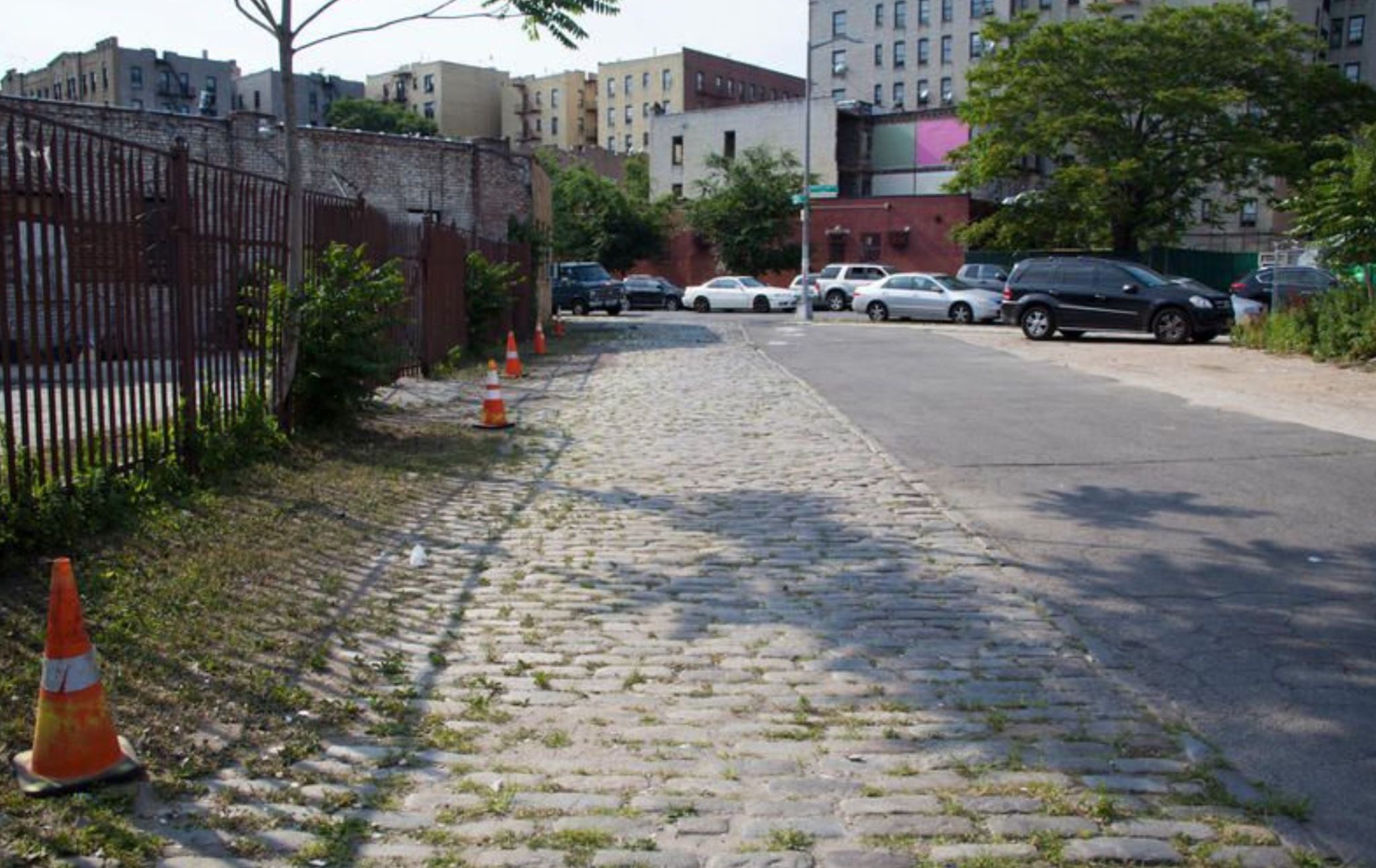
In practical terms, the paving in Brooklyn evolved not because of new ideas “for beauty,” but because of increased demands for load-bearing capacity and durability. Early road designs were quite simple: uneven natural stone, in some places almost unprocessed, laid in such a way that it would at least somehow hold the surface together. But such surfaces wore out quickly, subsided, and were inconvenient for wheeled vehicles.
Eventually, a more standardized format came into use—the so-called Belgian blocks. These were stones that were relatively uniform in size and shape, fitted tightly together. Unlike rounded stones, which appeared more “random,” the cubic shape allowed for an even distribution of load, which reduced the movement of individual paving elements.
Another important point is the base beneath the paving stones. It was a properly prepared layer of sand, crushed stone, or gravel that ensured drainage and stability. Water could pass through all the layers downward without damaging the surface, and the paving stones themselves remained relatively dry and sturdy. Combined with tight laying, this significantly increased the load-bearing capacity of such a road.
The key advantage of stone paving was its ability to withstand heavy loads. Horse-drawn carts carrying cargo, and later heavier vehicles, exerted pressure that dirt roads simply could not withstand. At the same time, the paving worked as a system: each stone distributed part of the load to its neighbors, and together they formed a stable surface that did not “give way” even under substantial weight.
That is precisely why such roads became critically important for port areas. They made it possible to continuously transport cargo from the docks into the city without interrupting the process due to weather conditions. As a result, technical decisions—the shape of the stone, the method of laying, and the preparation of the foundation—directly impacted the economy.
The Killers of Brooklyn’s Cobblestones
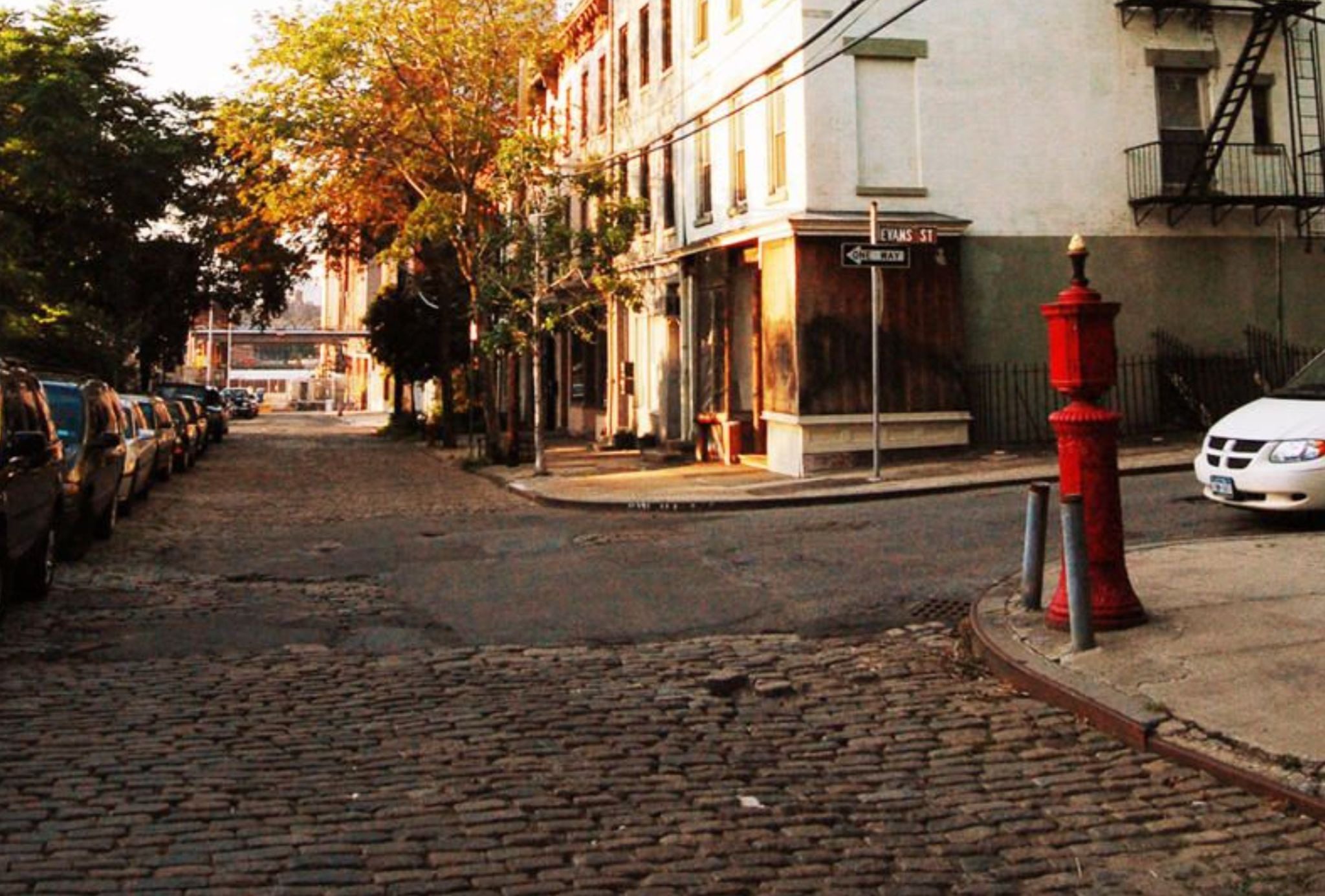
But time did not stand still, and with the advent of automobiles, everything began to change faster than the infrastructure itself could adapt. The cobblestone pavement, which had worked well for horse-drawn carriages and slower traffic, suddenly became unsuitable for the new speeds and loads. Cars required a much smoother, quieter, and more predictable surface. And the solution was asphalt.
Gradually, asphalt replaced cobblestones on most of Brooklyn’s streets. It was cheaper to maintain, quicker to lay, and better suited for heavy traffic. As transportation changed, so did the rhythm of the city. The pace quickened, and the old stone streets began to be seen as something outdated, noisy, and completely impractical.
However, cobblestones haven’t disappeared entirely. They’ve been preserved in parts of the city where it’s not just functionality but also history that matters. For example, in the neighborhoods of DUMBO and Red Hook and on the streets of Brooklyn Heights and Cobble Hill, where such stone pavements can still be found today. They no longer fully serve their original purpose but remain part of the urban landscape.
And there is a certain logic to this. The cobblestones in these neighborhoods are not just old pavements, but a part of the area’s identity. They serve as a reminder of the city’s port-based past, of a time before cars, and of a city that developed around a completely different pace of life and entirely different needs.
Sources:
- https://www.untappedcities.com/10-fun-facts-about-nyc-belgian-block-not-cobblestone-streets/
- https://ephemeralnewyork.wordpress.com/2019/05/06/a-downtown-alleys-belgian-block-paving-stones/
- https://forgotten-ny.com/2013/08/dumbos-belgian-blocks-under-siege/
- https://dumbo.nyc/dumbohistory/
- https://www.stone.be/en/nieuws/reclaimed-belgian-setts-heritage-sustainability-and-design-potential