
The construction of playgrounds has failed to keep up with the growing number of children in several New York City neighbourhoods. Unfortunately, Brooklyn is one of the most underserved boroughs, with only eight playgrounds per 10,000 children.
The maintenance of playgrounds is deeply inadequate—521 NYC Parks playgrounds have at least one hazardous element requiring urgent attention or even removal, according to New York City Comptroller Scott M. Stringer.
To address this issue, Stringer launched the “Pavement to Playgrounds” initiative, which introduces an innovative model for building urban playgrounds. His plan calls for the construction of 200 new playgrounds over the next five years.
Read more about the state of Brooklyn’s playgrounds on i-brooklyn.com.
Findings from the Inspection
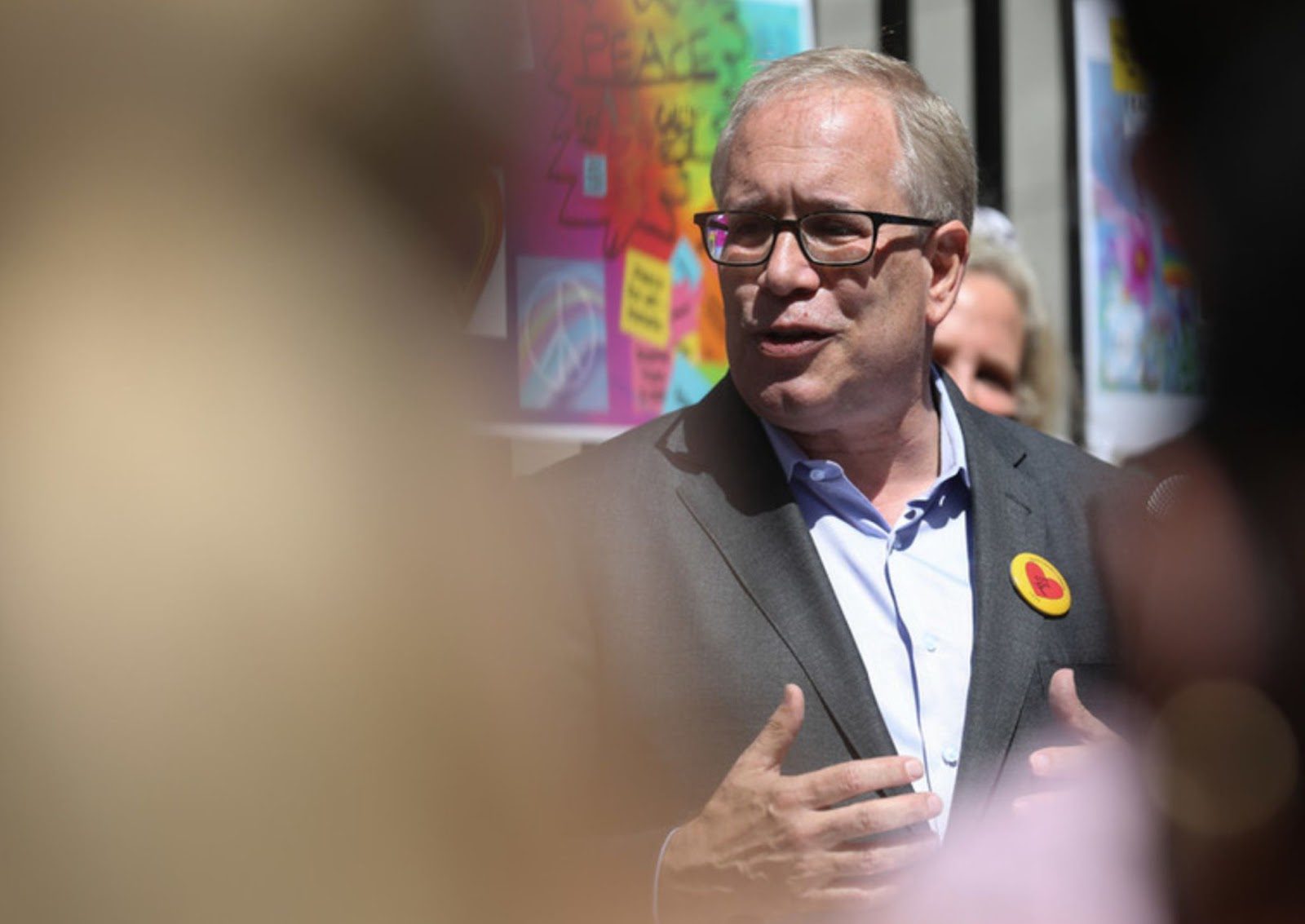
According to Scott M. Stringer, access to playgrounds varies dramatically between different neighbourhoods.
- In some areas, there are three times as many playgrounds per child as in others.
- In neighbourhoods with the highest number of children, there are fewer than four playgrounds per 10,000 children—a critically low number.
- More broadly, New York City ranks only 48th in playground availability per capita among the 100 largest U.S. cities.
Hundreds of playgrounds across the city were found to be in poor condition.
- 521 playgrounds operated by NYC Parks had at least one serious safety hazard requiring immediate intervention.
- Among these hazards:
- 807 risks posed a moderate chance of injury.
- 29 hazards were classified as life-threatening.
Brooklyn was the most severely affected borough, with 24% of playgrounds deemed “unacceptable”—the highest percentage in the city.
Brooklyn also had the lowest playground density, with only eight playgrounds per 10,000 children under ten.
- By comparison:
- Manhattan had 15 playgrounds per 10,000 children.
- Staten Island had 11 per 10,000.
Furthermore, Brooklyn’s child population has increased significantly.
- In the 15 neighbourhoods with the fewest playgrounds, the number of children grew by 14% from 2010 to 2017—an increase from 276,000 to nearly 314,000 children.
- This accounts for 89% of the total child population growth in NYC.
Domino Park Playground: A Rare Success
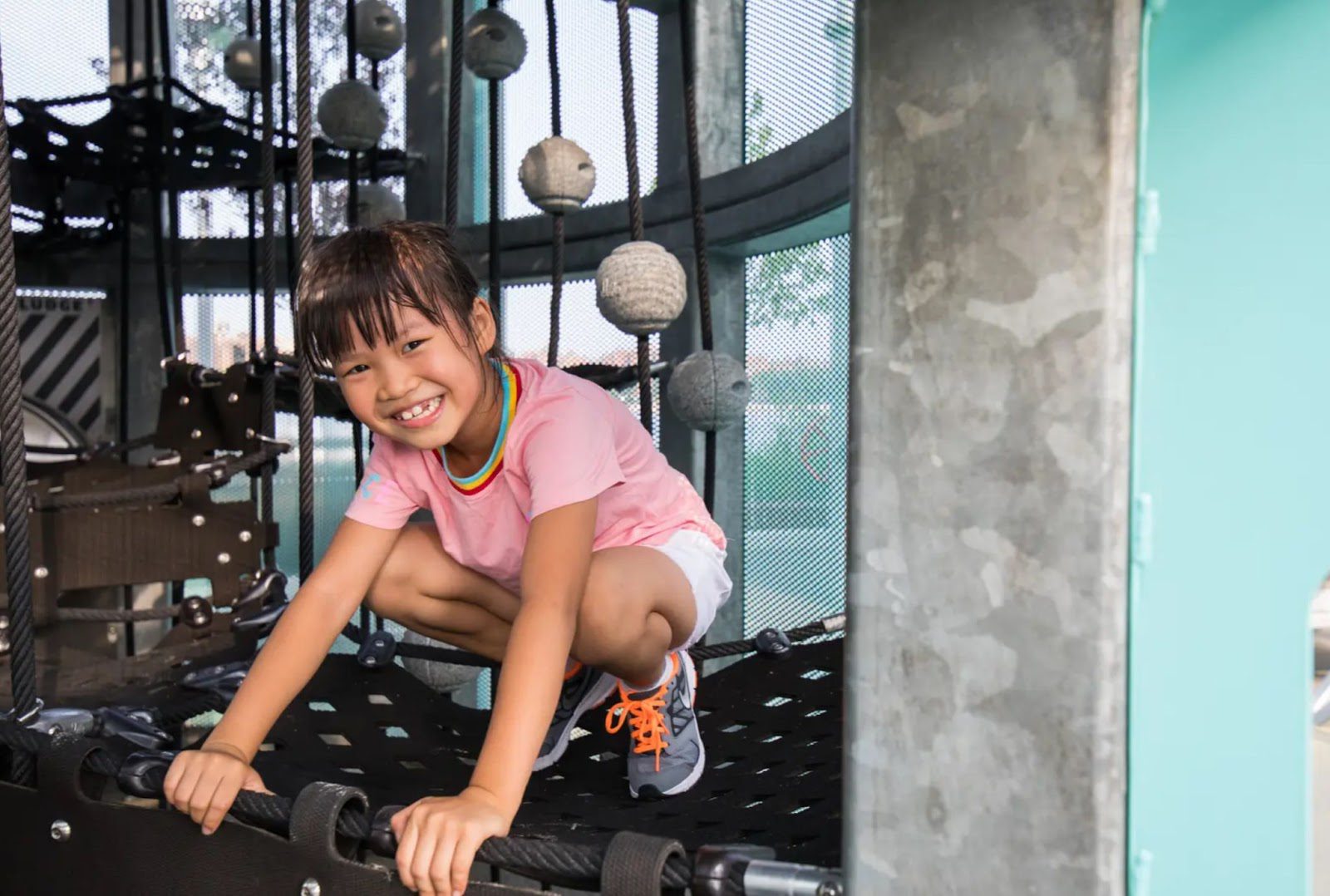
Despite these troubling statistics, are all Brooklyn playgrounds unsafe?
To investigate, let’s visit one of Brooklyn’s most notable playgrounds—Domino Park.
Located in Williamsburg, Brooklyn, along the East River, the six-acre park sits on the site of the former Domino Sugar Refinery. It features:
- A raised walkway (accessible under the Americans with Disabilities Act).
- A beach volleyball court and a bocce court.
- A four-season lawn.
- Two water features.
- A dog park.
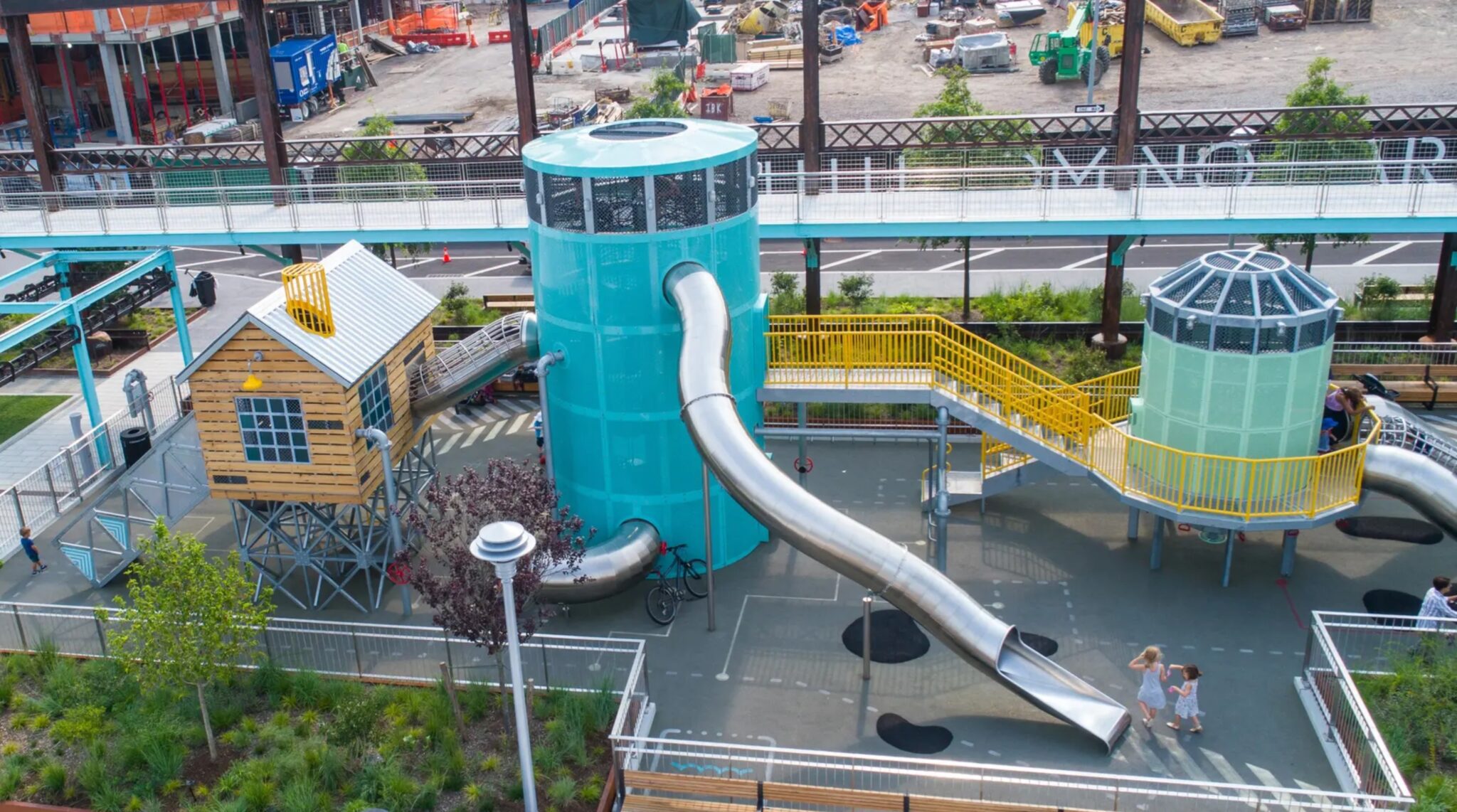
However, the highlight of the park is the Domino Park Playground, designed by Brooklyn-based artist Mark A. Reigelman II. The playground’s industrial design reflects Brooklyn’s manufacturing history. It includes three main play zones:
- The Sugar Cane Cabin.
- The Sweetwater Silo.
- The Centrifuge.
To enhance the historical theme, Reigelman incorporated words from the original factory signage inside the structures.
The playground was engineered to meet strict safety standards, thanks to collaboration with Landscape Structures.
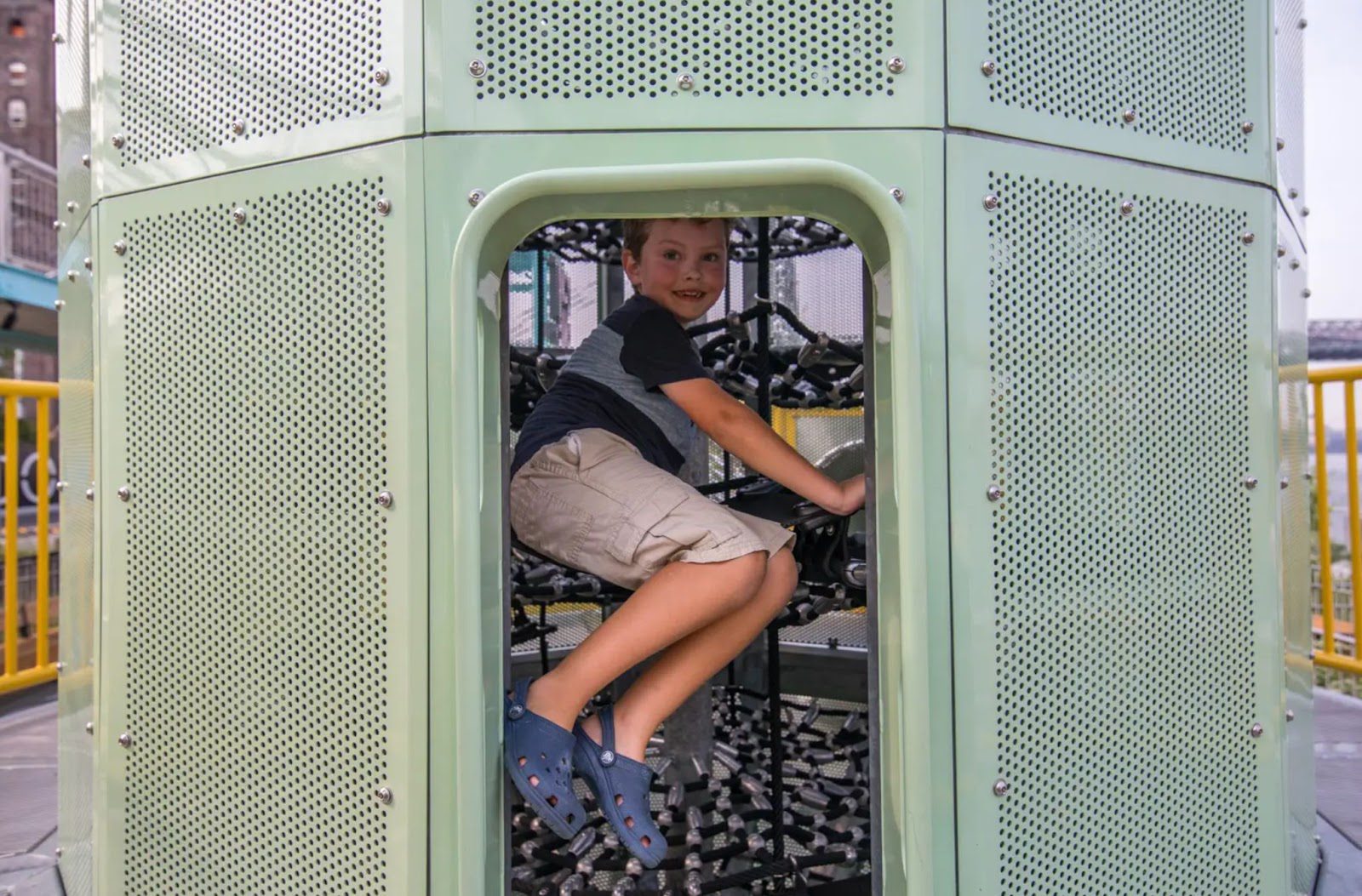
Since its opening, the playground has received overwhelmingly positive reviews. Regardless of the weather, the playground is always full of children and families. Even passersby stop to admire the unique design.
This example proves that Brooklyn can have safe, well-designed playgrounds—but it remains an exception.
The “Pavement to Playgrounds” Initiative
A single playground does not solve Brooklyn’s playground shortage.
To address the issue, Scott M. Stringer proposed major reforms, including:
- Building 200 new playgrounds over the next five years.
- Expanding “Pavement to Playgrounds”, a partnership between NYC Parks, the NYC Department of Transportation, local non-profits, and community boards.
- Strengthening the “Schoolyards to Playgrounds” program, converting more schoolyards into public playgrounds.
- Increasing maintenance funding for existing playgrounds.
- Ensuring playgrounds serve a wide range of age groups, encouraging learning, play, and social interaction.
Stringer’s report analyzed all 2,067 municipal playgrounds in NYC:
- 1,028 are managed by NYC Parks.
- 796 belong to NYCHA (New York City Housing Authority).
- 243 are schoolyards with shared playground spaces.
Hundreds of playgrounds were classified as “unacceptable” due to:
- Multiple safety hazards.
- A single severe risk.
- Overall poor cleanliness and upkeep.
To assess whether these findings led to improvements, let’s examine a newer playground built after Stringer’s report—Papa’s Review Playground in Greenpoint.
A Playground at the End of the Block
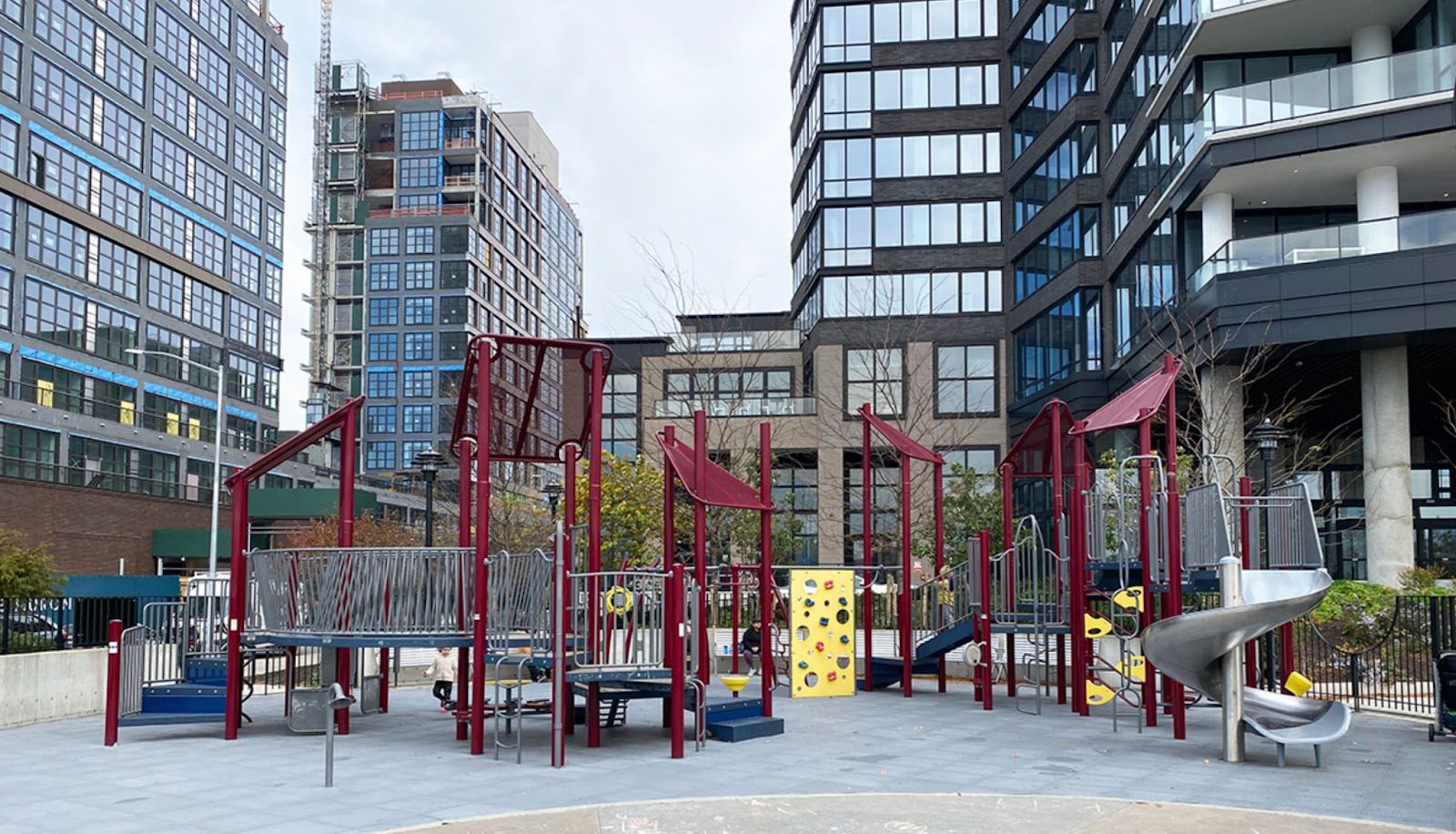
Papa’s Review Playground is tucked away in a newly renovated section of Greenpoint’s waterfront.
- Located at the very end of a restored city block, it’s shiny and new, with sensory panels for children.
- However, it lacks excitement.
- The playground is small and compact, limiting space for active play.
While it includes key elements—slides, ladders, and climbing structures—it feels underwhelming.
- It’s a great spot for a quick visit but not a place where families would spend hours.
- The playground is likely enough for local families in nearby new developments, but it doesn’t compare to more dynamic Brooklyn playgrounds.
While some exceptional playgrounds exist in Brooklyn, many children still lack safe places to play. Domino Park Playground is a shining example of what a well-designed and safe play space should be. However, Brooklyn remains the most underserved borough, with far too few playgrounds and many unsafe conditions.
The “Pavement to Playgrounds” initiative aims to address this imbalance, but significant improvements are still needed.