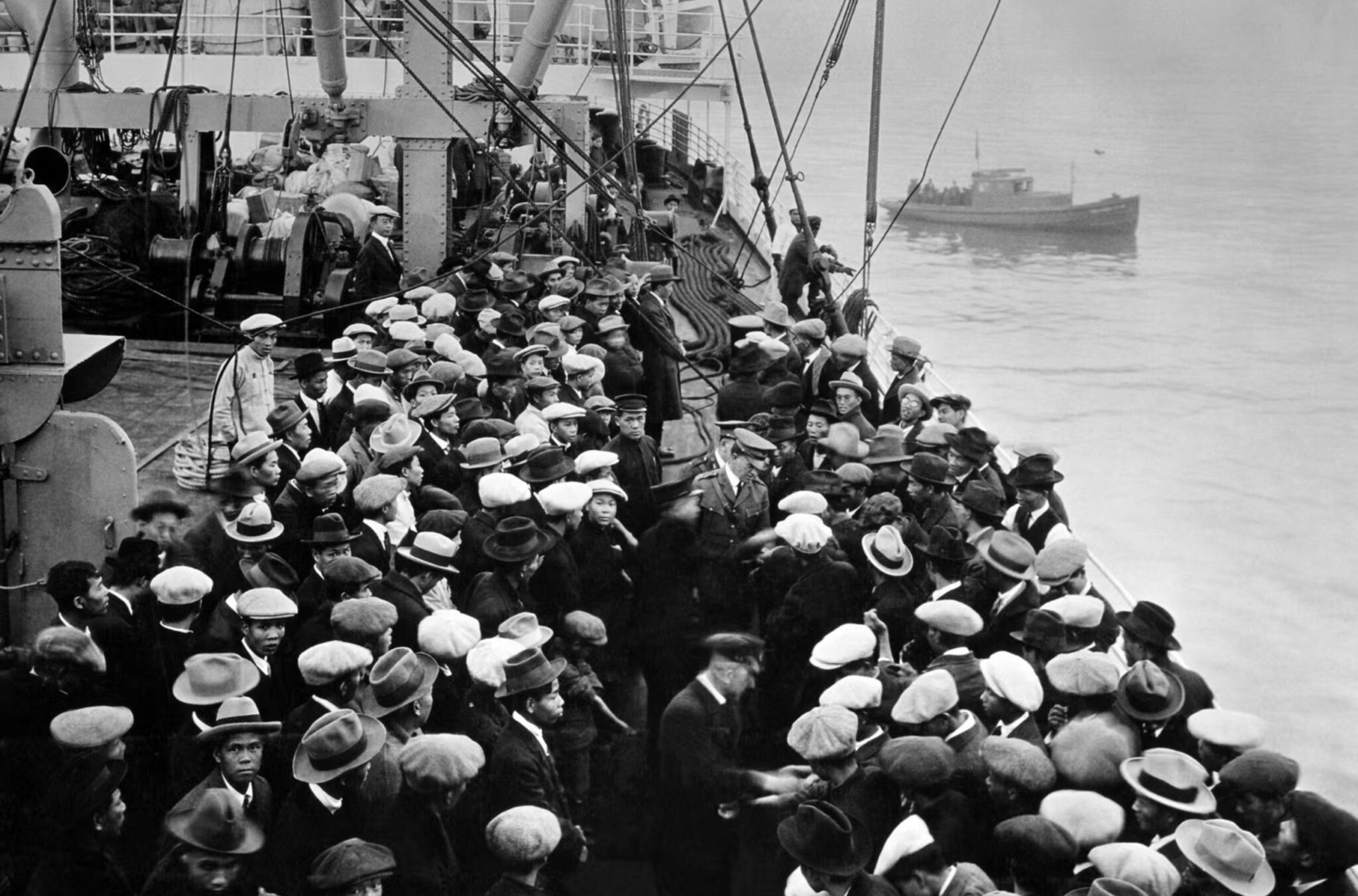

The Jews who immigrated to New York City from the seventeenth to the twenty-first century represented the city’s diversity. The fact that all of these people came from different cities and towns in Europe and other parts of the world, as well as from different periods of U.S. history, added to the peculiarity and a certain piquancy.
Regarding Brooklyn, first as a separate city in its own right,17 and later as the second-largest borough in New York City, it is known that throughout time Jews have mostly settled in Crown Heights and Brownsville. Read more about all this and how the Jewish community of Brooklyn influenced its culture on i-brooklyn.com.
Brooklyn is a special place
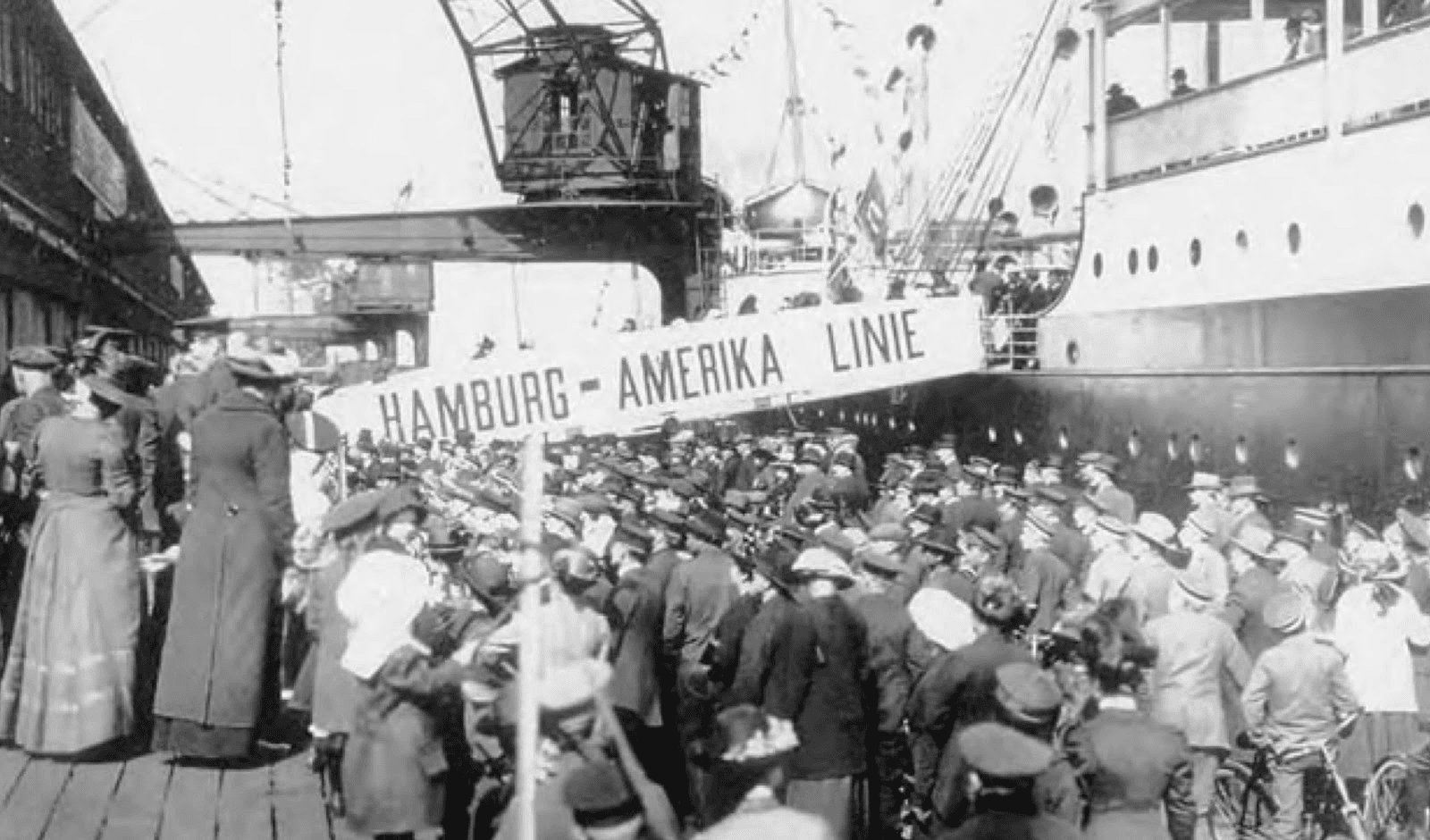
If one tries to examine the traditional way of periodizing Jewish immigration to Brooklyn, one will notice the presence of three waves of arrival. Naturally, there was an early Jewish population that arrived in New Amsterdam in 1654 from the Dutch colony of Recife. We can say that it was these immigrants of Jewish nationality who actually formed the first Jewish community, not only in New York or Brooklyn, but in North America in general. These were mostly Sephardic Jews.
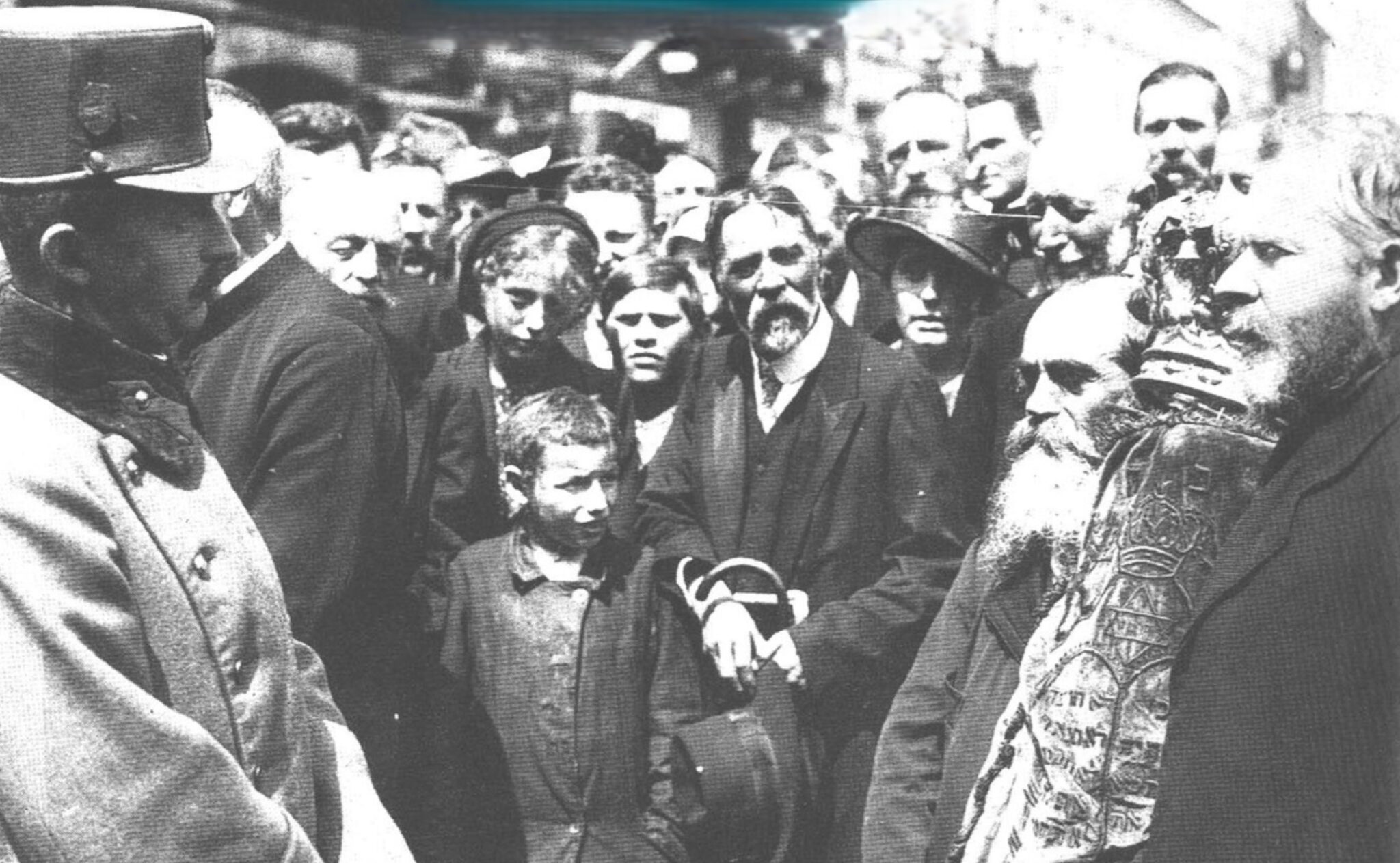
In the mid-nineteenth century, the Jews, who came mostly from Central Europe, were German-speaking. In addition to participating in German-American public affairs, they had a separate Jewish existence with their own synagogues and brotherhoods. The largest influx of Jews occurred in the late nineteenth and early twentieth centuries. The Jewish population of New York City at that time grew from approximately 80,000 in 1880 to 1.5 million in 1920.
At the same time, at the end of the nineteenth century, New York City began to undergo a transformation. Immigrants, including Jewish immigrants, no longer had to live in one of the many overcrowded and completely dilapidated tenement buildings on Manhattan’s Lower East Side. Advances in bridge construction and improvements in the transportation system provided new opportunities for all newcomers.
And over the next few decades, the face of Jewish demographics changed dramatically, allowing for lower rents and healthier urban and rural environments, at least for a time. Many moved east to Brooklyn. One of the first neighborhoods to receive new Jewish residents was Brownsville.
Brownsville vs. Manhattan
Starting around 1887, Brownsville began to develop in a completely different way. A certain Aaron Kaplan, a real estate developer, began to buy up numerous plots of land. Like other developers in Manhattan, he specialized in apartment buildings. It should be understood that his idea from the beginning was not to use Brownsville as a place for recreation.
On the contrary, he wanted to attract businesses from Lower Manhattan and thus increase the population of this Brooklyn neighborhood, so that he could make good money on it. Things were moving along, and over time, individual houses and cottages, which used to be very numerous in this Brooklyn neighborhood, became rare. And all because they were replaced by new houses with two apartments or apartment buildings.
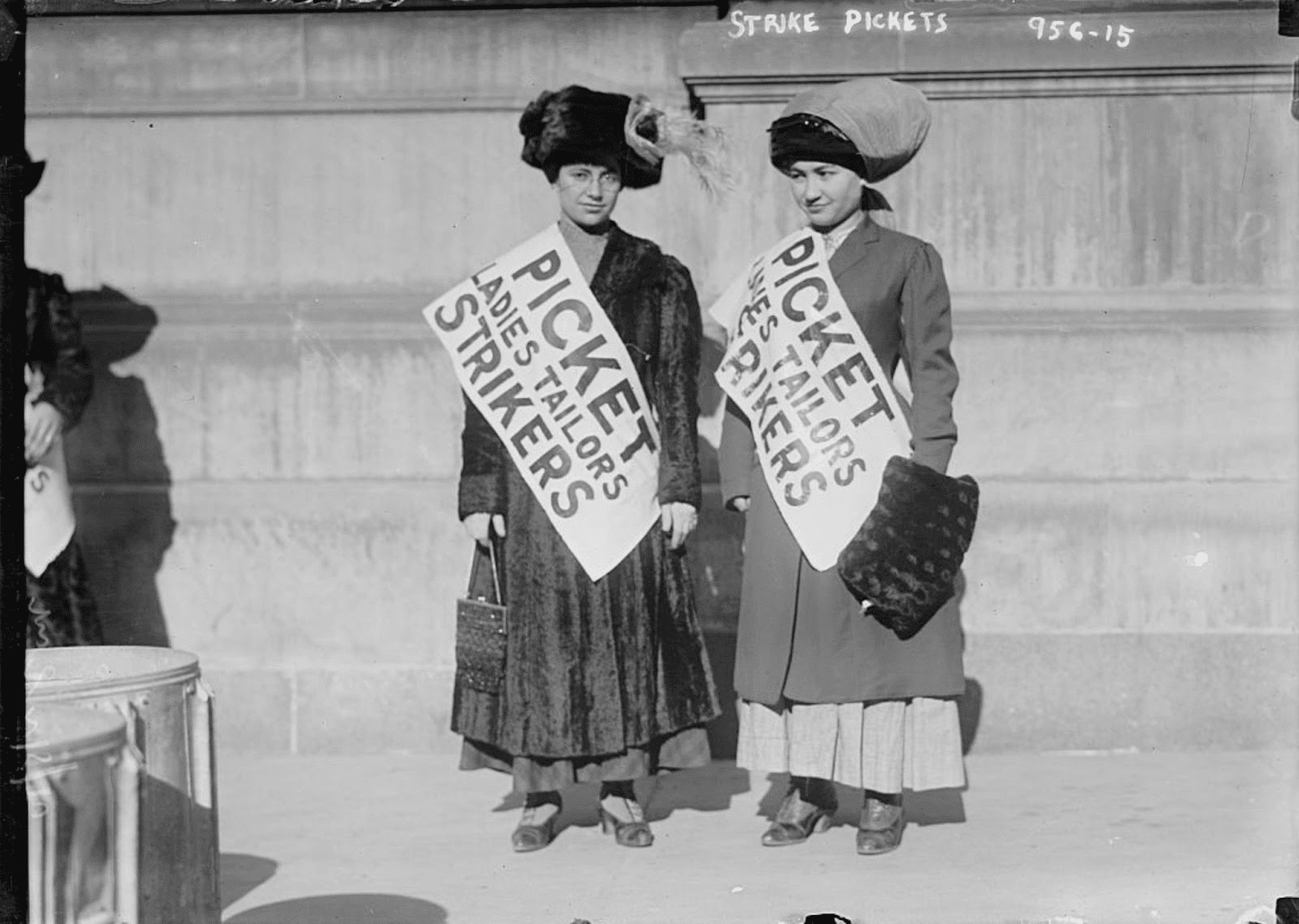
In addition, in the late 1880s, some clothing manufacturers, usually Jewish, decided that it was more economically viable for them to move out of the Lower East Side. So they took their workshops and workers with them to the other side of the East River. And so, with the migration of the factories to Brooklyn, the families who worked in these factories usually followed their employers.
As a result, the population of Brownsville grew from ten to sixty thousand people in a five-year period between 1899 and 1904. At this time, there was a lot of speculation in land, which eventually sent real estate values skyrocketing. The scheme was quite simple. A semi-skilled immigrant, while working, saved a certain amount of money to buy a plot of land. Later he would sell it for a profit. This turned many former poor scoundrels into wealthy landowners. America, the land of dreams.
Thus, the once pastoral Brownsville became as densely populated as Williamsburg and the southern part of Brooklyn. Later, Coney Island became just as accessible and developed, and the flow of immigrants, including Jewish people, could not be slowed down due to the conditions of life from which they were fleeing. There were times when immigrants settled in Brooklyn at the rate of a thousand people a week.
At the same time, it should be noted that not all immigrants who wanted to avoid the unpleasant moments, to put it mildly, that awaited them on the Lower East Side were able to escape to Brooklyn. In the early 1890s, many Jews also fled to the North. Those who could afford it moved to the Upper East Side, where wealthier German Jews lived, often as garment factory owners. At the turn of the century, many Jews also settled between 97th and 142nd Streets in what is now known as Harlem.
Jewish women
Initially, life in Brownsville was much more attractive to Jews. Perhaps it had to do with the shtetl in the countryside and the hope that life could be lived in the traditional way that they all aspired to. Namely, that a man or a woman, or even a child, could find a job so that they wouldn’t have to work on the Sabbath, so that their children could go to school, as they had in their past lives. And this is not surprising, because Brooklyn was predominantly Jewish at the time, and for this it was called the “Jerusalem of America.” In 1925, for example, the population of Brownsville was ninety-five percent Jewish.
For many years, Jewish women in Brooklyn demonstrated their commitment to social equality by speaking out and protesting injustice. In 1935, it was they who organized a strike for cheap kosher meat – kosher meat shops were, of course, an integral part of Jewish life. The women’s stand up for their beliefs forced the butcher shops to close for a week, which eventually led to a reduction in prices to a reasonable level. Such events raised the social and political consciousness of many Brooklynites.
Lowe’s Cinema Palace
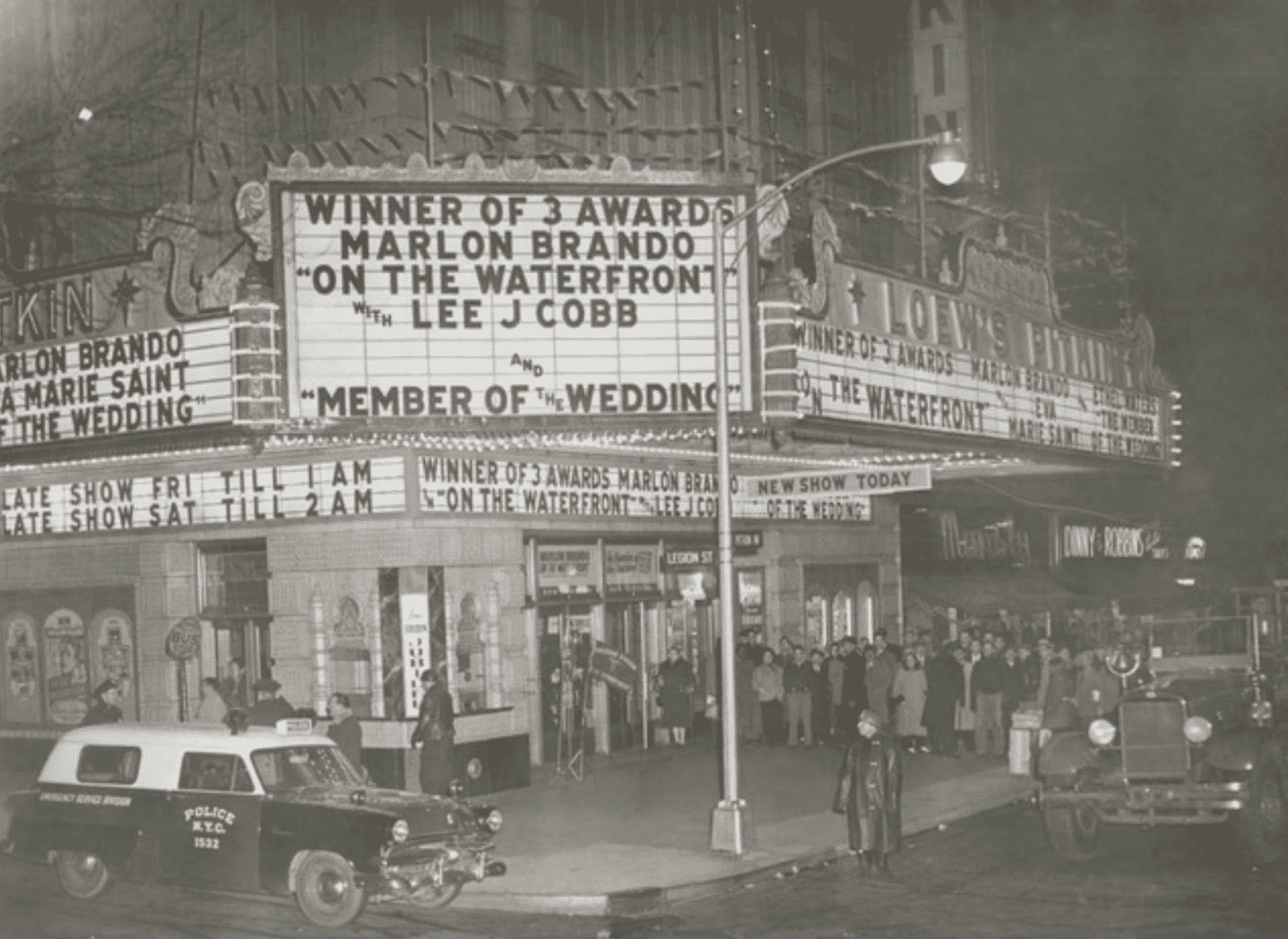
One of the most prominent representatives of Jewish cultural life in Brownsville was the Lowe’s movie palace, located on Pitkin Avenue between Legion Street and Saratoga Avenue. It had a seating capacity of more than 3,000 spectators, including a large auditorium, a fairly large balcony, and a couple of loggias.
The building was designed by Thomas W. Lamb. The Cinema Palace became one of the most popular atmospheric places in Brooklyn. At that time, in addition to movie screenings, small theater performances took place in such venues. Vaudeville and stage revues were shown at the Lowe’s, and comedians performed there as well.
As for cinema, the Lowe’s first film was a full-length sound picture with the song “So This Is College” featuring Elliott Nugent, Robert Montgomery, and Sally Starr. In the nearly four decades of its existence, the theater has mostly shown top-quality films.
In general, this place became something more than just a movie theater in an overwhelmingly Jewish neighborhood of Brooklyn. It was a destination, a center from which images poured forth that informed, entertained, and changed lives. For immigrants and children of immigrants locked in the tight world of work and school, it was a way to absorb American ideas and values.
Sources:
- https://now.fordham.edu/inside-fordham/faculty-reads/tracing-history-jewish-immigrants-impact-new-york-city/
- https://brooklynjewish.org/explore-brooklyn/living-in-brooklyn-the-jewish-experience/
- https://www.brownstoner.com/architecture/brooklyn-architecture1501-pitkin-avenue-loews-theatre-brownsville/