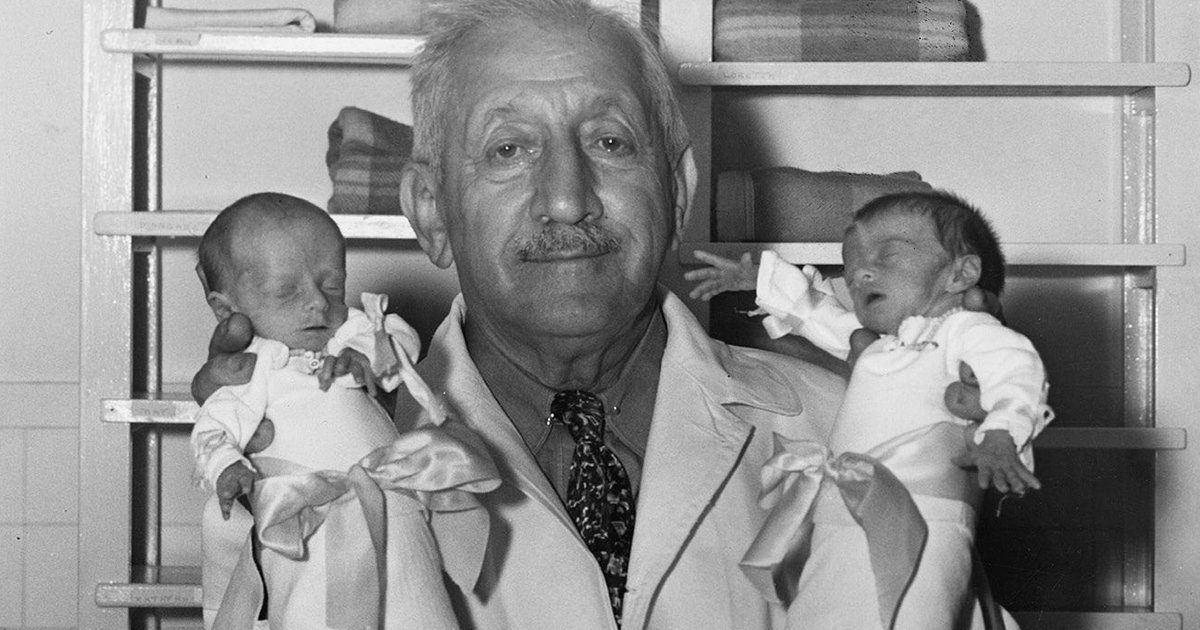

Not all great discoveries or breakthroughs were made by scientists. In the early 20th century, America had a high mortality rate among premature infants. To be more precise, it was 100%. Doctors simply did not want to take on such cases. They did not even ascribe the same rights to them as to full-term babies.
At that time, medicine had no idea that such babies could survive. Doctors refused to help women citing its futility. However, the first prototypes of incubators for premature babies had already been used in Europe. How did this innovation get to America? It was all down to one initiative. Read more at i-brooklyn.
Doctor Impostor
At the beginning of the 20th century, Martin Couney, a Jewish-German immigrant, came to Brooklyn. No one knew him then. Upon his arrival, Couney told everyone that he was a doctor. Although he had no medical education or experience. While living in Paris, Couney bought several incubators for babies and came to Brooklyn with them. Before that, in 1896, he came to Berlin to a technological exhibition which was held at that time in the city. But the Germans were not surprised.
He was driven by purely altruistic motives. He wanted to help babies survive. But no one in America knew about this technology at the time. The maintenance of incubators was expensive. Then he found a way out of the situation, an amusement park with a terrifying performance. New Yorkers were offered to look at premature babies in glass boxes.
For just 25 cents, anyone could see the freaks. This is how they saw premature babies. The show lasted for 37 years. Thousands of viewers did not even realize that they were saving lives with their interest. It cost 15 dollars a day to maintain one incubator with a baby. At that time, it was a lot of money. There were several such incubators. In addition to funding, Couney popularized the very concept of premature babies. He sowed the idea in the minds of his colleagues that it was possible.
The subtleties of the process
Despite the fact that Couney was not officially a doctor, his name was well known in medical circles, however, not in the best light. His colleagues considered him a madman and a sadist. They equated him with Victor Frankenstein. Because of this preconceived notion, for several decades doctors denied the real benefits of this invention.
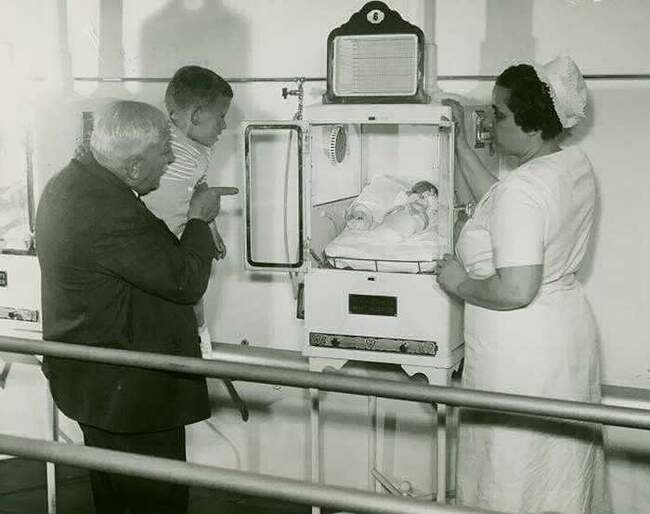
Although from a technical point of view, the first incubators were a real miracle. They were glass boxes with a metal base. Warm air was supplied to them from a steam boiler. To maintain life, temperature and humidity control devices were installed. Such incubators were the first artificial imitation of a woman’s womb. Unfortunately, no accurate statistics on the number of children who survived and died have been preserved until the 21st century. It is known that Martin Couney’s enterprise saved the lives of over 6,000 children.
The audience thought it was a show, colleagues thought it was sadism. But for Couney himself, it was a real and serious matter. He had strict requirements for all his staff. Most of his employees were women. They all had to be responsible and free of bad habits. The slightest violation resulted in dismissal. Couney may not have had a medical degree but he was well aware of how dangerous the outside world was for babies.
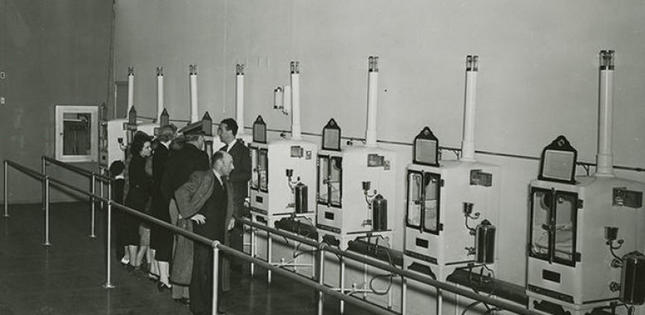
The Couney facility closed in 1940. At that time, American medicine recognized the usefulness of such incubators and made a major breakthrough in perinatal medicine. Doctors learned not only how to nurse premature babies but also how to prevent late-term pregnancy failures.
Couney did not earn much money at work. Everything went to the maintenance of incubators and children.
Little is known about the life and work of the do-gooder and impostor doctor. Martin Couney died in the 1950s in a very difficult financial situation.