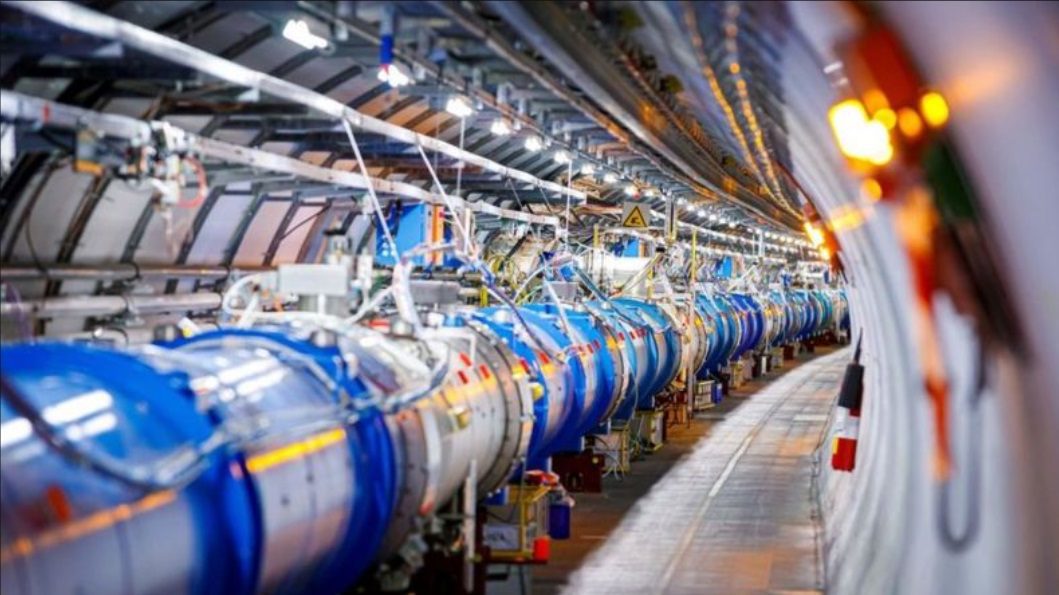

Sheldon Leslie Stone was a distinguished professor of physics at Syracuse University, widely recognized for his pioneering work in experimental particle physics.
His most notable contributions include:
- The Large Hadron Collider beauty (LHCb) experiment
- The study of B-meson decays
- Advancements in data analysis, detector design, and phenomenology
Stone played a key role in developing the LHCb detectors, analyzing experimental data, and furthering the understanding of heavy quark physics.
Learn more about his scientific achievements on i-brooklyn.
Education and Early Career
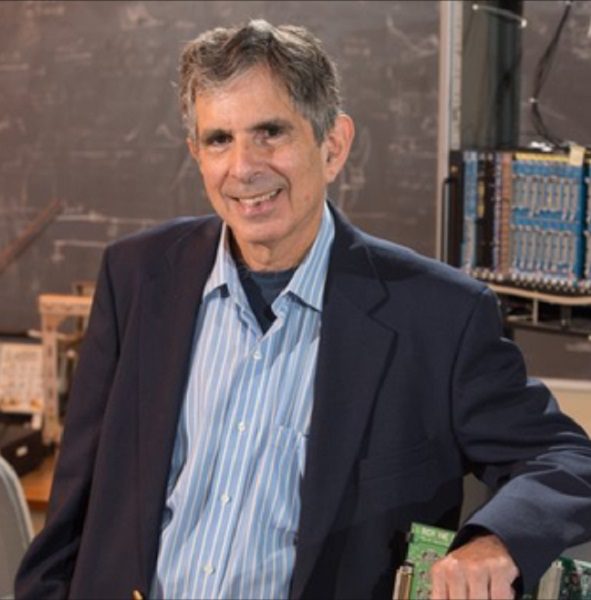
Sheldon Leslie Stone was born in Brooklyn in 1946.
- 1967 – Earned a bachelor’s degree in physics from Brooklyn College
- 1972 – Completed his PhD in physics at the University of Rochester under the mentorship of Thomas Ferbel
- 1973-1979 – Worked as an assistant professor of physics at Vanderbilt University
- 1979 – Joined the Cornell Laboratory for Nuclear Studies as a senior research associate
- 1991 – Moved to Syracuse University, where he led the Experimental High-Energy Physics Group from 1993 until his passing in 2021
In 2011, Stone was awarded the title of Distinguished Professor of Physics at Syracuse University.
Contributions to Particle Physics
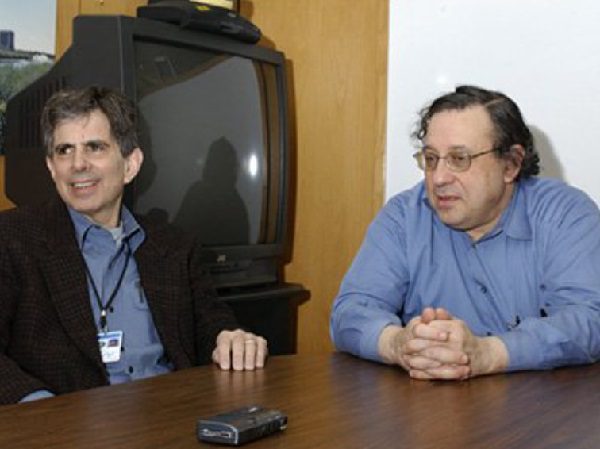
In 1988, Stone served as coordinator of physics analysis for the CLEO experiment, where he made significant contributions to data analysis and detector design. He played a key role in building particle detectors for the CLEO experiment at Cornell University.
From 1997 to 2005, he was also a spokesperson for the BTeV experiment at Fermilab. Additionally, he was an active member of the Fermilab PAC, advisory board, and board of directors.
In 2005, Stone became a co-author of the LHCb experiment, working as the upgrade coordinator from 2008 to 2011, during which he helped shape the project and submit an official Letter of Intent for its development.
Scientific Discoveries
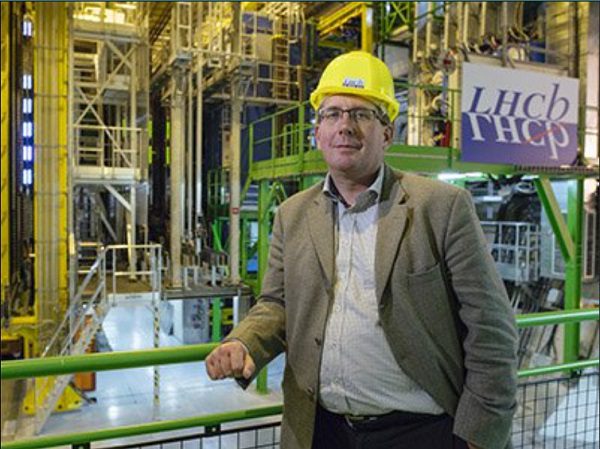
Stone played a leading role in many groundbreaking discoveries, including the observation of mesons.
- In 2000, he advocated for converting the CLEO experiment into a charm factory, leading to precise measurements of charm decay constants.
- These measurements validated lattice QCD calculations of hadronic effects in weak decays of heavy quarks with unprecedented precision.
This work provided the foundation for interpreting critical flavor physics experiments.
At CLEO, Stone led the design and construction of high-efficiency calorimeter detectors, which were the first precision electromagnetic calorimeters used in a general-purpose magnetic spectrometer.
Additionally, he contributed to the development and construction of a Ring Imaging Cherenkov Detector (RICH), which enabled 4-sigma separation of K-π particles across a full range of momenta.
In 2015, Stone was instrumental in the discovery of the pentaquark at CERN.
- Pentaquark resonances were first predicted at the birth of the quark model, but remained unobserved for 50 years.
- Stone and his small team of colleagues finally detected these elusive five-quark states in LHCb data.
This landmark discovery provided a crucial insight into quantum chromodynamics and the structure of exotic hadrons.
Stone’s impact on physics was widely recognized.
- 2019 – Received the Panofsky Prize in Experimental Particle Physics from the American Physical Society (APS) for his transformational contributions to flavor physics and hadron spectroscopy
- 1993 – Elected as a Fellow of the American Physical Society (APS) for his outstanding research on B-quark decays
His intellectual leadership in detector design, data analysis, and advocacy for flavor physics in hadron colliders solidified his legacy as one of the most influential physicists of his generation.