

Norman J. Zabusky was an American physicist renowned for his groundbreaking work in nonlinear equations, fluid dynamics, and computational physics. He gained prominence for his co-discovery of solitons in the Korteweg–de Vries (KdV) equation, alongside Martin Kruskal.
Zabusky was also a staunch human rights advocate, known for supporting persecuted scientists in the Soviet Union and around the world.
Learn more about this remarkable Brooklyn-born scientist on i-brooklyn.
Education and Early Career
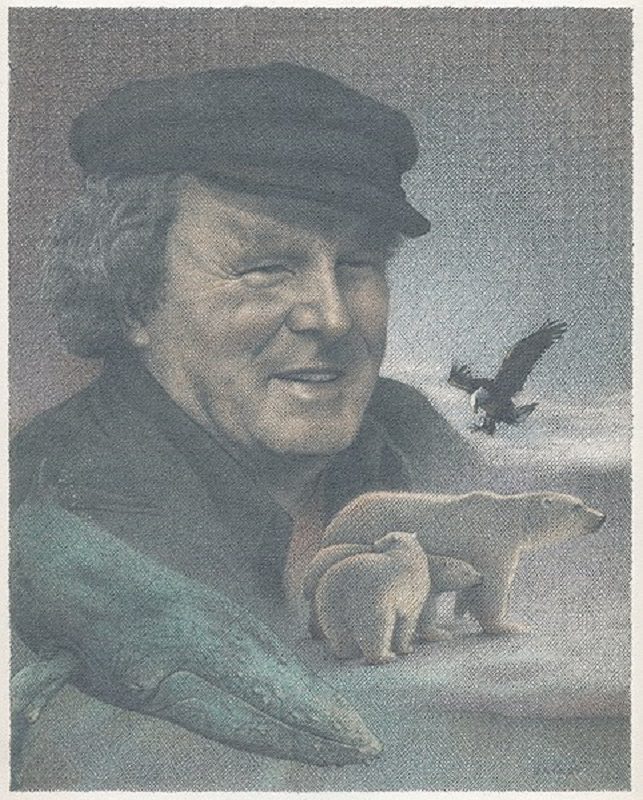
Norman J. Zabusky was born in Brooklyn in January 1929 to Hyman and Anna (née Brown) Zabusky.
- Graduated from Brooklyn Technical High School
- 1951 – Earned a bachelor’s degree in electrical engineering from City College of New York
- 1953 – Completed a master’s degree in electrical engineering at MIT
- 1959 – Earned a PhD in theoretical physics from Caltech, where he studied the stability of magnetized plasma flows
Initially trained as an engineer, Zabusky shifted his focus to physics after earning his doctorate.
The Discovery of Solitons
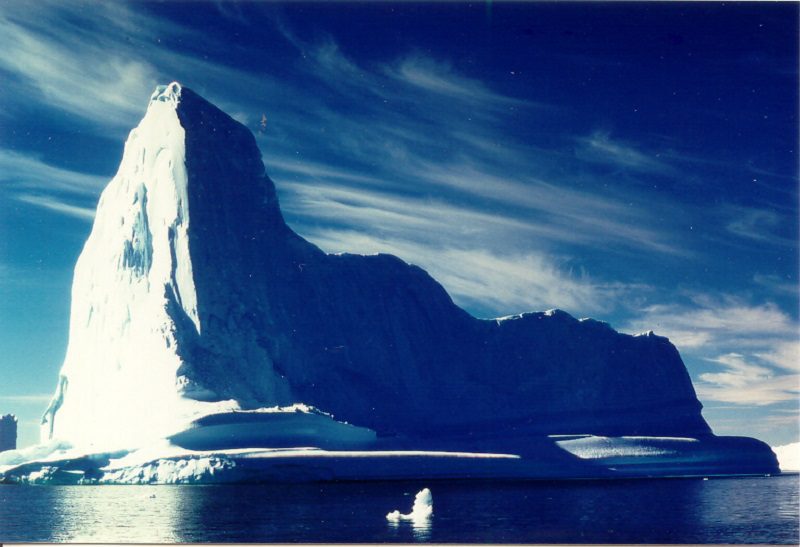
In 1965, Zabusky and Martin Kruskal used computational simulations to gain insights into nonlinear equations. During this work, they discovered soliton solutions in the Korteweg–de Vries (KdV) equation.
- This discovery revolutionized nonlinear physics and opened new analytical approaches to studying integrable systems
- It played a key role in advancing fluid dynamics, wave physics, and mathematical physics
Beyond the mathematical impact, Zabusky’s work introduced computational modeling as a critical tool for solving complex physics problems.
Innovations in Computational Visualization
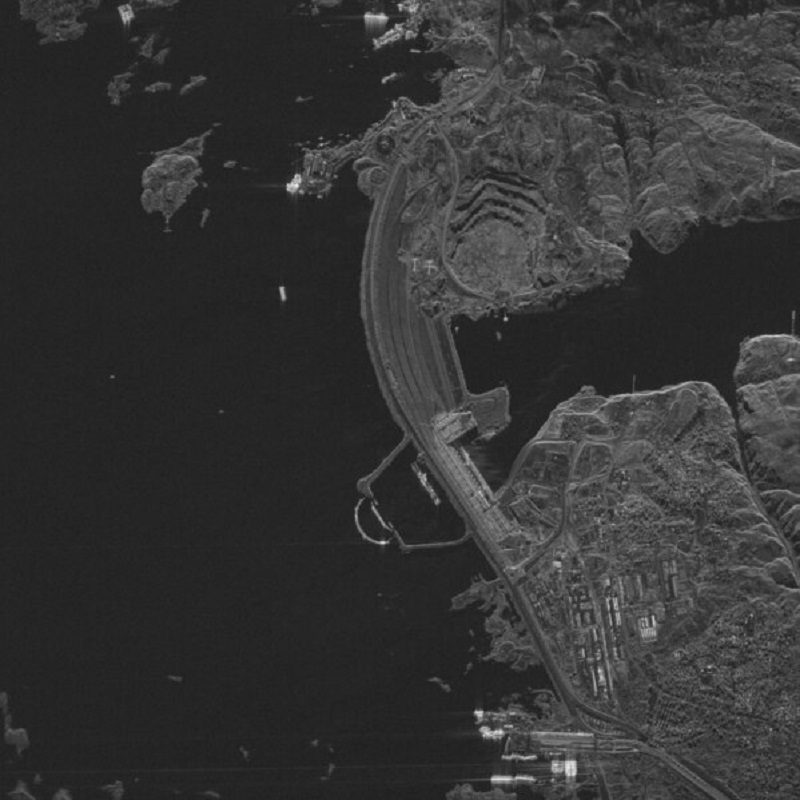
Zabusky was among the first to recognize the importance of visualization in physics. In 1990, he and François Bitz introduced the term “visiometry”, describing the process of using computer-generated imagery to guide quantitative analysis in fluid dynamics.
His work demonstrated how graphical representation of data could enhance scientific discovery and lead to new theoretical insights.
Zabusky’s career spanned several prestigious institutions:
- Bell Laboratories (1961-1976) – Worked on computational fluid dynamics and nonlinear wave equations
- University of Pittsburgh (1976-1988) – Served as a professor of mathematics and founded the NATO School on Nonlinear Mathematics and Physics
- Oxford University & Weizmann Institute of Science (1971-1972) – Conducted research as a Guggenheim Fellow
- Rutgers University (1988-2006) – Appointed Professor of Computational Fluid Dynamics at the Department of Mechanical and Aerospace Engineering
- Weizmann Institute of Science (post-2006) – Continued research as a visiting professor in complex systems physics
In 2000, he was named the Jacobs Professor of Applied Physics at Rutgers and later organized the fourth International Symposium on Science & Art (ScArt4).
Beyond his scientific contributions, Zabusky was deeply committed to human rights and academic freedom.
- Active supporter of dissident scientists in the Soviet Union
- Member of the Advisory Board of the Committee of Concerned Scientists (CCS)
- In 1983, he was expelled from the USSR for meeting with Jewish dissident scientists during an international scientific conference
The Committee of Concerned Scientists was established in 1972 in Washington and New York to defend persecuted researchers and protect academic freedoms worldwide.
Norman Zabusky’s work transformed nonlinear physics, pioneered computational fluid dynamics, and introduced new visualization techniques.
At the same time, his courage in supporting oppressed scientists underscored his dedication to both science and human rights.
His legacy remains in the fields of nonlinear wave physics, computational modeling, and scientific visualization, as well as in the fight for academic freedom worldwide.