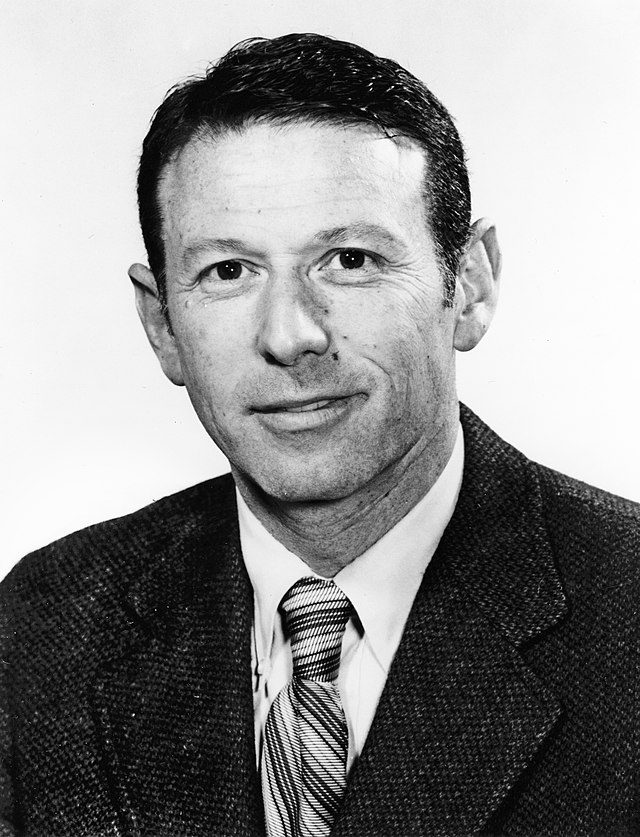

The history of Brooklyn is replete with the names of prominent scientists. Paul Berg is one of them. His DNA research has been useful for many scientists. Learn more on i-brooklyn.
Ukrainian roots
Paul was born in 1926 in Brooklyn. Both of his parents were natives of Uman, Cherkasy region, Ukraine (at that time Kiev Gubernia). However, they came to America from Orhei. In the 1920s, it was the territory of Romania, and since 1991 it has been part of Moldova. His father was a textile worker and his mother was a housewife. She was responsible for raising the children.
The family lived in the Seagate neighborhood. Paul’s acquaintance with biology took place in an unusual way. He became interested in the works of Sinclair Lewis and Paul de Kruif. After reading their books, he seriously thought about becoming a biologist. Since then, Paul had taken up his studies in earnest.
At the age of 14, he entered Abraham Lincoln High School, skipping a few grades. Immediately after graduation, in 1943, Paul went to war in the Navy. He was not able to go into battle right away. He had to wait for his assignment.
Berg didn’t waste any time and entered the Penn State University. He chose biochemistry as his specialty. He did not succeed in becoming a pilot. Berg served on a submarine until 1946.
After the war, Paul finished his studies and married his high school girlfriend. The couple had a son.
The road to Stanford
In 1952, Berg received his PhD in biochemistry from Case Western Reserve University. He studied how folic acid and vitamin B12 affect methionines. In his dissertation, Berg investigated formic acid, formaldehyde and methanol.
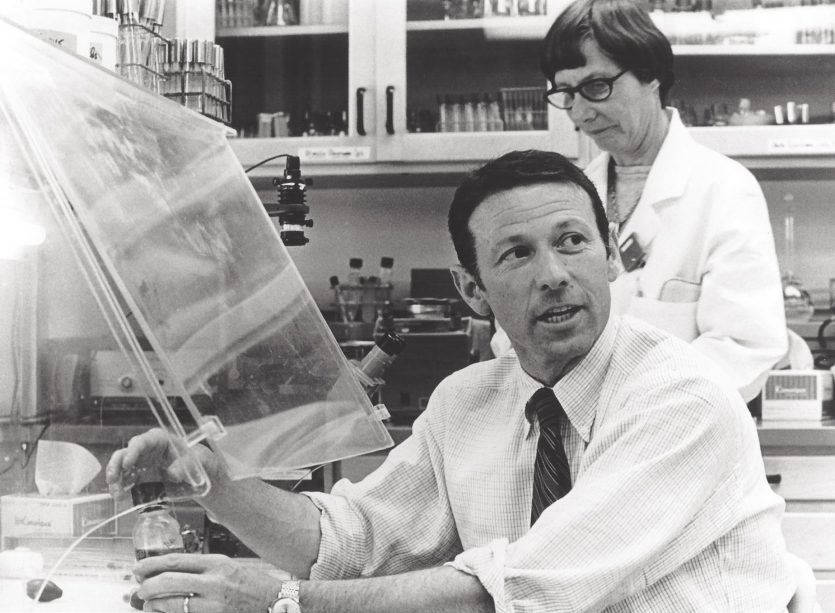
At the age of 33, Berg became a professor at Stanford University School of Medicine. By the time he was forty, he had been appointed to the U.S. National Academy of Sciences. More than a stunning success.
In 1980, the Nobel Committee honored him and his colleagues for their work in the field of nucleic acid research. Five years later, Ronald Reagan, the 40th President of the United States, awarded him the U.S. National Medal of Science.
Paul Berg retired from teaching and research in 2000. However, he remained a professor emeritus at Stanford University.
Even in his retirement, Berg advocated for genetically modified organisms. He was one of those scientists who did not see them as a detrimental influence of humanity. He even urged the world’s leading environmental organizations to reconsider their opinion on this issue. Paul Berg died on February 15, 2023.
Leading research
His doctoral dissertation helped Berg advance his studies in enzymology. His research on the effects of vitamin B12 and folic acid on the synthesis of the amino acid methionine demonstrated his talent as a biological scientist. This led him to work with Arthur Kornberg and Herman Kalckar. Together with the latter, he worked for a year at an institute in Copenhagen. There they studied cytophysiology. They tried to understand how glucose metabolism works. Instead, they made another discovery. They found out that other triphosphate forms, besides ATP, are able to transfer energy.
Berg worked extensively to determine the cause of food digestion and energy release. His later work focused on the synthesis of the protein that directs RNA. Sometimes, Berg’s scientific work contradicted the work of other scientists.
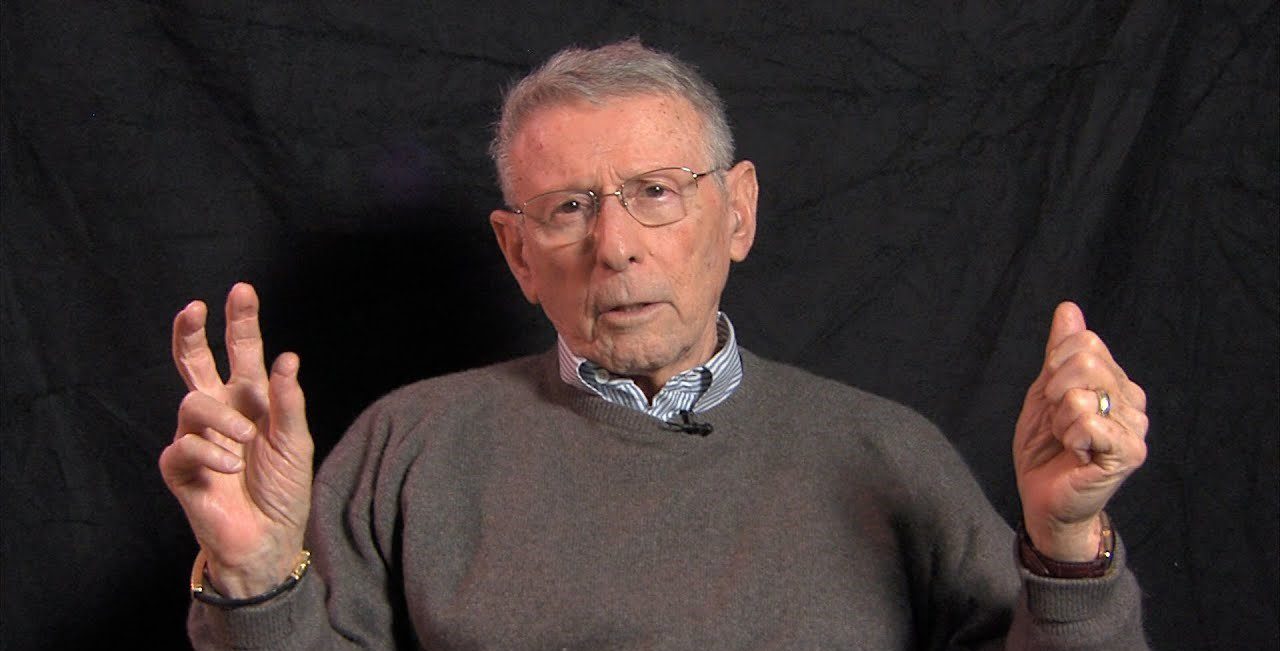
At Stanford, in the 60s and 80s, he studied amino acids. It was a difficult job. Each new discovery was followed by another, more complicated than the previous one. He discovered that each amino acid requires a separate t-RNA. He did not work alone. Together with his team, they explored these complex processes. At this time, he began to study DNA transcription. His research on bacterial genes became fundamental to the work of other scientists around the world. He found that with a set of certain factors (nutrition, lifestyle), some bacterial genes may not be expressed. He also worked on the SV40 mutation. He went on working on DNA until his retirement. His work helped found The Beckman Center for Molecular and Genetic Medicine.
In the company of his colleagues Arthur Kornberg and Charles Yanofsky, he founded DNAX. The research institute was engaged in the study of r-DNA for the synthesis of immunoglobulins with specific properties. His laboratory developed cloning systems and worked on the production of interleukins. Even after Berg’s death, DNAX continues to be a leading center in the field of immunology.